The Promise of His Appearing: The Historical Development of Christmas and Advent

Advent Is Not Christmas, Part II

This is part two of a two part series. To read part one click here.

“I hate Christmas.”

I recently read an article in the Washington Post whose title was, “I hate Christmas.” It wasn’t entirely what I expected: an atheist curmudgeon annoyed by the ubiquitous seasonal Christian messaging, wishing that everyone would get off his god-free lawn. While there was a little bit of that in the piece, it was mostly centered around the fact that because the author grew up poor, he could never experience Christmas the way movies, tv shows, pop songs, commercials, catalogs, and even friends and family taught him he was supposed to experience it. His family could never afford the lavish feast, the tree surrounded with all the items on his Christmas wish list, or even a very nice tree. He now shuns Christmas along with its gatherings, festivities, gifts, and cheer, instead spending all the money he can afford buying toys for poor children so they can have the Christmas he never had.

I finished the article thinking that the author hadn’t rejected Christmas, he had rejected what Christmas has become: a commercialized cornucopia of instant gratification. What he had actually offered was a valid critique of Christmas and a call to recenter on its true meaning. After all, what more pure symbol of the Christmas spirit is there than sacrificing financially to provide gifts to poor children? St. Nicholas, anyone?

Afterward, I perused a bit of the comment section (yes, I know you are not supposed to read the comments). Many commenters agreed with the author. Some agreed because they were of other religions or were atheists (what I thought the article was going to be about). Others, though, didn’t reject Christmas but rather the spectacle that it has become. One commenter replied, “Only 2-ish weeks before the schizophrenia is behind us. My favorite day of the year is January 1, when it’s all over.”

Christmas isn’t the problem

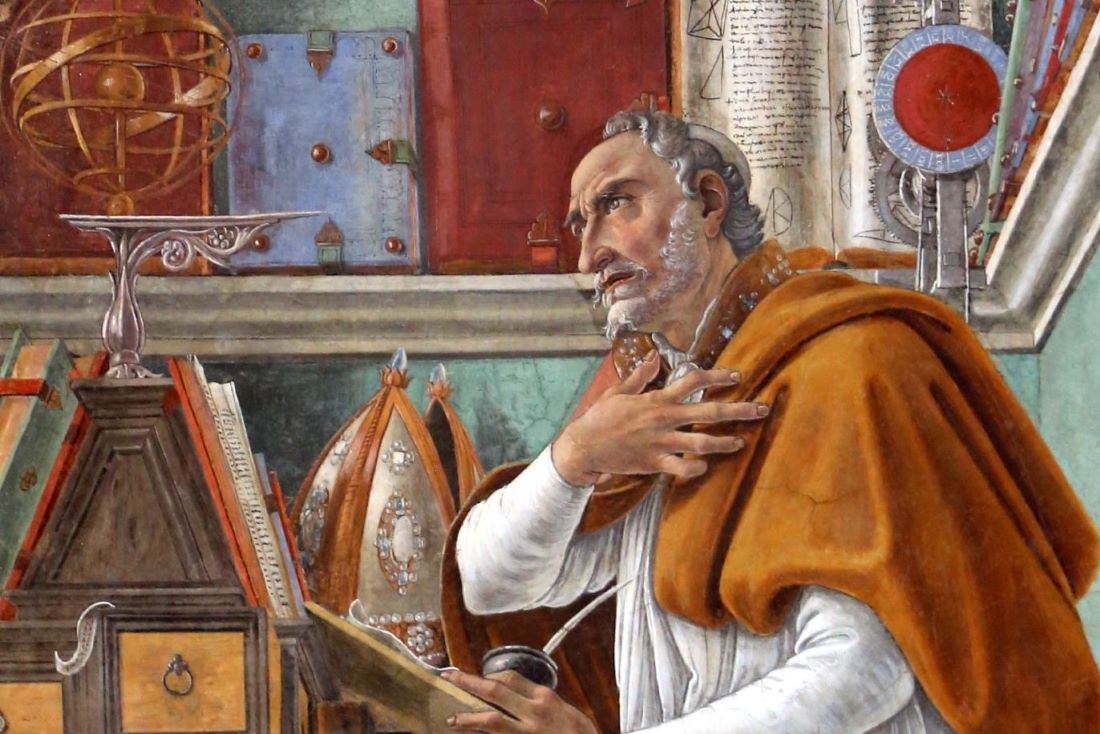
Now don’t get me wrong, I love Christmas. If there was a hidden camera in my house it would catch me randomly singing, “It’s the most wonderful time of the year!” My wife and I have curated the biggest (and best) Christmas display in a three or four block radius (in our estimation… opinions may vary). I love the feasting. I love the gift-giving. I love the Christmas liturgies, hymns, and candlelight services. I love all that because I love the message of Christ born to set his people free. I love the message of Immanuel, God-with-us, that the God of the Universe took on every bit of our broken humanity so that he could redeem it all. I love it because the incarnation is the only sufficient answer to the problem of evil in this world, as the best philosophers have realized, St. Augustine at the head. I love it because he became sin, who knew no sin, that we might become the righteousness of God. That’s the reason I’m singing, “It’s the most wonderful time of the year!” That’s the reason why I’ve lit my yard up in multicolored c-9 ceramic bulb nostalgic glory. That’s also the reason why I’m ecstatic that the whole world pauses once a year to celebrate the fact that God was born into the world.

And yet, I resonate with what that Washington Post author wrote. Because he’s right. The Christmas message is not what Hallmark, Home Depot, Honda, Hanes, Harley-Davidson, Hurley, and Hasbro are selling us. We have gotten off the rails, or jumped the shark, or whatever metaphor you want to use, in our overindulgence of the Coca-Cola commercialized version of Christmas. The songs, ads, and store displays start before Halloween now. That’s three full months on a peppermint Red Bull IV drip of wall-to-wall Christmas experience. There’s no expectation. There’s no preparation. There’s no self-denial. It’s just CHRISTMAS!!!!!, full-bore, full-tilt for three full months until December 26 when they turn off the spigot and we collapse into full-on exhaustion. No wonder some people hate it.

But that’s not the way Christmas was designed by those that developed the church year centuries ago. Yes, there was feasting. Yes, there was decorating and singing and gift-giving. But preceding it was a period of longing, expectation, and self-denial focused on something entirely un-Christmassy: the second coming of Christ. In other words, there was the season of Advent. And Advent was not Christmas.

Perhaps refocusing on the wisdom of those that created the autumnal portion of the Church calendar could help us in our current predicament. What can we learn by sitting at their feet?

Click here to read the rest of the article over at Semper Ref.

Gregory of Nazianzus on the Incarnation

Gregory of Nazianzus was a 4th century bishop from Cappadocia who eventually became the Archbishop of Constantinople. Together with the brothers Basil the Great and Gregory of Nyssa they were known as the Cappodocian Fathers. Basil, Nazianzus, and John Chrysostom are known collectively as the Three Holy Heirarchs, the Eastern Church’s version of the Four Great Doctors (Augustine, Ambrose, Gregory the Great, and Jerome). Gregory briefly presided over the Council of Constantinople (which gave us the Nicene Creed) and is responsible for the Trinitarian language we use about the Holy Spirit, the language of “three persons” (hypostases) of the Trinity, and in articulating Christology in the face of Apollinarianism. In other words, he was kind of a big deal.

It is to Gregory’s defense of the full humanity of Christ against the heresy of Apollinaris that I now turn. Apollinarianism was a heresy that taught that while Jesus had a human body, he did not possess a human mind. What’s the big deal, you ask? He’s still divine. Well, Gregory of Nazianzus would have none of that. In his Epistle 101 he eloquently articulates why it is important that Jesus Christ possesses a human mind. In this section he bequeaths to the church this important theological maxim that you should commit to memory: what has not been assumed has not been healed. Here’s the conclusion to his letter.

If anyone has put his trust in Him as a Man without a human mind, he is really bereft of mind, and quite unworthy of salvation. For that which He has not assumed He has not healed; but that which is united to His Godhead is also saved. If only half Adam fell, then that which Christ assumes and saves may be half also; but if the whole of his nature fell, it must be united to the whole nature of Him that was begotten, and so be saved as a whole. Let them not, then, begrudge us our complete salvation, or clothe the Saviour only with bones and nerves and the portraiture of humanity.

Gregory of Nazianzus, Epistle 101, 4th c. A.D.

Three things stick out from this quote. First of all is the Eastern notion that the incarnation itself, God uniting with humanity in the person of Jesus Christ, is the source of our salvation. Of course, the atoning work of the cross to gain the forgiveness of our sins was necessary, but this notion of the hypostatic union- that humanity and divinity are inseparably united together in Christ and by the very force of that union we find the source of the righting of our broken humanity- this is key aspect of our salvation as well. Thus, Gregory reasoned, if Christ was not fully human, we are not fully saved. If he did not have a human mind, as Apollinaris taught, then our minds are not healed. But if our minds are fallen, then we need our minds to be redeemed. Who among us who has suffered from depression, anxiety, or other disabilities that with modern science we know are afflictions of the mind would not agree that our minds are fallen and in need of healing? Since our minds are fallen we need a Jesus with a human mind, to heal our minds by the union of broken humanity with the divine.

Further, if our wills are fallen or our emotions, or any other non-tangible aspect of our inner-selves, then Jesus had to have a human one of those too. Otherwise we are not fully redeemed.

Secondly, we have in this quote something that looks an awful lot like the Calvinistic idea of radical depravity. Gregory’s syllogism requires belief in the notion that every aspect of humanity is fallen and in need of redemption. He writes, “If only half Adam fell, then that which Christ assumes and saves may be half also; but if the whole of his nature fell, it must be united to the whole nature of Him that was begotten, and so be saved as a whole.” The whole of his nature fell, including the parts that make decisions, the will, and enable a person to respond to the gospel call by faith. That looks like radical depravity to me.

And that leads to the third notion in the quote that so powerfully resonates: the idea that we are saved to the uttermost. It’s not just that our souls are rescued to escape eternal punishment. No, all of who we are, every aspect of who we are as humans is saved because every aspect of our fallen humanity was united to the Godhead in the person of Jesus Christ. In that humanity he perfectly obeyed and pleased the father, was crucified to pay the debt we could never repay, was raised again as the first-fruits of our resurrection, was glorified into a new incorruptible, impeccable humanity that we will all one day possess, and was raised into the heavens where a fully human person sits at the right hand of the Father ruling over all things and sustaining all things with his powerful word.

That is salvation. Do not begrudge us any little bit of it. For if any part of Jesus’ humanity wasn’t really human, if he wasn’t truly consubstantial with us in his humanity, then we aren’t completely saved. What has not been assumed has not been healed. Let them not, then, begrudge us our complete salvation, or clothe the Savior only with bones and nerves and the portraiture of humanity.

The Biblical and Patristic Roots of the Church Calendar

Advent is Not Christmas, Part I

This is part one of a two part series. To read part two click here.

I have a pet peeve. Actually, I have several. This one has to do with the way that many churches do Advent, that is, as an extended time of Christmas. Their focus is on the first Advent of Christ, and the time is spent covering the biblical material leading up to his birth. Christmas carols and hymns are sung from the first Sunday of Advent onward and there is no distinctive Christmas season. In other words, Advent is Christmas.

There is just one problem. Advent is not Christmas.

Before I get any further I need to make several disclaimers. First, the purpose of this essay is not to shame anyone or call anyone out. I’ve observed this practice enough to not have any one particular church in mind. In fact, the church I attended this week on the First Sunday of Advent did it correctly. So, I’m not calling anyone out in particular and neither do I have any recent experience in mind. Second, my goal is not to cause anyone to feel ashamed or to cause any immediate, drastic changes in your church. My purpose is to educate and train. The church year is a secondary (or even tertiary) matter, and there’s no reason to go to war over how anyone does the church year (or doesn’t).

That said, if we are going to do the church year, I think that it ought to be grounded in what the Scripture teaches and what the church has observed over the centuries, and that as Reformed Christians we ought to have a good rationale and purpose for doing it.

In this essay, part one of two, I will cover the broader biblical and historical aspects and then in part two I will get into the nitty gritty of why Advent is not Christmas (and why that matters).

The Church Year is Grounded in God’s Word

The church year is not just a cool thing that trendy churches are now doing. While I think it’s good that all kinds of churches are getting in touch with the roots of historic Christianity, as we do that we need to understand what we are doing and why. Ancient does not necessarily equate to good and helpful, and we need to understand what unhelpful aspects may have developed in ancient practices so we can avoid them. When it comes to the church year, we are not just appropriating church tradition. It turns out that, as in many other things, the church’s tradition is grounded in God’s Word.

Please continue reading over at SemperRef.

What Church Leaders Should Know About Responding to Abuse

I was recently interviewed by the Hagerstown, MD Harald-Mail as a part of a series of articles covering an abuse coverup at a prominent Christian school there. I spent quite a bit of time with the reporter on the phone, and she did an excellent job putting this together. The newspaper article is largely just reporting her interview with me.

In the interview, I say some things that I think all church leaders should know about responding to abuse. If you are a church leader, I encourage you to read the article and leave a comment if you would like more resources.

Thanks so much to Tamela Baker for her excellent work on this story, and to her colleague Alexis Fitzpatrick who teamed up with her on this project to break the story of abuse and coverup at the school there. In the process, they show the important role that journalists play in shining light on the truth when institutions fail to do that. The greatest recent example of this was the Boston Globe’s reporting in the Spotlight project, which blew the lid off of the clergy abuse scandal in this country. A fantastic movie was made about this that every Christian should watch. While this set of reporting will not likely end up on the silver screen, it demonstrates the vital role that local journalists play. Remember, it was the journalists at the Indianapolis Star, who were willing to run with the story that Rachael Denhollander was pitching them, that exposed and eventually took down Larry Nassar and USA Gymnastics.

Here is the article. I hope it both informs and challenges you.

Did Augustine really say, “The Church is a whore.”?

I hear this quite frequently, “As St. Augustine said, ‘The Church is a whore, but she’s my Mother.”

The problem is that St. Augustine never said that.

If you try to run down the source of the quote, the trail ends in a book written by Tony Campolo. In Letters to a Young Evangelical, chapter 6 he writes, “I would urge you to consider this carefully, and to think about the words of St. Augustine, ‘The church is a whore, but she’s my mother.’ That statement brilliantly conveys how I feel about the church.” He goes on to argue that despite all the failures and sins of the church, she is still our mother, and thus we should be a part of her. Where Campolo got that quote is a mystery because he gives no citation. But if you look further back you will not find it, because it does not exist.

How do I know? Well first off, as someone who has read an awful lot of Augustine and an awful lot about Augustine, I have never come across that quote, and that quote just doesn’t seem like something he would say. A few years back after I heard it yet again I decided to try and find the source. That’s when I discovered that the trail went dead at Campolo. Luckily, as an academic I have access to better search engines than Google.

I went to two of the best search databases for Christian Latin texts, the Patrologia Latina and the Brepols Library of Latin Texts. Between the two of them they contain pretty much everything written by ancient Christian writers in the Latin language. I searched for church (ecclesia) and mother (mater) using several different synonyms for whore (meretrix and prostituta being the main ones) and nothing came up exactly like the quote. That leaves me 99% sure that Augustine never said that.

The closest I was able to find is from Sermon 213 on the Creed. What he says there is significant so I’ve translated it for you:

Let us honor the Catholic Church, our true Mother, the true Bride of her Husband, because she is the wife of so great a Lord. And what shall I say? How great is that Husband and of singular rank, that he discovered a prostitute and made her a virgin. Because she should not deny that she was a prostitute, lest she forget the mercy of her liberator. How can it be said that she was not a prostitute when she fornicated with demons and idols? Fornication was in the heart of everyone; a few have fornicated in the flesh, but everyone has fornicated in his heart. And He came and made her a virgin; he made the church a virgin.*

Here we find the concepts mother, church, and whore, but we do not find that direct quote we are seeking. In fact there is a significant difference between the quote Campolo gave us and what Augustine actually said. Augustine here is saying that the Church was a whore because she formerly lusted after demons and idols. She is no longer a whore because her great husband, Jesus Christ, has liberated her from her thraldom, forgiven her sins, and made her his virgin bride.

Campolo is trying to make the point that although the church fails she is still the church. That is right and good. However, that is not Augustine’s point. Augustine is preaching about the glorious redemption that the great Husband of the church has accomplished. She is praised because of what He has done in and for her. She is our Mother because He is her Husband and because He has sanctified her. To make Campolo’s point resonate with what Augustine actually said, we should love and cherish the church, in spite of her failures, because she is Christ’s bride. Because she is his only bride. He found her, liberated her, sanctified her, and married her. That’s why we love her even when she is imperfect, because she is the only bride Christ has. He makes her great.

It is then grossly wrong to say that the Church is a whore. In fact that is blasphemous to say. Augustine himself says so in Sermon 10, which I found when searching for this supposed quotation:

I read in the Psalm, “The one who disparages his neighbor in private, I will destroy,” (Psalm 101:5).  If it is right for [God] to destroy the one who disparages his neighbor in private, then how much more right is it for Him to destroy the one who publicly blasphemes the church of God? When he says “She is not who she is!” When he says, “What is ours is partial.” When he says, “She is a whore.”**


UPDATE: Cyprian wrote concerning this concept in his treatise On the Unity of the Church. Since Augustine cites Cyprian extensively, even from this treatise, it is likely that he learned this concept from the African great himself.

The spouse of Christ cannot be adulterous; she is uncorrupted and pure. She knows one home; she guards with chaste modesty the sanctity of one couch. She keeps us for God. She appoints the sons whom she has born for the kingdom. Whoever is separated from the Church and is joined to an adulteress, is separated from the promises of the Church; nor can he who forsakes the Church of Christ attain to the rewards of Christ. He is a stranger; he is profane; he is an enemy. He can no longer have God for his Father, who has not the Church for his mother. If any one could escape who was outside the ark of Noah, then he also may escape who shall be outside of the Church.

*My translation from the Latin text edited by G. Morin: Sancti Augustini Sermones post Maurinos reperti in Miscellanea Agostiniana, vol. 1, 1930, p. 447.

**My translation from the Latin text edited by Michael Petschenig, CSEL 53, p.177, available here: https://archive.org/stream/CSEL53#page/n269/mode/2up


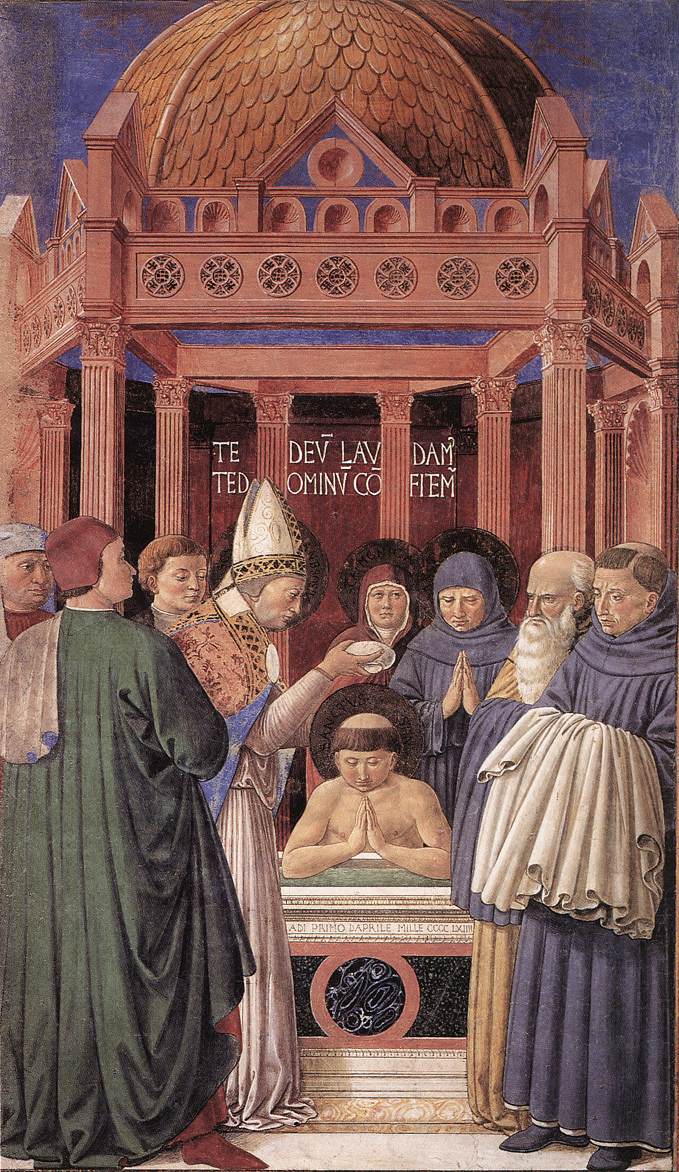
Infant Baptism in the History of the Church

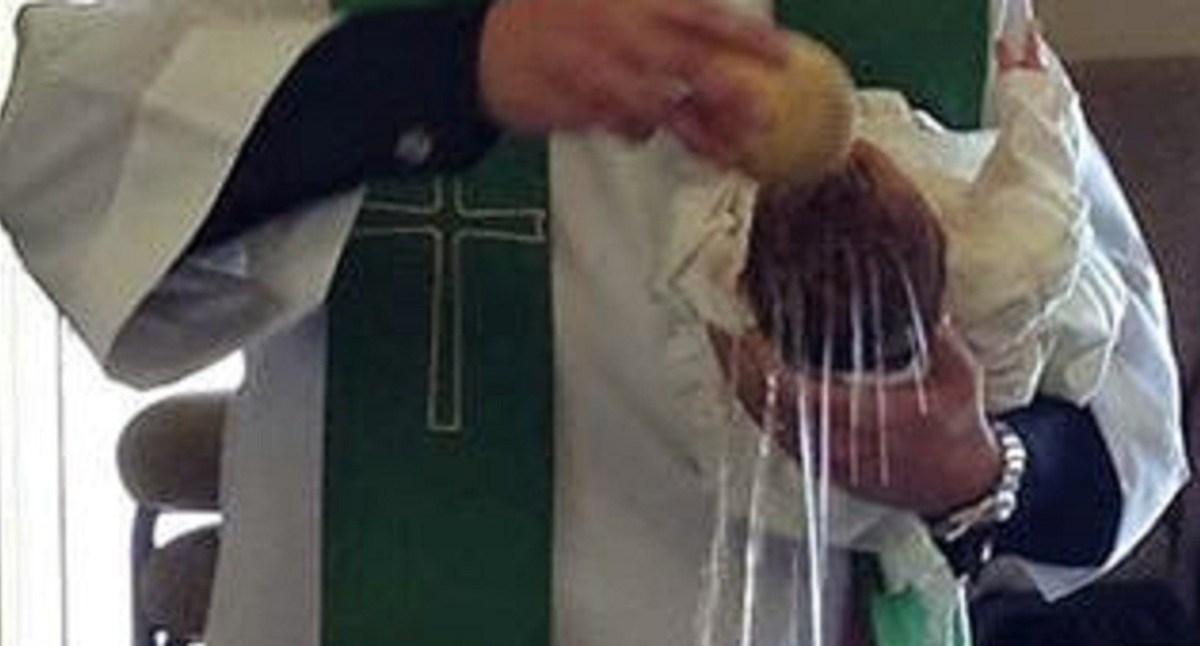
Infant baptism was the universal practice of the church until after the Protestant Reformation. The early church was not credo-baptist.

Note: I wrote this post in response to a question I received from a fellow pastor. I like to address practical issues that pastors and Christians are facing on the ground. If you would like me to address a particular question, drop me a note!

Ancient practice in the Church sets an important precedent for present day practice. This certainly doesn’t mean that Christians are bound to only do things as they have always been done, but the principles of catholicity and unity move us not to break from historic church practice on a particular item unless there is a strong biblical rationale.  Where there is not a strong biblical rationale, or, strong cases could be made on either side, the precedent of church tradition should play a factor in making the decision.

Such is the case with infant baptism. Credo-baptists and paedo-baptists both present biblical arguments that either side is fully convinced of. Thus, church tradition is often brought into the discussion to lend weight to the support of one side or another.

So what does church tradition have to say on the issue of infant baptism? What was the historic practice of the church from the earliest days?

Before we go further, I would like to make a few distinctions and give a few definitions. First of all, credo-baptism shall be defined as the conviction that only those who credibly and consciously profess belief in Christ are valid subjects for baptism. This can also be referred to as believers-only baptism. Second, paedo-baptism shall be defined as the conviction that infants of at least one believing parent are valid subjects of baptism. The paedo-baptist conviction therefore does not exclude baptism of adults who have converted to Christianity and have never been baptized. I shall also use the term infant baptism as synonymous with paedo-baptism.

Also, I would like to make two caveats. First, I am fully aware of the biblical evidence and rationale for the paedo-baptist position and can readily give it. This point of this article is to give historical evidence in the face of two positions that both claim to have biblical rationale. I am also fully aware that credo-baptists have fully developed biblical rationale for their position (though I disagree with them). The point of this post is to address the historical precedent as a sort of “tie-breaker” to the biblical stalemate. Second caveat: I fully embrace my Baptist brothers and sisters as fellow believers in Christ. This is a intramural discussion, and one I offer not with rancor, yet with firmness of conviction.


Infant baptism was the universal practice of the church until after the Protestant Reformation. At the onset of the Reformation, none of the magisterial reformers abandoned the practice of infant baptism, but began to vigorously defend it with fresh biblical rationale based on Covenant Theology. The Reformers went so far in their defense of paedo-baptism that none of them even advocated the re-baptism of those who had received baptism in the pre-Reformation church. To this day, churches that are the ecclesial and theological heirs of the Protestant Reformers have continued that practice of infant baptism. These would be Lutherans, Presbyterians, Reformed of various kinds, and Anglicans (which I would argue fall in the Reformed camp, but someone may protest that I left them out). In these churches there is a continuous and consistent theology and practice of infant baptism that goes back to the days of the early church.

Thus infant baptism was the universal practice of the Christian Church until some Reformation leaders began to question many of the standard practices of Christianity and the Christian life. These Radical Reformers (what scholars call the anabaptists) opposed padeo-baptism, and they advocated for the re-baptism (thus the name anabaptist, one who re-baptizes) of those who had been baptized before the Reformation. But the 16th century anabaptists can not be properly described as holding to credo-baptism as I have defined it. These radical reformers made a very high hurdle to cross before baptism, not simply allowing those who made a credible profession of faith come to the font, but only allowing those who had proven themselves over a long period of time as committed Christian disciples. The radical reformation reserved baptism for the few, a subset of Christian believers. This is not the modern Baptist position. Furthermore, there are many aspects of 16th century anabaptist movements that modern baptists do not adhere to, specificaly, pacifism, communitarianism, and mysticism. The proper heirs of the 16th c. Radical Reformation are to be found in the Menonite and Amish churches, not in modern Baptist churches. (NOTE: see James R. Payton, Jr, Getting the Reformation Wrong, pp. 160-172).

Baptists, rather, are the spiritual heirs of the English Reformation of the 16th-17th centuries. As such, the 17th century theology of credo-baptism was quite new, even by the timeline of the Reformation. There is no real historical precedent for the view before the 17th century and no place where it was practiced outside of England. In contrast, the paeo-baptist position was practiced and defended biblically and theologically from the onset of the Reformation and in every place where the Reformation spread up to the present day.

To the time before the Reformation: no one disputes that the practice of the ancient and medieval Church was universally paedo-baptist after the time of Augustine.[1] This is because Augustine’s treatment of both original sin and the doctrine of grace made a theological path for the practice of infant baptism to become universal. From the 5th century onward, there is no question as to the universal practice of the Church in baptizing the infants of believing parents.

However, in the earliest centuries of the church (before Augustine) the evidence for infant baptism is scant and many credo-baptists will argue based on this that believers-only baptism was the first practice of the church until Constantine got a hold of things. The Constantine thing is always a red herring. Almost nothing he is credited (or blamed) for in the Church is accurate. As I said above, Augustine was the one who closed the book on infant baptism. Constantine himself never weighed in on it and still evidenced the flawed early church baptismal practice in his own life (which I will talk about below).

Yet the argument for credo-baptism in the early church is not sustained by the historical evidence. It is true that the writings we have access to today give overwhelming evidence to adult baptism and to many folks delaying their baptisms well into their adult life. However, this evidence for delaying baptism does not support the credo-baptist position for the following reasons.

1) The reason why adult baptism is the focus in the early church is because everyone is converting to Christianity (it’s the same as in the New Testament). Many of the stories told in the very early church are of converts, and so many were converting from paganism to Christianity that the stories of infant baptism get lost. The story of the early church is one of conversion. Thus the baptism of professing believers is the story told. This is not therefore evidence against infant baptism or for believers-only baptism. It is evidence that people were converting to Christianity in droves and being baptized.

2) There is no writing (that I know of) that is polemical against infant baptism. If the Early Church was credo-baptist by conviction, you would expect much polemic against infant baptism. It simply doesn’t exist.[2]

3) There is evidence for infant baptism in the early church. It isn’t the only practice, but the evidence suggests that infant baptism was a normal and expected practice. One specific example is found in the Apostolic Tradition of Hippolytus (late 2nd to early 3rd c.). In this text a baptismal rite is described that includes infants. There are other examples of this in the early church. As I said above, the adult baptism of converts was the most attested practice, but there is still ample evidence that infant baptism was occurring and no one, I repeat, no one was arguing against it.

4) The reason why many Christians in the early church delayed their baptism was due to a faulty baptismal theology and a faulty soteriology. Before Augustine gave the definitive treatments, many believed that since baptism washed away all previous sin and that if you sinned after baptism there was no possibility for forgiveness, you should delay baptism as long as possible to get your sinnin’ in. This is why Constantine was baptized late in life, for example, not because he was not a committed Christian, but because he wanted to make sure to be saved (there was also a political reason for him delaying baptism). After Augustine developed his doctrine of grace and gave the definitive (and final, at least till the Reformation) argument for infant baptism, this is no longer an issue.

Here’s the payoff, Baptists point to the early church for evidence of believers-only baptism, but are they willing also to own the errant theology that was the reason for it? I think not. There were people who delayed baptism in the early church but it was not for modern credo-baptist conviction that only believers should be baptized. It was for other (faulty) theological reasons. Baptism was not delayed until a credible profession. It was delayed  until the person felt they could go on for the rest of their lives without sin (or to enter the Christian ministry). This is not the modern Baptist position, nor should it be. The early church was not credo-baptist.


[1] I recently (June of 2025) found this article that refers back to this post. He quotes from Peter the Venerable who states that, “all Gaul, Spain, Germany, Italy, and the whole of Europe, for nearly three hundred or five hundred years, has had no one except baptized in infancy.” I left this comment on his post in rejoinder, “all Gaul, Spain, Germany, Italy, and the whole of Europe, for nearly three hundred or five hundred years, has had no one except baptized in infancy.” His reply was that Peter says “All of Europe.” Point well taken, though NW Europe is Peter’s immediate context. However, I will further point out that Peter does not say that no on was baptized as an infant before that time, but that since that time no one has been baptized in any other way. The reason why adult baptism persisted until around 800 is that people were still being converted all over Europe. But after the continent had more or less been converted, there were no more (or exceedingly few) adult baptisms.

[2] In a recent (June 2025) discussion on X.com I was made aware of a quote from Tertullian (On Baptism, XVIII) where he argues for a delay in baptism. Here is the full quote:

“And so, according to the circumstances and disposition, and even age, of each individual, the delay of baptism is preferable; principally, however, in the case of little children. For why is it necessary—if (baptism itself) is not so necessary —that the sponsors likewise should be thrust into danger? Who both themselves, by reason of mortality, may fail to fulfill their promises, and may be disappointed by the development of an evil disposition, in those for whom they stood? The Lord does indeed say, “Forbid them not to come unto me.” Let them “come,” then, while they are growing up; let them “come” while they are learning, while they are learning whither to come; let them become Christians when they have become able to know Christ.  Why does the innocent period of life hasten to the “remission of sins?” More caution will be exercised in worldly matters: so that one who is not trusted with earthly substance is trusted with divine! Let them know how to “ask” for salvation, that you may seem (at least) to have given “to him that asketh.” For no less cause must the unwed also be deferred—in whom the ground of temptation is prepared, alike in such as never were wedded by means of their maturity, and in the widowed by means of their freedom—until they either marry, or else be more fully strengthened for continence. If any understand the weighty import of baptism, they will fear its reception more than its delay: sound faith is secure of salvation.”

Here I would argue that it is clear that Tertullian thinks baptism should be delayed because of the early church belief that if you sin after you are baptized you will be damned (and also your sponsors?). He also argues that since baptism is for the removal of sins, children don’t need to be baptized in their age of innocence. This is not an argument against paedobaptism as much as it is an argument for everyone to delay baptism.

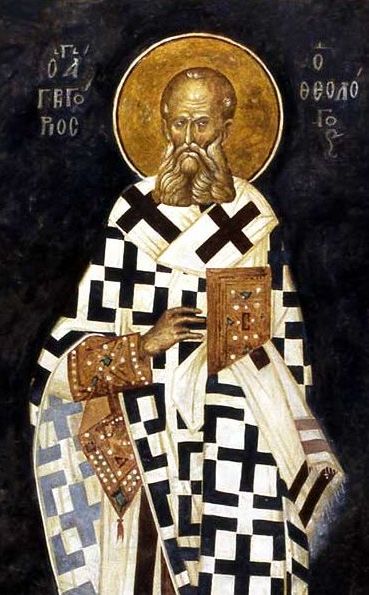
St. Ambrose of Milan – Savior of the Nations, Come

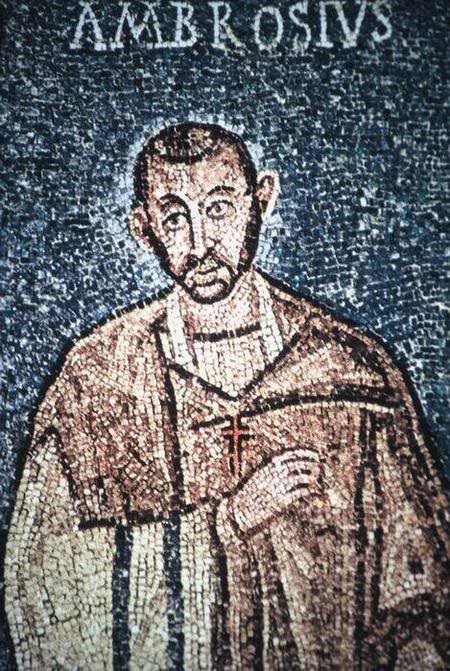
This is one of my favorite Advent hymns. It has some of the most powerful lines in the history of Christian hymnody, written by one of the first to really emphasize congregational participation in worship, Ambrose of Milan.

This hymn is also deeply theological. In Ambrose’s words we find the various theological controversies of the day reflected. Namely, the heresy of Arianism, which said that Jesus Christ was not fully divine, is combated in verse 4. Nestorianism, which argued that Jesus Christ was not fully human, is combated in verse 3. But beyond that, the hymn promotes the wonder and awe that we should all have when contemplating the mystery of the Incarnation. Verse three into the first phrase of verse 4 gives me goosebumps. Every time.

Give a listen to Christ Our King’s arrangement of this hymn from the 4th century. I hope it instills in you the wonder that it did for its first singers in Milan.

1 Savior of the nations, come,
Virgin’s Son, make here Your home!
Marvel now, O heav’n and earth,
That the Lord chose such a birth.

2 Not by human flesh and blood,
By the Spirit of our God,
Was the Word of God made flesh —
Woman’s offspring pure and fresh.

3. Here a maid was found with child,
Yet remained a virgin mild.
In her womb this truth was shown:
God was there upon His throne.

4. Then stepped forth the Lord of all
From His pure and kingly hall;
God of God, yet fully man,
His heroic course began.


Savior of the Nations, Come
St. Ambrose of Milan, 4th c.
Translation of verses 1 and 2 by William M. Reynolds, 19th c.
Translation of verse 3 by the Lutheran Service Book, 2006
Translation of verse 4 by F. Samuel Janzow, 20th c.

Tune: Johann Walter, Wittenburg, 16th c.
Arranged by: Timothy R. LeCroy 2016

Performed by Christ Our King Musicians
Vocals: Tim LeCroy and Liv Cordray
Violin: Erica Kallis
Piano: Liv Cordray
Guitar: Tim LeCroy
Bass: Tim LeCroy


If you want to be added to my Advent devotional emails, just leave a comment below!


Sunday Music – The Old Rugged Cross

At Christ Our King, the church where I pastor, we’ve been recording our worship services, including the music. Here’s a recent rendition we did of the old hymn, “The Old Rugged Cross.” I hope it is a blessing to you!

Vocals: Tim LeCroy and Olivia Cordray
Guitar: Tim LeCroy
Mandolin: Olivia Cordray
Violin: Erica Kallis
Bass: Tim LeCroy

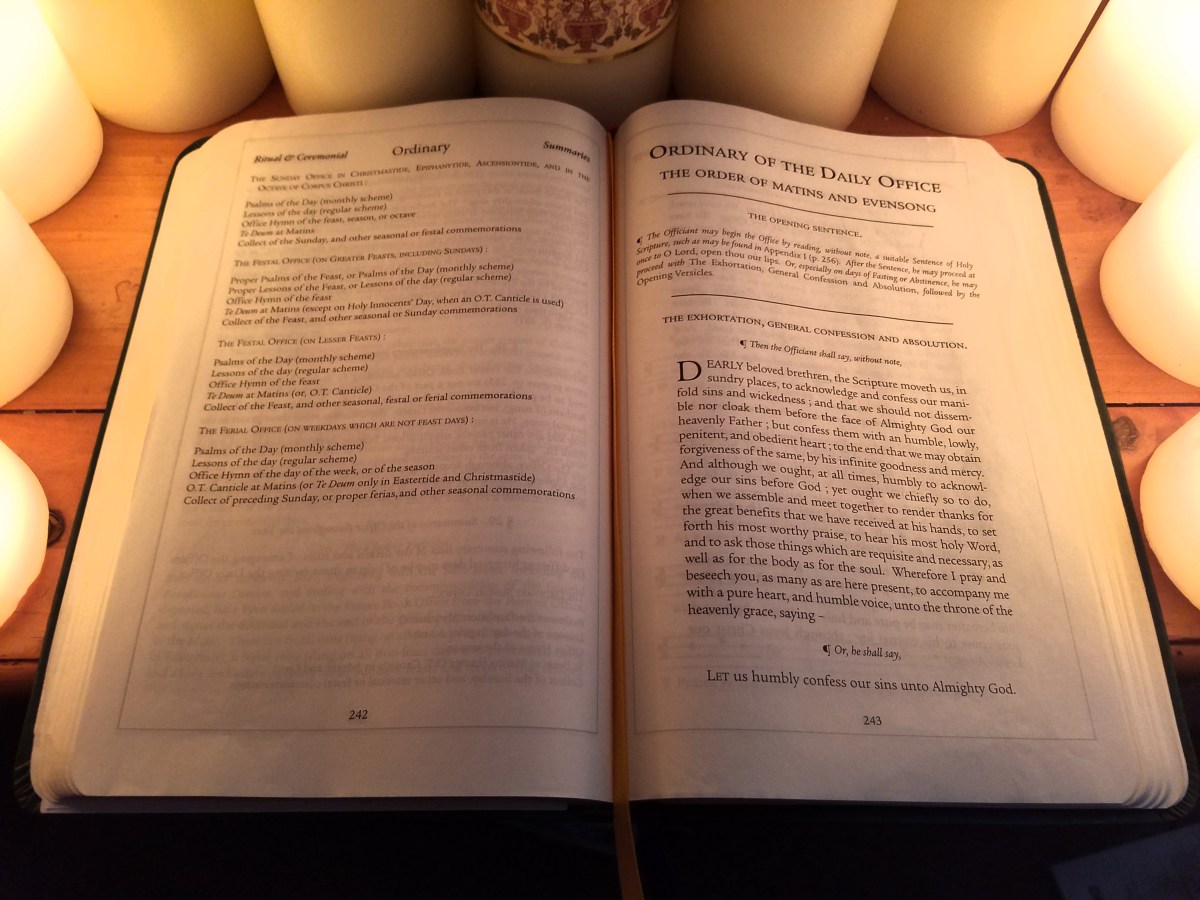
Why Pray the Hours? – Reflections on Reformation

The church throughout her history has kept regular, set times of prayer each day. Should modern Christians reacquire this ancient practice?

Note: this begins a series on my blog called Reflections on Reformation which will be running this year in commemoration of the 500th anniversary of the onset of the Protestant Reformation.

Early on in the history of the church, Christians understood that the 1st century Jewish practice of meeting for prayer at set times of the day was a good and biblical practice to continue. We find references to this in several places in Scripture. In Acts 3 we find Peter and John attending a set prayer at the temple at 3PM. Acts 10 seems to reference Peter continuing this practice in his devotional life as he was praying at the ninth hour (3pm). Later in the story he prays at the sixth hour (noon).  Pentecost occurred at the third hour of the day (9 am). In Jesus’s parable in Luke 18 we find two men going up to the temple to pray. While he does not tell us the exact hour, it was a corporate prayer service they were attending. Simeon and Anna prayed in the Temple continually, it says in Luke 2. We tend to assume this is individual devotional prayer, but it would make more sense if this referred to them participating in the set prayers of the temple service. In Acts 22 we find Paul praying at the temple. In Luke 1:10 we find a multitude praying in the temple courts at the “hour of incense.” In Daniel 9 we find Daniel praying at the time of the evening sacrifice. He did this even though the temple was destroyed and there was currently no sacrificial ministry occurring.

In the Psalms there are multiple references to prayer and times of day. Psalm 88:13 says, “But I, O LORD, cry to you; in the morning my prayer comes before you.” Psalm 141:2 says, “Let my prayer be counted as incense before you, and the lifting up of my hands as the evening sacrifice!” Psalm 5:3 says, “O LORD, in the morning you hear my voice; in the morning I prepare a sacrifice for you and watch.” Psalm 59:16, “But I will sing of your strength; I will sing aloud of your steadfast love in the morning. For you have been to me a fortress and a refuge in the day of my distress.” Psalm 119:147, “I rise before dawn and cry for help; I hope in your words.” Psalm 55:17, “Evening and morning and at noon I utter my complaint and moan, and he hears my voice.” Psalm 119:148, “My eyes are awake before the watches of the night, that I may meditate on your promise.” Psalm 134:1-2, “Come, bless the LORD, all you servants of the LORD, who stand by night in the house of the LORD! Lift up your hands to the holy place and bless the LORD!” Psalm 119:62, “At midnight I rise to praise you, because of your righteous rules.” This is not to mention numerous places in the Psalms where specific times of day are referred to with relation to receiving mercy, hearing God’s word, groaning, crying out, meditating on his greatness, etc.

Perhaps this is also what is meant by the several references in the scriptures to praying night and day and praying without ceasing. This would make sense in the context of gathered set times of prayer, which we know were happening at least in the temple and also in an extension of those temple services in private prayers (see Peter and Daniel above).

Are we to take these numerous references to prayer at specific times of day as a descriptive coincidence? Or do the Scriptures intend to prescribe a practice for God’s people? Indeed, the early Christians saw these references as scriptural warrant to offer prayers at set times each day. Based on specific times mentioned in scripture (just before dawn, third hour, sixth hour, ninth hour, sunset, evening, midnight) and based on Psalm 119:164 which says, “Seven times a day I praise you for your righteous rules,” the early Christians established set times of prayer at these times.

https://pastortimlecroy.com/wp-content/uploads/2017/09/daf9c-xpray-the-hours-pagespeed-ic-msrl-z6coo.jpg

Not everyone prayed seven times a day in the early church, although for some this was the ideal (see Hippolytus of Rome’s Apostolic Constitutions). Yet the churches called those to prayer who were pastors and workers, those with vocations within the church and those who were able and willing to do so. Eventually communities sprang up who were devoted to prayer, such were the early monasteries. In the Rule of Benedict he lays out the liturgies for the set times of prayer along with the Psalms that were to be sung at them. In the ancient practice of the Benedictine Rule, the monastery was directed to sing through the entire Psalter every week.

This may be what Paul had in mind as well when he describes that the widows who are enrolled in the church when he writes in 1 Timothy 5:5, “She who is truly a widow, left all alone, has set her hope on God and continues in supplications and prayers night and day.” Interestingly, Calvin remarked on this in his Institutes in book 4:8:18-19 where he discusses the enrollment of widows as deaconesses to “discharge the public ministry of the church toward the poor and to strive with all zeal, continancy, and diligence in the task of love.” It is interesting because he does not address the apostolic command that these widows continue in supplications night and day. His reaction against late medieval monasticism was too strong to allow him to consider that possibility. In this he was not unlike many of the Protestant Reformers who saw the services of the hours as attempts to “appease God with songs or unintelligible mumbling.”

Despite Calvin’s protestation, the church has continued these daily prayers, the hours or divine offices throughout her history. At the time of the Protestant Reformation one of the main questions that arose was whether and which practices of the ancient and medieval church should be continued. While some protestant traditions continued the daily office in some form (mainly Anglicans and some Lutherans), most of the Protestants jettisoned the daily office in favor of the teaching ministry of the church. Calvin himself taught the scriptures daily, and for that reason we have an expansive collection of his biblical teaching. We might ask though, while teaching the scriptures is obviously a very good thing, should the corporate prayer ministry of the church have been abandoned? If the answer is no, what are ways that we can reincorporate this ministry into the life our churches today?

Evangelical churches have tended to relegate prayer to the private life of the individual believer. The emphasis on alone time with the Lord is in keeping with Christ’s teaching on prayer, and this was the main influence for Evangelical piety. Yet in the 20th century, Pentecostal and Charismatic movements have reacquired this ancient emphasis on prayer, while not taking up the ancient forms. Many charismatic prayer ministries seek to be faithful to God’s word by opening up prayer rooms where there is a sign-up and a schedule to ensure that prayers are being offered around the clock.

While this re-emphasis on prayer is to be commended, it largely focuses on the efficacy of prayer (a true and good notion), but not necessarily on the formative aspects of prayer for the Christian believer. In the early church it was both the efficacious and the formative aspects of prayer that shaped the church’s practices. Could we glean from this formative aspect of prayer today?

There has been much work recently in this area. James K. A. Smith’s work on Christian formation has drawn deeply from prayer’s formative aspect and the goodness of this for Christian formation. Additionally Greg Thompson in his public teaching ministry has made this a focus. Both Thompson and Smith have drawn from the life of the ancient church in its rich liturgies and from the Rule of Benedict which prescribes prayer as a way of life for disciples of Christ. It should be noted that both Smith and Thompson are active in the Reformed context, Thompson being a pastor in the PCA and having given a series of foundational lectures at Covenant Theological Seminary on this topic.

What then are we to make of this? I’m not suggesting that every Christian should pray the seven offices every day. Yet it would be helpful if Evangelicals leaned into this rich tradition to form our congregations in some way. It is also very helpful, if not necessary, that those who are in vocational ministry participate in the daily office as a way to rest, recharge, and fulfill our callings to intercede as ministers of word and prayer.

I’ll offer several practical suggestions below.

  1. Offer avenues for daily prayer to congregants. This could be in the form of a prayer guide that the church produces, or suggestions of various smartphone apps which fulfill the same purpose. For example, each year for Advent and Lent my church offers a daily prayer guide to all our congregants to enter into daily prayer. Mind you, this is not seven times a day, but a suggestion and resource for engaging in once-daily prayer as individuals and families. Another option is to offer a page in the weekly service bulletin with all the lectionary readings for that week and encourage congregants to use that week’s service as a prayer guide throughout the week.
  2. Offer a mid week prayer service. Churches with access to facilities during the week could offer a mid-week vespers or matins (or both!) so that congregants who wish could attend to pray together and be shaped by these rich patterns of prayer.
  3. Pray daily as a church staff. If you have multiple staff who office at the same location, gather for morning prayer as you start each day. Make it a priority and block the time out on your schedule.
  4. Seminary Communities. Seminaries are uniquely positioned to enter into the richness of communal prayer. If chapels are more lightly attended than years past, perhaps a shift away from the didactic focus of a chapel sermon to the communal and formative act of prayer will reinvigorate seminary communities. Begin by exposing students and faculty to things like chanting psalms and saying the hours. Do the office for one or two of the chapel services a semester. Pick one day per semester to cancel classes and pray the hours (9am, 12, 3, and at sunset), encouraging the students and faculty to work in between the prayer services. Eventually begin offering morning prayer on a daily basis for those that desire it. Then sit back and see what the Lord does with it.
  5. Individual pastors. I encourage all pastors to say the office at least once a day. I say the morning office every morning (even Sunday before church!) except for my day off. This has been very beneficial for me in a number of ways, which I will detail in a future post.

Won’t this require too much work and take up too much time? The great thing about the office is that once you learn how it works, you don’t need to spend time preparing and practicing like we have done for many chapel services and Sunday services these days. Find someone who can lead it well. Find someone who can chant psalms. Then just show up and do it. Take 15-20 minutes out of your day (minimum) to spend time in community before the Lord. I promise that you will begin to see tangible results in the lives of those who participate.

Martin Luther is supposed to have said, “I have so much to do that if I didn’t spend at least three hours a day in prayer I would never get it all done.” There is no written evidence that he ever said that, though perhaps it was a oral tradition that was passed down through the ages due to its poignancy. Whether he said it or not, we must remember that Luther was a medieval monk who prayed the hours. That shaped him and formed him in his knowledge of the scriptures and in his love and knowledge of God. Augustine prayed the hours. Chrysostom prayed the hours. Anselm prayed the hours. In fact, all the theological giants of the ancient and medieval church prayed them in some form. Our fathers and mothers were steeped in scripture because of this. We often think that we know the bible well and understand it even better. But are we steeped in scripture to the level that our fathers and mothers were? Who recited the psalter by heart once a week? Who read through the bible at least every three years? Who daily spent hours in prayer before the face of God?


Want me to help you learn how to chant the psalms? Contact me.

Apps for the daily office
These apps are available in your app store. Note: these apps come from various theological traditions.

  • Mission St. Clare
  • Divine Hours, Vinyard Ann Arbor
  • Universalis
  • Daily Prayer from the COE
  • Do you know of others? Comment below!