Work and Pray

Ora et labora: pray and work.

This was the motto of the medieval monk. This simple phrase moved the life of prayer from the realm of the ascetical heroism of the few to a life that was both accessible to normal Christians and helpful for society. Monks were called to a life of prayer, and pray they did.

But they also worked. They built. They planted. They copied texts by hand. They pastored churches. But in all that work their rhythm of life was set to the meter of daily prayer. Seven times a day, the monks would pray. Their life was one of meditation on God’s wondrous works. Their work flowed out from their prayers and enabled their work to be a vocation, a calling, that was defined by God’s goodness and love for the world, not one motivated by greed, success, pride, or jealousy.

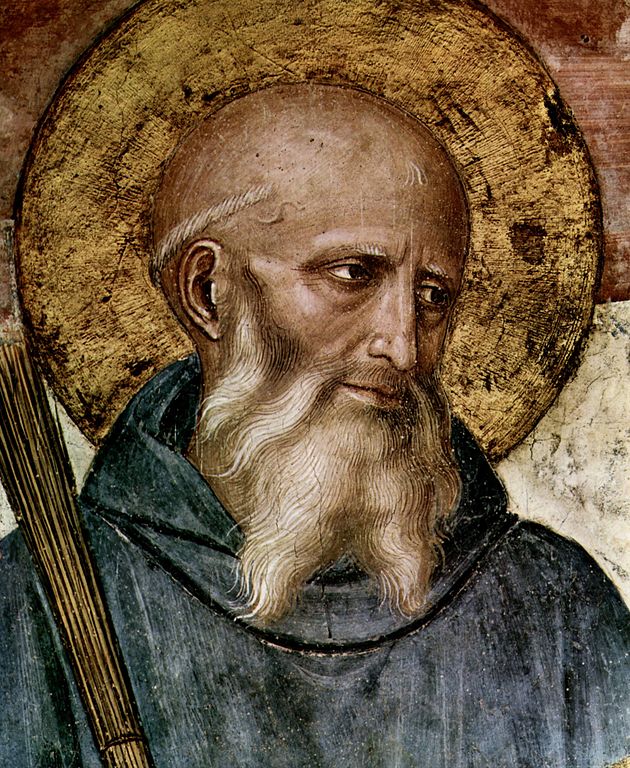
It was not always this way for monks. The ancient monks of the Egyptian desert did not place work as a priority. Their goal was an ascetical ascent to God. Yet the goal of 6th century monastic father Benedict of Nursia was to set prayer and work in harmony. In order to do this he lessened the monastic requirements on prayer to make them more reasonable. He increased the provision for sleep, food, and drink so that the monks could be productive. His goal was not to ascetically bludgeon evil out of the monk, but to set the monk into an ordered life that valued work as an objective good and recognized the necessity of prayer in the life of the worker.

In essence, the daily prayer patterns that Benedict developed for his rule were designed to be a pattern of prayer that the worker could manage. It was intended to be reasonable and doable. It was intended to uplift and encourage, not berate and punish.  

The monk’s life was, as one commentator on The Rule of St. Benedict put it, “an intensely lived Christianity.” Their life was more intense in prayer and in the denial of some worldly goods. Yet the monastic call to prayer was never just for monks, it was for all, even if monks were the only ones ever to fully attain to it. St. Francis, after visiting the Sultan of Egypt remarked at the devotion of Muslim peoples and their commitment to prayer. In a letter to Christian rulers he suggested that cities emulate the Muslim public calls to prayer with a bell or a trumpet or some sort of public audible sign so that Christians everywhere would be called to pray. In the early Church, Hippolytus of Rome encouraged all Christians to pray, at least some kind of prayer, seven times a day according to the Psalmist who wrote, “Seven times a day I praise you for your righteous rules,” (Psalm 119:164).

The Protestant Reformation, one might say, was not an effort to do away with all the emphases of monasticism entirely, but to return the positive aspects of monastic spirituality to all the people. This was in effect to turn the entire Christian church into a monastery, a “School for Christ,” as Benedict of Nursia himself put it, and as Knox notably called Calvin’s Geneva a thousand years later. The Reformation was about returning the spirituality of the Church back to the people. It did not intend to remove anything from the richness of the faith.

The phrase ora et labora, pray and work, shows us the goodness of work. It also communicates the need for prayer. All of us work. We work and work and work. There is no end to our work. But is our work good?  Do we have this notion that work is secular and prayer is sacred? Do we drive a hard division in between our work during the week and our prayers on Sunday? The scriptures tell us that our work is good. The Christian faith has not driven such a hard wedge between the sacred and the secular. While prayer is not needed to sanctify work, (work is a created good), returning prayer to work reinforces work’s goodness and helps to push against the forces of this world which seek to turn our work toward evil and unhelpful and unhealthy paths.

Ora et labora also shows us the need for prayer in our lives. We need to pray. Paul says, “Pray without ceasing.” Yet do any of us really know how to go about doing that? Daily prayer on the pattern of the divine hours gives us a pattern for prayer that we can keep.

Work needs prayer. Prayer needs work. We cannot continue to do our best work unless we stop to fill our tanks with the spiritual fuel of word and prayer. The best work is done from a tank that is filled to the top, a goblet of goodly wine that is full to the brim and overflowing, as David wrote. This is a kind of prayer, you see, not just for the various prayer needs of our lives, but a formative prayer: a prayer that forms, shapes, molds; a prayer that fills us and renews us and restores us. There is room in that prayer for petitioning God according to our needs. But the main force of the daily office is to fill our tanks, to nourish and strengthen us, to make us better Christians out in the working world.

Ora et labora. Pray and work.

This essay originally appeared at Mere Orthodoxy. Please visit their great website.
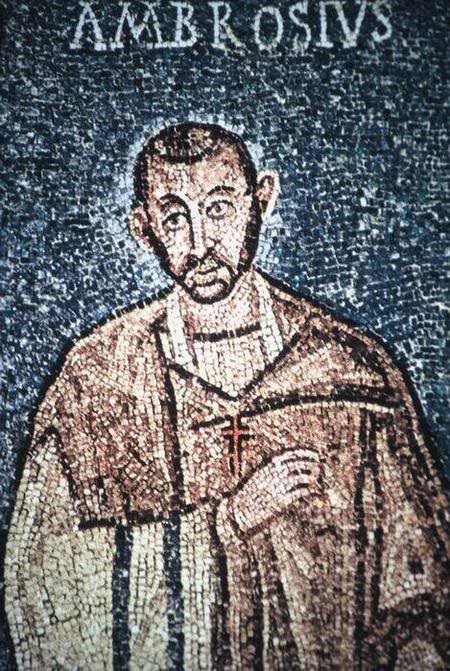
St. Ambrose of Milan – Savior of the Nations, Come

This is one of my favorite Advent hymns. It has some of the most powerful lines in the history of Christian hymnody, written by one of the first to really emphasize congregational participation in worship, Ambrose of Milan.

This hymn is also deeply theological. In Ambrose’s words we find the various theological controversies of the day reflected. Namely, the heresy of Arianism, which said that Jesus Christ was not fully divine, is combated in verse 4. Nestorianism, which argued that Jesus Christ was not fully human, is combated in verse 3. But beyond that, the hymn promotes the wonder and awe that we should all have when contemplating the mystery of the Incarnation. Verse three into the first phrase of verse 4 gives me goosebumps. Every time.

Give a listen to Christ Our King’s arrangement of this hymn from the 4th century. I hope it instills in you the wonder that it did for its first singers in Milan.

1 Savior of the nations, come,
Virgin’s Son, make here Your home!
Marvel now, O heav’n and earth,
That the Lord chose such a birth.

2 Not by human flesh and blood,
By the Spirit of our God,
Was the Word of God made flesh —
Woman’s offspring pure and fresh.

3. Here a maid was found with child,
Yet remained a virgin mild.
In her womb this truth was shown:
God was there upon His throne.

4. Then stepped forth the Lord of all
From His pure and kingly hall;
God of God, yet fully man,
His heroic course began.


Savior of the Nations, Come
St. Ambrose of Milan, 4th c.
Translation of verses 1 and 2 by William M. Reynolds, 19th c.
Translation of verse 3 by the Lutheran Service Book, 2006
Translation of verse 4 by F. Samuel Janzow, 20th c.

Tune: Johann Walter, Wittenburg, 16th c.
Arranged by: Timothy R. LeCroy 2016

Performed by Christ Our King Musicians
Vocals: Tim LeCroy and Liv Cordray
Violin: Erica Kallis
Piano: Liv Cordray
Guitar: Tim LeCroy
Bass: Tim LeCroy


If you want to be added to my Advent devotional emails, just leave a comment below!


Why Pray the Hours? – Reflections on Reformation

The church throughout her history has kept regular, set times of prayer each day. Should modern Christians reacquire this ancient practice?

Note: this begins a series on my blog called Reflections on Reformation which will be running this year in commemoration of the 500th anniversary of the onset of the Protestant Reformation.

Early on in the history of the church, Christians understood that the 1st century Jewish practice of meeting for prayer at set times of the day was a good and biblical practice to continue. We find references to this in several places in Scripture. In Acts 3 we find Peter and John attending a set prayer at the temple at 3PM. Acts 10 seems to reference Peter continuing this practice in his devotional life as he was praying at the ninth hour (3pm). Later in the story he prays at the sixth hour (noon).  Pentecost occurred at the third hour of the day (9 am). In Jesus’s parable in Luke 18 we find two men going up to the temple to pray. While he does not tell us the exact hour, it was a corporate prayer service they were attending. Simeon and Anna prayed in the Temple continually, it says in Luke 2. We tend to assume this is individual devotional prayer, but it would make more sense if this referred to them participating in the set prayers of the temple service. In Acts 22 we find Paul praying at the temple. In Luke 1:10 we find a multitude praying in the temple courts at the “hour of incense.” In Daniel 9 we find Daniel praying at the time of the evening sacrifice. He did this even though the temple was destroyed and there was currently no sacrificial ministry occurring.

In the Psalms there are multiple references to prayer and times of day. Psalm 88:13 says, “But I, O LORD, cry to you; in the morning my prayer comes before you.” Psalm 141:2 says, “Let my prayer be counted as incense before you, and the lifting up of my hands as the evening sacrifice!” Psalm 5:3 says, “O LORD, in the morning you hear my voice; in the morning I prepare a sacrifice for you and watch.” Psalm 59:16, “But I will sing of your strength; I will sing aloud of your steadfast love in the morning. For you have been to me a fortress and a refuge in the day of my distress.” Psalm 119:147, “I rise before dawn and cry for help; I hope in your words.” Psalm 55:17, “Evening and morning and at noon I utter my complaint and moan, and he hears my voice.” Psalm 119:148, “My eyes are awake before the watches of the night, that I may meditate on your promise.” Psalm 134:1-2, “Come, bless the LORD, all you servants of the LORD, who stand by night in the house of the LORD! Lift up your hands to the holy place and bless the LORD!” Psalm 119:62, “At midnight I rise to praise you, because of your righteous rules.” This is not to mention numerous places in the Psalms where specific times of day are referred to with relation to receiving mercy, hearing God’s word, groaning, crying out, meditating on his greatness, etc.

Perhaps this is also what is meant by the several references in the scriptures to praying night and day and praying without ceasing. This would make sense in the context of gathered set times of prayer, which we know were happening at least in the temple and also in an extension of those temple services in private prayers (see Peter and Daniel above).

Are we to take these numerous references to prayer at specific times of day as a descriptive coincidence? Or do the Scriptures intend to prescribe a practice for God’s people? Indeed, the early Christians saw these references as scriptural warrant to offer prayers at set times each day. Based on specific times mentioned in scripture (just before dawn, third hour, sixth hour, ninth hour, sunset, evening, midnight) and based on Psalm 119:164 which says, “Seven times a day I praise you for your righteous rules,” the early Christians established set times of prayer at these times.

https://pastortimlecroy.com/wp-content/uploads/2017/09/daf9c-xpray-the-hours-pagespeed-ic-msrl-z6coo.jpg

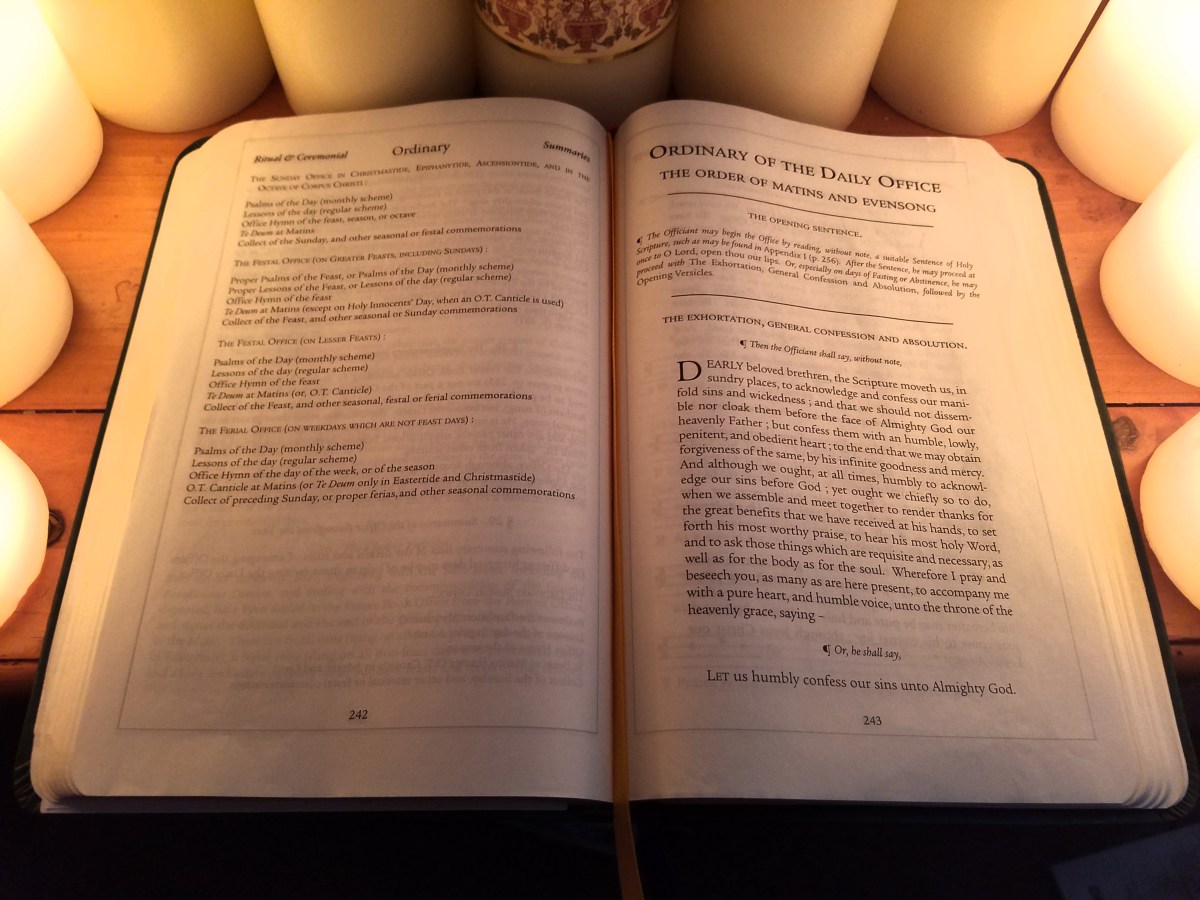
Not everyone prayed seven times a day in the early church, although for some this was the ideal (see Hippolytus of Rome’s Apostolic Constitutions). Yet the churches called those to prayer who were pastors and workers, those with vocations within the church and those who were able and willing to do so. Eventually communities sprang up who were devoted to prayer, such were the early monasteries. In the Rule of Benedict he lays out the liturgies for the set times of prayer along with the Psalms that were to be sung at them. In the ancient practice of the Benedictine Rule, the monastery was directed to sing through the entire Psalter every week.

This may be what Paul had in mind as well when he describes that the widows who are enrolled in the church when he writes in 1 Timothy 5:5, “She who is truly a widow, left all alone, has set her hope on God and continues in supplications and prayers night and day.” Interestingly, Calvin remarked on this in his Institutes in book 4:8:18-19 where he discusses the enrollment of widows as deaconesses to “discharge the public ministry of the church toward the poor and to strive with all zeal, continancy, and diligence in the task of love.” It is interesting because he does not address the apostolic command that these widows continue in supplications night and day. His reaction against late medieval monasticism was too strong to allow him to consider that possibility. In this he was not unlike many of the Protestant Reformers who saw the services of the hours as attempts to “appease God with songs or unintelligible mumbling.”

Despite Calvin’s protestation, the church has continued these daily prayers, the hours or divine offices throughout her history. At the time of the Protestant Reformation one of the main questions that arose was whether and which practices of the ancient and medieval church should be continued. While some protestant traditions continued the daily office in some form (mainly Anglicans and some Lutherans), most of the Protestants jettisoned the daily office in favor of the teaching ministry of the church. Calvin himself taught the scriptures daily, and for that reason we have an expansive collection of his biblical teaching. We might ask though, while teaching the scriptures is obviously a very good thing, should the corporate prayer ministry of the church have been abandoned? If the answer is no, what are ways that we can reincorporate this ministry into the life our churches today?

Evangelical churches have tended to relegate prayer to the private life of the individual believer. The emphasis on alone time with the Lord is in keeping with Christ’s teaching on prayer, and this was the main influence for Evangelical piety. Yet in the 20th century, Pentecostal and Charismatic movements have reacquired this ancient emphasis on prayer, while not taking up the ancient forms. Many charismatic prayer ministries seek to be faithful to God’s word by opening up prayer rooms where there is a sign-up and a schedule to ensure that prayers are being offered around the clock.

While this re-emphasis on prayer is to be commended, it largely focuses on the efficacy of prayer (a true and good notion), but not necessarily on the formative aspects of prayer for the Christian believer. In the early church it was both the efficacious and the formative aspects of prayer that shaped the church’s practices. Could we glean from this formative aspect of prayer today?

There has been much work recently in this area. James K. A. Smith’s work on Christian formation has drawn deeply from prayer’s formative aspect and the goodness of this for Christian formation. Additionally Greg Thompson in his public teaching ministry has made this a focus. Both Thompson and Smith have drawn from the life of the ancient church in its rich liturgies and from the Rule of Benedict which prescribes prayer as a way of life for disciples of Christ. It should be noted that both Smith and Thompson are active in the Reformed context, Thompson being a pastor in the PCA and having given a series of foundational lectures at Covenant Theological Seminary on this topic.

What then are we to make of this? I’m not suggesting that every Christian should pray the seven offices every day. Yet it would be helpful if Evangelicals leaned into this rich tradition to form our congregations in some way. It is also very helpful, if not necessary, that those who are in vocational ministry participate in the daily office as a way to rest, recharge, and fulfill our callings to intercede as ministers of word and prayer.

I’ll offer several practical suggestions below.

  1. Offer avenues for daily prayer to congregants. This could be in the form of a prayer guide that the church produces, or suggestions of various smartphone apps which fulfill the same purpose. For example, each year for Advent and Lent my church offers a daily prayer guide to all our congregants to enter into daily prayer. Mind you, this is not seven times a day, but a suggestion and resource for engaging in once-daily prayer as individuals and families. Another option is to offer a page in the weekly service bulletin with all the lectionary readings for that week and encourage congregants to use that week’s service as a prayer guide throughout the week.
  2. Offer a mid week prayer service. Churches with access to facilities during the week could offer a mid-week vespers or matins (or both!) so that congregants who wish could attend to pray together and be shaped by these rich patterns of prayer.
  3. Pray daily as a church staff. If you have multiple staff who office at the same location, gather for morning prayer as you start each day. Make it a priority and block the time out on your schedule.
  4. Seminary Communities. Seminaries are uniquely positioned to enter into the richness of communal prayer. If chapels are more lightly attended than years past, perhaps a shift away from the didactic focus of a chapel sermon to the communal and formative act of prayer will reinvigorate seminary communities. Begin by exposing students and faculty to things like chanting psalms and saying the hours. Do the office for one or two of the chapel services a semester. Pick one day per semester to cancel classes and pray the hours (9am, 12, 3, and at sunset), encouraging the students and faculty to work in between the prayer services. Eventually begin offering morning prayer on a daily basis for those that desire it. Then sit back and see what the Lord does with it.
  5. Individual pastors. I encourage all pastors to say the office at least once a day. I say the morning office every morning (even Sunday before church!) except for my day off. This has been very beneficial for me in a number of ways, which I will detail in a future post.

Won’t this require too much work and take up too much time? The great thing about the office is that once you learn how it works, you don’t need to spend time preparing and practicing like we have done for many chapel services and Sunday services these days. Find someone who can lead it well. Find someone who can chant psalms. Then just show up and do it. Take 15-20 minutes out of your day (minimum) to spend time in community before the Lord. I promise that you will begin to see tangible results in the lives of those who participate.

Martin Luther is supposed to have said, “I have so much to do that if I didn’t spend at least three hours a day in prayer I would never get it all done.” There is no written evidence that he ever said that, though perhaps it was a oral tradition that was passed down through the ages due to its poignancy. Whether he said it or not, we must remember that Luther was a medieval monk who prayed the hours. That shaped him and formed him in his knowledge of the scriptures and in his love and knowledge of God. Augustine prayed the hours. Chrysostom prayed the hours. Anselm prayed the hours. In fact, all the theological giants of the ancient and medieval church prayed them in some form. Our fathers and mothers were steeped in scripture because of this. We often think that we know the bible well and understand it even better. But are we steeped in scripture to the level that our fathers and mothers were? Who recited the psalter by heart once a week? Who read through the bible at least every three years? Who daily spent hours in prayer before the face of God?


Want me to help you learn how to chant the psalms? Contact me.

Apps for the daily office
These apps are available in your app store. Note: these apps come from various theological traditions.

  • Mission St. Clare
  • Divine Hours, Vinyard Ann Arbor
  • Universalis
  • Daily Prayer from the COE
  • Do you know of others? Comment below!


Ambrose’s Advice to Augustine When Visiting Other Churches

A beautiful example of Christian discipleship

When I was in graduate school preparing for my doctoral comprehensive examinations on the history of eucharistic theology, I came across an insightful passage in Augustine’s letter to Januarius (Letter 54, found here). In this letter, Augustine relays to Januarius a situation he had with his mother who was scandalized when visiting a church in a distant city that did not worship the way she was accustomed. You see, Augustine was raised by his mother, Monica, according to the Roman rite, and during her sojourn with her son in Milan she was confronted with the different practices of the Milanese rite. All that to say that when traveling, she and Augustine went to church and she was putt off by the way they worshiped (the exact details are contained in the text below).

Now when I came across this passage I was a bit younger and more strident in my opinions about worship. To be sure, I still have a developed liturgical theology, but as I have aged a bit and grown from experience, I have softened a good deal. One of the things that softened me was Ambrose’s advice to Augustine (Was Monica’s scruple really his own?), and Augustine’s advice in turn to Januarius.

Here is another example how the wise Ambrose’s shepherding helped the young Augustine to mature. I think it’s a beautiful picture of Christian discipleship. Like Augustine, my own opinions in my younger days were such that I could not truly participate in worship with any sort of true and humble spirit of unity for all the scruples my sinful heart was throwing before my eyes. I’ve had to repent of that, and this passage from Augustine helped me to do that. Perhaps it will help you as well.

Be mindful that Augustine uses some strong words at the end of the passage, but we can forgive him as he was confronted by violent schism in his native diocese of Hippo and the surrounding areas near Carthage in Northern Africa.

There are other things, however, which are different in different places and countries: e.g., some fast on Saturday, others do not; some partake daily of the body and blood of Christ, others receive it on stated days: in some places no day passes without the sacrifice being offered; in others it is only on Saturday and the Lord’s day, or it may be only on the Lord’s day. In regard to these and all other variable observances which may be met anywhere, one is at liberty to comply with them or not as he chooses; and there is no better rule for the wise and serious Christian in this matter, than to conform to the practice which he finds prevailing in the Church to which it may be his lot to come. For such a custom, if it is clearly not contrary to the faith nor to sound morality, is to be held as a thing indifferent, and ought to be observed for the sake of fellowship with those among whom we live.

I think you may have heard me relate before, what I will nevertheless now mention. When my mother followed me to Milan, she found the Church there not fasting on Saturday. She began to be troubled, and to hesitate as to what she should do; upon which I, though not taking a personal interest then in such things, applied on her behalf to Ambrose, of most blessed memory, for his advice. He answered that he could not teach me anything but what he himself practised, because if he knew any better rule, he would observe it himself. When I supposed that he intended, on the ground of his authority alone, and without supporting it by any argument, to recommend us to give up fasting on Saturday, he followed me, and said: “When I visit Rome, I fast on Saturday; when I am here, I do not fast. On the same principle, do you observe the custom prevailing in whatever Church you come to, if you desire neither to give offence by your conduct, nor to find cause of offence in another’s.” When I reported this to my mother, she accepted it gladly; and for myself, after frequently reconsidering his decision, I have always esteemed it as if I had received it by an oracle from heaven. For often have I perceived, with extreme sorrow, many disquietudes caused to weak brethren by the contentious pertinacity or superstitious vacillation of some who, in matters of this kind, which do not admit of final decision by the authority of Holy Scripture, or by the tradition of the universal Church or by their manifest good influence on manners raise questions, it may be, from some crotchet of their own, or from attachment to the custom followed in one’s own country, or from preference for that which one has seen abroad, supposing that wisdom is increased in proportion to the distance to which men travel from home, and agitate these questions with such keenness, that they think all is wrong except what they do themselves.

SOURCE: Augustine, Letter 54 to Januarius, CCEL (accessed here).

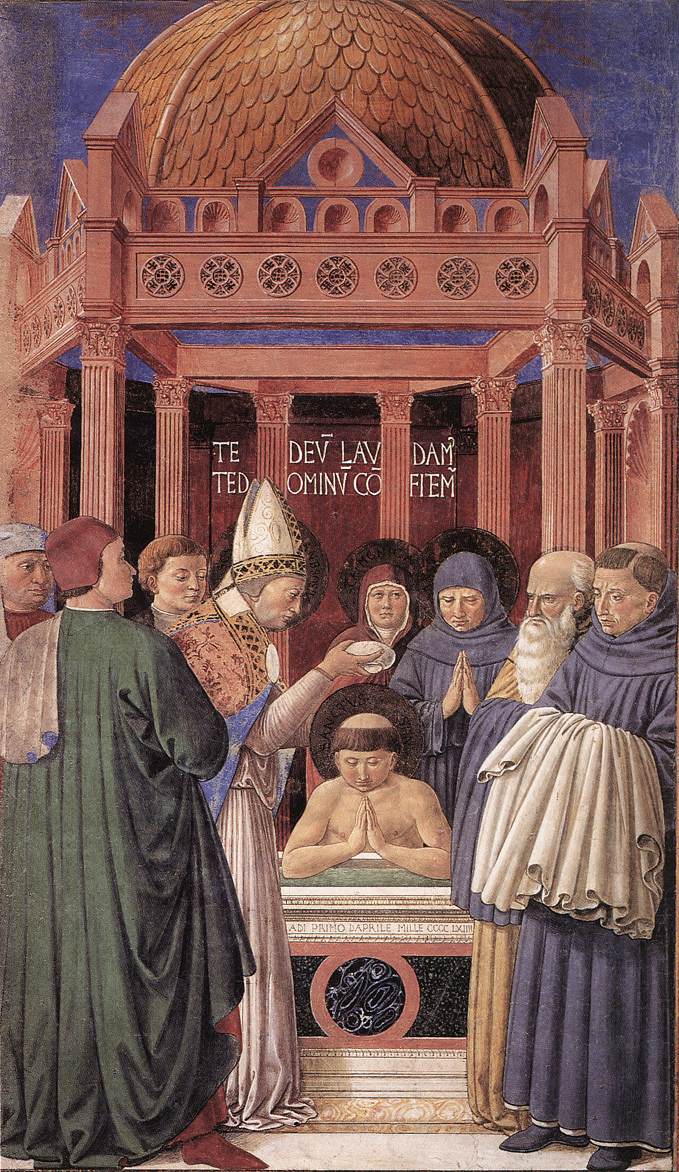
IMAGE: Gozzoli, Ambrose baptizing Augustine with the words of the hymn Te deum (Source: Wikimedia Commons) 15th c.

To Ash or not to Ash

To Ash or Not to Ash - Theopolis

Today is Ash Wednesday, and as many Christians of the Protestant formerly “low church” persuasion are reacquiring some of the good and ancient practices of the church, one question in particular comes to the front: to ash or not to ash? That is, while many of us are finding great spiritual value in keeping Lent, we are also wondering, what about the whole ashes on the forehead thing?

So, why even make ashes an option? Here, briefly, are the reasons. Let me first say that I resonate with the idea of not offering ashes on Wednesday. The practice is not commanded in scripture, and it is not something that I consider to be essential to the life of the church. Therefore, I do not judge those who abstain from the practice any more than I do those who practice it.

That said, I do believe the imposition of ashes to be a good and right thing to do. My reasons are that the symbolism is taught in the scriptures, the practice has a very ancient heritage in the church, and that rituals are important to us as human beings and especially as Christian believers.

>>To read the rest, click over to the Theopolis Institute Blog.

The Importance of Reading Scripture in Worship

Al Mohler comments on a Mark Gali article in Christianity Today remarking on modern Christians’ lack of appetite for hearing passages of Scripture read in church.

This is why we keep the traditional set of scripture readings in our services at Christ Our King. I often tell our people that my opinion as an expositor and preacher may be informed by education, wisdom, and experience, but my sermons are not inspired by the Holy Spirit. We need to read and hear Scripture so that we can make space in our worship for the Lord to work in changing our hearts and lives.

One way to look at it is that the reading of Scripture should be the main event. The sermon is simply explaining and applying what we have just read from God’s holy and inspired Word. All too often, it is the sermon and not the Scriptures (or communion!) that is the main event. This is a modern aberration in the history of Christian worship. Christian worship has always made the reading of Scripture the primary event, as it should be. In the standard worship service of most of the 2,000 years of Christian worship, passages of God’s Word were read from the Old Testament, The New Testament, and the Gospels. These lessons, as they are called, are often thematic to the time of the church year. At other times they relate to each other as one main text is being moved through sequentially (the Gospels, for instance).

In the historical worship service, the reading of scripture is highlighted and glorified by being interspersed with the singing of Psalms, Scripture Songs, and Hymns. In this kind of service, it is God’s Word that is magnified and honored, not the opinions and self-importance of one person. Is it any wonder that as the practice of reading scripture has lessened in our churches that the cult of personality has increased with celebrity pastors and mega-churches? What would happen if we read more scripture, sang more scripture, celebrated communion more often and had a shorter sermon? GASP!

Are we afraid to let God’s word to take precedence in our worship? Isn’t it a bit conceited and even idolatrous to think that my sermon could ever do a better job of edifying and strengthening the flock than the Holy Spirit working through the Word of God?

Knox on Baptism

We utterly condemn the vanity of those who affirm the sacraments to be nothing else than naked and bare signs. No, we assuredly believe that by Baptism we are engrafted into Christ Jesus, to be made partakers of his righteousness, by which our sins are covered and remitted, and also that in the Supper rightly used, Christ Jesus is so joined with us that he becomes the very nourishment and food for our souls.

-John Knox, The Scots Confession, 1560

http://en.wikipedia.org/wiki/Scots_Confession

An Ancient Homily for Holy Saturday

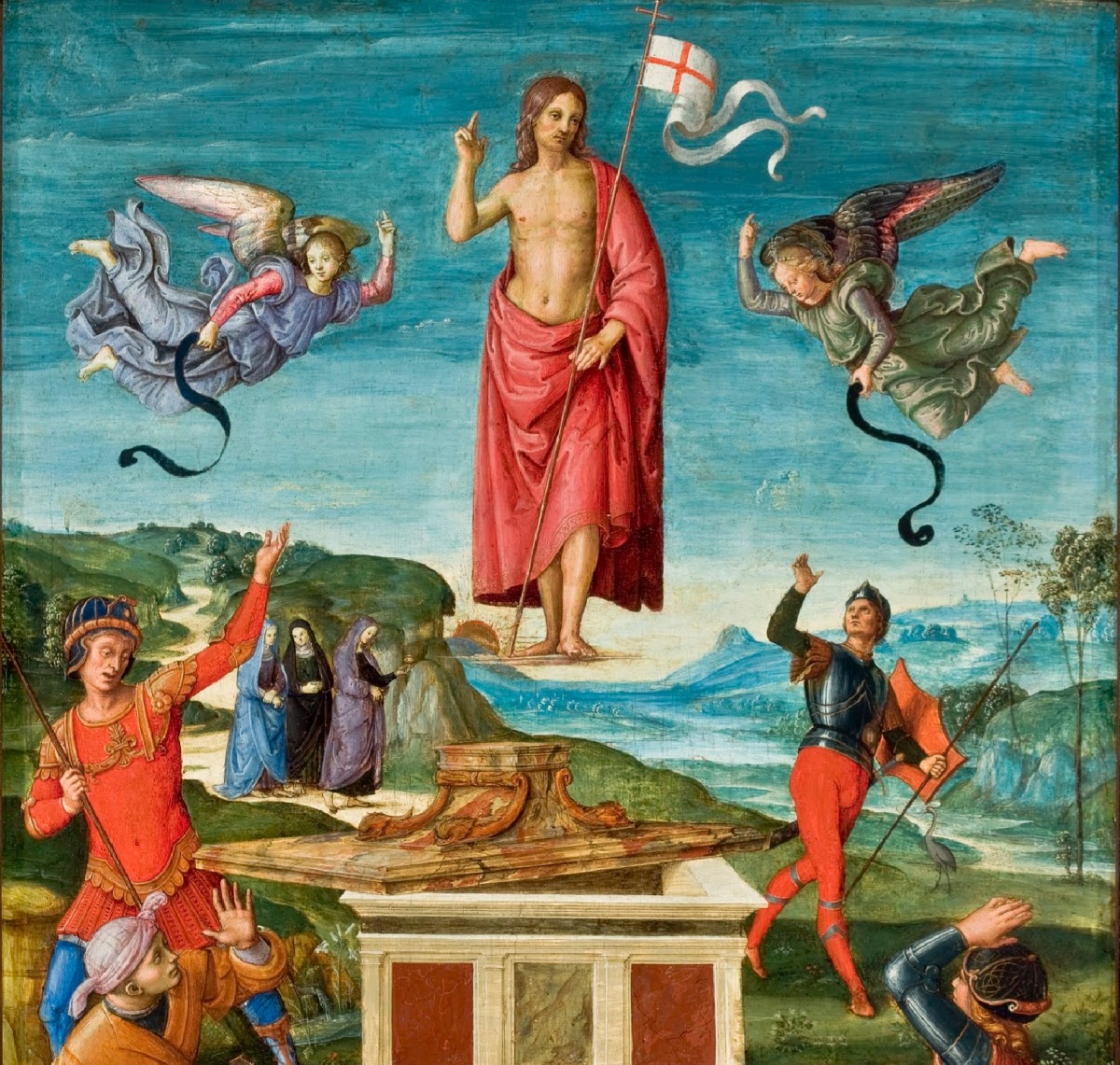
What is happening? Today there is a great silence over the earth, a great silence, and stillness, a great silence because the King sleeps; the earth was in terror and was still, because God slept in the flesh and raised up those who were sleeping from the ages. God has died in the flesh, and the underworld has trembled.

Truly he goes to seek out our first parent like a lost sheep; he wishes to visit those who sit in darkness and in the shadow of death. He goes to free the prisoner Adam and his fellow-prisoner Eve from their pains, he who is God, and Adam’s son.

The Lord goes in to them holding his victorious weapon, his cross. When Adam, the first created man, sees him, he strikes his breast in terror and calls out to all: ‘My Lord be with you all.’ And Christ in reply says to Adam: ‘And with your spirit.’ And grasping his hand he raises him up, saying: ‘Awake, O sleeper, and arise from the dead, and Christ shall give you light.

‘I am your God, who for your sake became your son, who for you and your descendants now speak and command with authority those in prison: Come forth, and those in darkness: Have light, and those who sleep: Rise.

‘I command you: Awake, sleeper, I have not made you to be held a prisoner in the underworld. Arise from the dead; I am the life of the dead. Arise, O man, work of my hands, arise, you who were fashioned in my image. Rise, let us go hence; for you in me and I in you, together we are one undivided person.

‘For you, I your God became your son; for you, I the Master took on your form; that of slave; for you, I who am above the heavens came on earth and under the earth; for you, man, I became as a man without help, free among the dead; for you, who left a garden, I was handed over to Jews from a garden and crucified in a garden.

‘Look at the spittle on my face, which I received because of you, in order to restore you to that first divine inbreathing at creation. See the blows on my cheeks, which I accepted in order to refashion your distorted form to my own image.

‘See the scourging of my back, which I accepted in order to disperse the load of your sins which was laid upon your back. See my hands nailed to the tree for a good purpose, for you, who stretched out your hand to the tree for an evil one.

`I slept on the cross and a sword pierced my side, for you, who slept in paradise and brought forth Eve from your side. My side healed the pain of your side; my sleep will release you from your sleep in Hades; my sword has checked the sword which was turned against you.

‘But arise, let us go hence. The enemy brought you out of the land of paradise; I will reinstate you, no longer in paradise, but on the throne of heaven. I denied you the tree of life, which was a figure, but now I myself am united to you, I who am life. I posted the cherubim to guard you as they would slaves; now I make the cherubim worship you as they would God.

“The cherubim throne has been prepared, the bearers are ready and waiting, the bridal chamber is in order, the food is provided, the everlasting houses and rooms are in readiness; the treasures of good things have been opened; the kingdom of heaven has been prepared before the ages.

“Easter” is not a bad word

It is once again the time of year that folks begin to ramp up for Easter. Easter bunnies, Easter egg hunts, and other various trappings are beginning to be ubiquitous. Now, I will be the first to recognize that the secular (and especially corporate) focus on fluffy bunnies, eggs, and the like is an attempt to sterilize the explicit Christian content of Easter, specifically that of the resurrection of Jesus from the dead. Yet, I would also argue that Christians who wish to push back against that sterilized (if not secularized) view should not abandon these traditional symbols of Easter, but should fully embrace them and refill them with their Christian meaning.

The same can be said of Christmas. The traditional symbols of Christmas- St. Nick, trees, gifts, feasts- may have been sterilized, secularized, commercialized, and paganized, but that does not change the fact that St. Nick is a real Christian saint, that the Wise Men really offered gifts to the baby Jesus, and that trees and feasts also have their origin in biblical theology. No more should we as Christians abandon these symbols of Christmas than we should abandon the traditional symbols of Easter.

Yet, while I have asserted that the traditional symbols for Easter, including the word “Easter” itself, are Christian in origin, I have not yet substantiated that claim. What is my claim exactly? Well you may have heard that the word “Easter” is of German pagan origin. As a result we Christians sometimes get a little uneasy about using that word. In this post I set out to argue that the word “Easter” is not of pagan origins, and that the word “Easter” itself is actually a Christian metonym for the word “resurrection.”

What is a metonym exactly?  A metonym is a word-symbol that represents another more abstract word that can be used in place of that word. For example, a scepter is something that a king or queen might hold as a symbol of their authority. Yet the word “scepter” itself can be used as a metonym for the word “authority.” In other words “holding the scepter,” can mean “possessing authority.” This is like when Jacob prophesies that the scepter will not pass from the hand of Judah in Genesis 49. There, the word “scepter” is a metonym for kingship or rule. Another way to think of it is that a metonym is a metaphorical or symbolical kind of synonym.

So the word “Easter” is a metonym for “resurrection.” Now, where do I get that? Well, from none other than the Oxford English Dictionary (OED), widely considered to be the definitive record of the English language. Now, as far as lexicographical philosophies go, the OED is descriptive and not prescriptive. In other words, what  the OED sets out to do, in an academically rigorous fashion, is to describe the various usages of a word throughout the history of the English language. This is opposed to prescriptive lexicography, which is the notion that a dictionary should impose its view of language on others. As opposed to stating how a word should be used, rather, descriptive lexicography presents how words have been used already.

Now where I find the OED supremely helpful is in its record of word origins and etymologies. If we look to the entry for “Easter,” what we find in the etymological section is that the word is not of pagan German origin, but of Greek origin. What we find is that far back into our linguistic heritage (that would be the Indo-European family of languages) the word “east” has been a metonym for the rising of the Sun or the coming of the dawn. Thus the Old Dutch ōster, the Old Saxon ōstarthe Middle Low German ōsteren, or the Northumbrian Eostre, never found their origins in any pagan festival, but in the fact that the Sun rises in the East (der Osten is German for “the East”). Thus East(er) means dawn, or the rising of the Sun. This word “Easter” became associated metonymically with the vernal equinox in Germanic lands, and subsequently after their acceptance of Christ, the same word became metonymically associated with the Christian festival of the resurrection of our Lord.

Now the fact that Jesus rose from the dead at or near the vernal equinox is no coincidence. The vernal equinox has always been associated as the creation of the world (in the Hebrew conception), and Jesus is considered to have both been conceived and to have died at or near the vernal equinox, coinciding with the creation of the world and the Hebrew deliverance from Egypt (this is why the Introit for Easter Sunday is the Song of Moses from Exodus 15). Thus a new world comes into being through the resurrection of Christ at the same time of year that the world itself is growing in light (in the Northern Hemisphere) and at the exact point when that light begins to over take the darkness (which by the way is why Easter can never be before the vernal equinox, before the point of the year when light overtakes darkness).

Now, reader, you may also note that only German and English speakers call Easter “Easter,” while the rest of the world calls the festival “Pascha,” which is Greek for “the Passover.” Well let us ponder this for a moment. Germans and English live in much more Northern latitudes than do Greeks or Latins. Do you think that perhaps in the German mind, where the darkness of winter is so much more pronounced than in more southerly latitudes, the coming of the spring might so much more be associated with the resurrection of our Lord? In the most Northern parts of Europe, darkness nearly overtakes the day completely in the depths of winter. Easter then is the day when light finally has defeated the dark. For Greeks and Latins this astronomical reality is not so much of a big deal because they never experienced the disparity between light and dark during winter to the degree that the Germans did.

So, where did this misconception about Easter being pagan come from? The fact of the matter is that there is only one source in existence that claims that the word has such an origin. Now that this source is quite venerable (literally, in fact) explains the stubbornness of this myth. Sadly, it comes from one of my heroes of the faith, the Venerable Bede, the Northumbrian Saint, who while otherwise a very respectable scholar and theologian mentions in one place while talking about the origin of their word for the month April that the word Eostre comes from the celebration of a pagan godess. While Bede is quite the authority on most matters, there is no other source to collaborate this claim, and the OED states that this etymological claim is “less likely” (which is academic speak for not holding much water), and that some scholars think that Bede may have made the whole thing up (for what reason we cannot guess).

If we think about this logically we may suppose that there may have been a pagan feast for the coming of spring, and if so why wouldn’t there have been? Wouldn’t you celebrate the ending of the long dark winter if you lived in Northern Europe? Yet, the word Easter is not pagan in origin, but an ancient way of referring to the rising of the Sun and the coming of spring.

Besides, feasting is biblical in origin, so it is ever as much likely that the pagans started having a springtime feast in response to the Christian festival of the resurrection of our Lord.

So, don’t be afraid of the word Easter. Gladly and loudly go about wishing everyone a “Happy Easter!” this Sunday without reservation. Because Easter is not a bad word.

And when you Fast

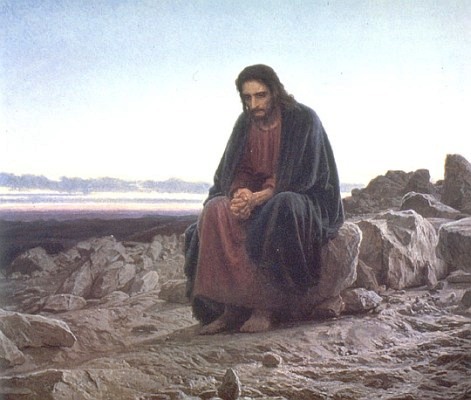
Christ in the Wilderness- Ivan Kramskoy- 1872

This is part three of a series on Lent. Part one: On the Origins of Lent; Part two: The History of Lenten Fasting.

Fasting is a biblical practice. In the sermon on the mount Jesus denounces the false fasts of the Pharisees, yet he assumes that fasting will nevertheless be a part of the Christian life. Twice in Matthew 6:16,17 Jesus says, “When you fast.” That Christians should fast is assumed by our Lord.

Despite this clear biblical teaching, while I’ve heard a great deal from Reformed teachers concerning when we shouldn’t fast and what fasting isn’t about, I’ve heard scarcely little written in a positive fashion about when and how we should fast. Now, what the recent teaching on fasting has done well is to offer a corrective to the idea that fasting is some sort of spiritual discipline. Fasting is not a spiritual discipline. In the Bible, fasting is always accompanied by prayer and is done for a specific purpose. Just do a simple word search and see for yourself.

Yet while we have had this needed corrective to the concept of fasting, we have not yet replaced it with a helpful, positive view of what fasting should be. This is what I want to explore for a bit in this article. Secondly, I want to explore whether this new reformed kind of fasting has a place in Lent.

What then is fasting for, and when should we do it? In the Bible people always fast for a specific purpose, and fasting is always coupled with prayer. Therefore, you never find a person in the Scriptures fasting as a general spiritual discipline (except the Pharisees). There is always a reason for the fast. People in the Bible fasted when they wanted an answer to prayer.

Furthermore, there is a strong connection in the Bible between fasting, mourning, and repentance. I will give two examples of this from the book of Samuel. In 1 Samuel 7, the people were oppressed by the Philistines and longed for deliverance. Samuel, now Judge of Israel, calls the people to put away their idols and repent of their sins so that Yahweh will deliver them. The people then respond to Samuel by obeying his word, and then in verse 6 we find that they fast and pray as a sign of repentance and to ask Yahweh to deliver them, “So they gathered at Mizpah and drew water and poured it out before the LORD and fasted on that day and said there, “We have sinned against the LORD.” And Samuel judged the people of Israel at Mizpah.” So the people fasted as a sign of repentance and the Lord delivered them from the Philistines.

Another example of this is from the life of David in 2 Samuel 12. After David commits adultery with Bathsheba and is called out for his sin, he repents of it. Still, as a result of David’s fall, Nathan says that Yahweh is going to take his first son by her. When the child becomes sick (the text says that Yahweh afflicted the child) we find this in 12:16, ” David therefore sought God on behalf of the child. And David fasted and went in and lay all night on the ground.” Again, we find that fasting is coupled with mourning, repentance, and a request for deliverance.

Example after example from the Scriptures can be brought forth in support of this general idea (see Nehemiah 9 and Joel 2 for two other examples). What the biblical data shows us is that we fast when we are in a very serious situation. We fast when we are mourning and asking for deliverance. We fast when we are  penitent. We fast as a physical manifestation of our urgency in crying out to God to hear and answer us in our time of need.

The criticism of fasting in the Bible that we find from Jesus and the prophets is not that it is a bad practice, but the criticism is that it is not done in a sincere way. The Old Testament reading for Ash Wednesday in the Book of Common Prayer is Isaiah 58:1-12. In that text the fasting is performed in an outward but insincere way. The text continues that fasting must be coupled with acts of righteousness. It must be accompanied by true contrition and true faith. Outward acts alone are not enough, but they must flow from the inward condition of the heart.

Given this, should a Christian undertake regular times of fasting, or should it be irregular and infrequent? Ask yourself: is the church called to sacrifice itself for the life of the world? Do we take seriously our call to die to self? Is it just when circumstances in my own life are bad that I should mourn and fast, or should I, we, the Church, fast and mourn on behalf of our broken, fallen world, our friends and neighbors, asking for our God to deliver it from evil and for His Kingdom to come? Do we not see enough reasons around us to fast and mourn for the deliverance of our city? Our nation? Our world? Do we have our eyes open?

Perhaps we should view fasting as a type of memorial like the Lord’s Supper, though to a lesser degree. In the Scriptures a memorial is something that primarily serves to remind God, and only secondarily serves to remind us. A good example of his is the rainbow. In Genesis 9:13-15, God tells Noah that he will set the rainbow in the clouds to be a reminder to Him, and that when God sees it, God will remember his covenant with the creation not to ever destroy it again by a flood. Of course, since the rainbow is a physical sign that we can also see, we are also reminded of God’s promise when we see it, yet it is primarily to remind God. In the same way, the Lord’s Supper is a memorial, and when we celebrate the Lord’s Supper we are primarily reminding God of his covenant promises to us, and only secondarily reminding ourselves of Christ’s death on our behalf. Nevertheless, the two, God’s remembering and our remembering, are inseparable.

In the same way, the Bible also speaks of prayer as a memorial. One clear example in Acts 10:6 where God appears in a vision to Cornelius the gentile and tells him that his prayers and his alms have ascended as a memorial before God (see also Acts 10:31). As a result, Cornelius is to send for Peter who will preach the gospel to him and his household. As we know, Peter comes, he preaches the gospel, and the Holy Spirit falls on the gentiles assembled there as He did at Pentecost. Then Peter baptizes all of them.

Now my point in mentioning this is that twice in this account by Luke, in verse 6 and in verse 31, prayer is called a memorial, and it is clearly a memorial that reminds God. In the same way we can see fasting as intensified prayer and that fasting too is a kind of memorial, a sacrificial offering that ascends to the Lord and gets his attention. Now, this may raise our hyper-calvinist hackles, but this is the way the Bible speaks.

Therefore if prayer is a memorial and fasting is an intensified type of memorial prayer, then  we can see why the church would want to enter into regular periods of prayer and fasting for the sake of the broken world around us. We are called as the church to take up our crosses, deny ourselves, and follow Jesus: follow Jesus into the wilderness; follow him as he gives his life for the life of the world. Lenten fasting is one small way in which we follow Christ by offering up our memorial before the face of God, asking him to act on our behalf.

Therefore what are we fasting and praying for in Lent? We are mourning and fasting because of our own sins. We are acknowledging our part in the broken condition in this world, and we are calling on God to act in our lives to heal us of our own sinfulness and to help us to lead lives of righteousness. Furthermore, we are fasting and praying for the life of the world. We are crying out to God to come and fix our broken world, and we are denying ourselves as a memorial before his face that he will act to strike down evil and cause his kingdom to come in evermore increasing ways in this world. In this way, Lenten fasting is a sacrificial act by the church on behalf of our world. Through it we are crying out to God to fix all the brokenness and pain we see around us: all the death, the sin, the wickedness, the injustice, the poverty, the disease, the war, the infertility, the loss, the hurt, the loneliness – every single way in which this world is fallen and broken – we are crying out to God to heal, to save, to deliver.

So, you see, we do have reasons to fast during Lent. We have good biblical and theological reasons for our fasting and abstinence. Through our fasting we are acting as living sacrifices, living memorial stones, asking God to heal our world, a world that we can surely seen is in desperate need of His healing touch.

This is part three of a series on Lent. Part one: On the Origins of Lent; Part two: The History of Lenten Fasting.