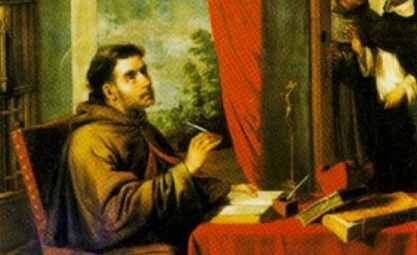
Did Augustine really say, “The Church is a whore.”?

I hear this quite frequently, “As St. Augustine said, ‘The Church is a whore, but she’s my Mother.”

The problem is that St. Augustine never said that.

If you try to run down the source of the quote, the trail ends in a book written by Tony Campolo. In Letters to a Young Evangelical, chapter 6 he writes, “I would urge you to consider this carefully, and to think about the words of St. Augustine, ‘The church is a whore, but she’s my mother.’ That statement brilliantly conveys how I feel about the church.” He goes on to argue that despite all the failures and sins of the church, she is still our mother, and thus we should be a part of her. Where Campolo got that quote is a mystery because he gives no citation. But if you look further back you will not find it, because it does not exist.

How do I know? Well first off, as someone who has read an awful lot of Augustine and an awful lot about Augustine, I have never come across that quote, and that quote just doesn’t seem like something he would say. A few years back after I heard it yet again I decided to try and find the source. That’s when I discovered that the trail went dead at Campolo. Luckily, as an academic I have access to better search engines than Google.

I went to two of the best search databases for Christian Latin texts, the Patrologia Latina and the Brepols Library of Latin Texts. Between the two of them they contain pretty much everything written by ancient Christian writers in the Latin language. I searched for church (ecclesia) and mother (mater) using several different synonyms for whore (meretrix and prostituta being the main ones) and nothing came up exactly like the quote. That leaves me 99% sure that Augustine never said that.

The closest I was able to find is from Sermon 213 on the Creed. What he says there is significant so I’ve translated it for you:

Let us honor the Catholic Church, our true Mother, the true Bride of her Husband, because she is the wife of so great a Lord. And what shall I say? How great is that Husband and of singular rank, that he discovered a prostitute and made her a virgin. Because she should not deny that she was a prostitute, lest she forget the mercy of her liberator. How can it be said that she was not a prostitute when she fornicated with demons and idols? Fornication was in the heart of everyone; a few have fornicated in the flesh, but everyone has fornicated in his heart. And He came and made her a virgin; he made the church a virgin.*

Here we find the concepts mother, church, and whore, but we do not find that direct quote we are seeking. In fact there is a significant difference between the quote Campolo gave us and what Augustine actually said. Augustine here is saying that the Church was a whore because she formerly lusted after demons and idols. She is no longer a whore because her great husband, Jesus Christ, has liberated her from her thraldom, forgiven her sins, and made her his virgin bride.

Campolo is trying to make the point that although the church fails she is still the church. That is right and good. However, that is not Augustine’s point. Augustine is preaching about the glorious redemption that the great Husband of the church has accomplished. She is praised because of what He has done in and for her. She is our Mother because He is her Husband and because He has sanctified her. To make Campolo’s point resonate with what Augustine actually said, we should love and cherish the church, in spite of her failures, because she is Christ’s bride. Because she is his only bride. He found her, liberated her, sanctified her, and married her. That’s why we love her even when she is imperfect, because she is the only bride Christ has. He makes her great.

It is then grossly wrong to say that the Church is a whore. In fact that is blasphemous to say. Augustine himself says so in Sermon 10, which I found when searching for this supposed quotation:

I read in the Psalm, “The one who disparages his neighbor in private, I will destroy,” (Psalm 101:5).  If it is right for [God] to destroy the one who disparages his neighbor in private, then how much more right is it for Him to destroy the one who publicly blasphemes the church of God? When he says “She is not who she is!” When he says, “What is ours is partial.” When he says, “She is a whore.”**


UPDATE: Cyprian wrote concerning this concept in his treatise On the Unity of the Church. Since Augustine cites Cyprian extensively, even from this treatise, it is likely that he learned this concept from the African great himself.

The spouse of Christ cannot be adulterous; she is uncorrupted and pure. She knows one home; she guards with chaste modesty the sanctity of one couch. She keeps us for God. She appoints the sons whom she has born for the kingdom. Whoever is separated from the Church and is joined to an adulteress, is separated from the promises of the Church; nor can he who forsakes the Church of Christ attain to the rewards of Christ. He is a stranger; he is profane; he is an enemy. He can no longer have God for his Father, who has not the Church for his mother. If any one could escape who was outside the ark of Noah, then he also may escape who shall be outside of the Church.

*My translation from the Latin text edited by G. Morin: Sancti Augustini Sermones post Maurinos reperti in Miscellanea Agostiniana, vol. 1, 1930, p. 447.

**My translation from the Latin text edited by Michael Petschenig, CSEL 53, p.177, available here: https://archive.org/stream/CSEL53#page/n269/mode/2up


Infant Baptism in the History of the Church

Infant baptism was the universal practice of the church until after the Protestant Reformation. The early church was not credo-baptist.

Note: I wrote this post in response to a question I received from a fellow pastor. I like to address practical issues that pastors and Christians are facing on the ground. If you would like me to address a particular question, drop me a note!

Ancient practice in the Church sets an important precedent for present day practice. This certainly doesn’t mean that Christians are bound to only do things as they have always been done, but the principles of catholicity and unity move us not to break from historic church practice on a particular item unless there is a strong biblical rationale.  Where there is not a strong biblical rationale, or, strong cases could be made on either side, the precedent of church tradition should play a factor in making the decision.

Such is the case with infant baptism. Credo-baptists and paedo-baptists both present biblical arguments that either side is fully convinced of. Thus, church tradition is often brought into the discussion to lend weight to the support of one side or another.

So what does church tradition have to say on the issue of infant baptism? What was the historic practice of the church from the earliest days?

Before we go further, I would like to make a few distinctions and give a few definitions. First of all, credo-baptism shall be defined as the conviction that only those who credibly and consciously profess belief in Christ are valid subjects for baptism. This can also be referred to as believers-only baptism. Second, paedo-baptism shall be defined as the conviction that infants of at least one believing parent are valid subjects of baptism. The paedo-baptist conviction therefore does not exclude baptism of adults who have converted to Christianity and have never been baptized. I shall also use the term infant baptism as synonymous with paedo-baptism.

Also, I would like to make two caveats. First, I am fully aware of the biblical evidence and rationale for the paedo-baptist position and can readily give it. This point of this article is to give historical evidence in the face of two positions that both claim to have biblical rationale. I am also fully aware that credo-baptists have fully developed biblical rationale for their position (though I disagree with them). The point of this post is to address the historical precedent as a sort of “tie-breaker” to the biblical stalemate. Second caveat: I fully embrace my Baptist brothers and sisters as fellow believers in Christ. This is a intramural discussion, and one I offer not with rancor, yet with firmness of conviction.


Infant baptism was the universal practice of the church until after the Protestant Reformation. At the onset of the Reformation, none of the magisterial reformers abandoned the practice of infant baptism, but began to vigorously defend it with fresh biblical rationale based on Covenant Theology. The Reformers went so far in their defense of paedo-baptism that none of them even advocated the re-baptism of those who had received baptism in the pre-Reformation church. To this day, churches that are the ecclesial and theological heirs of the Protestant Reformers have continued that practice of infant baptism. These would be Lutherans, Presbyterians, Reformed of various kinds, and Anglicans (which I would argue fall in the Reformed camp, but someone may protest that I left them out). In these churches there is a continuous and consistent theology and practice of infant baptism that goes back to the days of the early church.

Thus infant baptism was the universal practice of the Christian Church until some Reformation leaders began to question many of the standard practices of Christianity and the Christian life. These Radical Reformers (what scholars call the anabaptists) opposed padeo-baptism, and they advocated for the re-baptism (thus the name anabaptist, one who re-baptizes) of those who had been baptized before the Reformation. But the 16th century anabaptists can not be properly described as holding to credo-baptism as I have defined it. These radical reformers made a very high hurdle to cross before baptism, not simply allowing those who made a credible profession of faith come to the font, but only allowing those who had proven themselves over a long period of time as committed Christian disciples. The radical reformation reserved baptism for the few, a subset of Christian believers. This is not the modern Baptist position. Furthermore, there are many aspects of 16th century anabaptist movements that modern baptists do not adhere to, specificaly, pacifism, communitarianism, and mysticism. The proper heirs of the 16th c. Radical Reformation are to be found in the Menonite and Amish churches, not in modern Baptist churches. (NOTE: see James R. Payton, Jr, Getting the Reformation Wrong, pp. 160-172).

Baptists, rather, are the spiritual heirs of the English Reformation of the 16th-17th centuries. As such, the 17th century theology of credo-baptism was quite new, even by the timeline of the Reformation. There is no real historical precedent for the view before the 17th century and no place where it was practiced outside of England. In contrast, the paeo-baptist position was practiced and defended biblically and theologically from the onset of the Reformation and in every place where the Reformation spread up to the present day.

To the time before the Reformation: no one disputes that the practice of the ancient and medieval Church was universally paedo-baptist after the time of Augustine.[1] This is because Augustine’s treatment of both original sin and the doctrine of grace made a theological path for the practice of infant baptism to become universal. From the 5th century onward, there is no question as to the universal practice of the Church in baptizing the infants of believing parents.

However, in the earliest centuries of the church (before Augustine) the evidence for infant baptism is scant and many credo-baptists will argue based on this that believers-only baptism was the first practice of the church until Constantine got a hold of things. The Constantine thing is always a red herring. Almost nothing he is credited (or blamed) for in the Church is accurate. As I said above, Augustine was the one who closed the book on infant baptism. Constantine himself never weighed in on it and still evidenced the flawed early church baptismal practice in his own life (which I will talk about below).

Yet the argument for credo-baptism in the early church is not sustained by the historical evidence. It is true that the writings we have access to today give overwhelming evidence to adult baptism and to many folks delaying their baptisms well into their adult life. However, this evidence for delaying baptism does not support the credo-baptist position for the following reasons.

1) The reason why adult baptism is the focus in the early church is because everyone is converting to Christianity (it’s the same as in the New Testament). Many of the stories told in the very early church are of converts, and so many were converting from paganism to Christianity that the stories of infant baptism get lost. The story of the early church is one of conversion. Thus the baptism of professing believers is the story told. This is not therefore evidence against infant baptism or for believers-only baptism. It is evidence that people were converting to Christianity in droves and being baptized.

2) There is no writing (that I know of) that is polemical against infant baptism. If the Early Church was credo-baptist by conviction, you would expect much polemic against infant baptism. It simply doesn’t exist.[2]

3) There is evidence for infant baptism in the early church. It isn’t the only practice, but the evidence suggests that infant baptism was a normal and expected practice. One specific example is found in the Apostolic Tradition of Hippolytus (late 2nd to early 3rd c.). In this text a baptismal rite is described that includes infants. There are other examples of this in the early church. As I said above, the adult baptism of converts was the most attested practice, but there is still ample evidence that infant baptism was occurring and no one, I repeat, no one was arguing against it.

4) The reason why many Christians in the early church delayed their baptism was due to a faulty baptismal theology and a faulty soteriology. Before Augustine gave the definitive treatments, many believed that since baptism washed away all previous sin and that if you sinned after baptism there was no possibility for forgiveness, you should delay baptism as long as possible to get your sinnin’ in. This is why Constantine was baptized late in life, for example, not because he was not a committed Christian, but because he wanted to make sure to be saved (there was also a political reason for him delaying baptism). After Augustine developed his doctrine of grace and gave the definitive (and final, at least till the Reformation) argument for infant baptism, this is no longer an issue.

Here’s the payoff, Baptists point to the early church for evidence of believers-only baptism, but are they willing also to own the errant theology that was the reason for it? I think not. There were people who delayed baptism in the early church but it was not for modern credo-baptist conviction that only believers should be baptized. It was for other (faulty) theological reasons. Baptism was not delayed until a credible profession. It was delayed  until the person felt they could go on for the rest of their lives without sin (or to enter the Christian ministry). This is not the modern Baptist position, nor should it be. The early church was not credo-baptist.


[1] I recently (June of 2025) found this article that refers back to this post. He quotes from Peter the Venerable who states that, “all Gaul, Spain, Germany, Italy, and the whole of Europe, for nearly three hundred or five hundred years, has had no one except baptized in infancy.” I left this comment on his post in rejoinder, “all Gaul, Spain, Germany, Italy, and the whole of Europe, for nearly three hundred or five hundred years, has had no one except baptized in infancy.” His reply was that Peter says “All of Europe.” Point well taken, though NW Europe is Peter’s immediate context. However, I will further point out that Peter does not say that no on was baptized as an infant before that time, but that since that time no one has been baptized in any other way. The reason why adult baptism persisted until around 800 is that people were still being converted all over Europe. But after the continent had more or less been converted, there were no more (or exceedingly few) adult baptisms.

[2] In a recent (June 2025) discussion on X.com I was made aware of a quote from Tertullian (On Baptism, XVIII) where he argues for a delay in baptism. Here is the full quote:

“And so, according to the circumstances and disposition, and even age, of each individual, the delay of baptism is preferable; principally, however, in the case of little children. For why is it necessary—if (baptism itself) is not so necessary —that the sponsors likewise should be thrust into danger? Who both themselves, by reason of mortality, may fail to fulfill their promises, and may be disappointed by the development of an evil disposition, in those for whom they stood? The Lord does indeed say, “Forbid them not to come unto me.” Let them “come,” then, while they are growing up; let them “come” while they are learning, while they are learning whither to come; let them become Christians when they have become able to know Christ.  Why does the innocent period of life hasten to the “remission of sins?” More caution will be exercised in worldly matters: so that one who is not trusted with earthly substance is trusted with divine! Let them know how to “ask” for salvation, that you may seem (at least) to have given “to him that asketh.” For no less cause must the unwed also be deferred—in whom the ground of temptation is prepared, alike in such as never were wedded by means of their maturity, and in the widowed by means of their freedom—until they either marry, or else be more fully strengthened for continence. If any understand the weighty import of baptism, they will fear its reception more than its delay: sound faith is secure of salvation.”

Here I would argue that it is clear that Tertullian thinks baptism should be delayed because of the early church belief that if you sin after you are baptized you will be damned (and also your sponsors?). He also argues that since baptism is for the removal of sins, children don’t need to be baptized in their age of innocence. This is not an argument against paedobaptism as much as it is an argument for everyone to delay baptism.

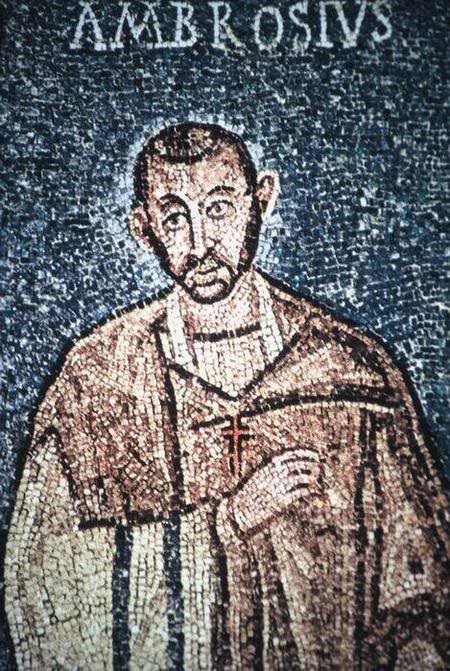
St. Ambrose of Milan – Savior of the Nations, Come

This is one of my favorite Advent hymns. It has some of the most powerful lines in the history of Christian hymnody, written by one of the first to really emphasize congregational participation in worship, Ambrose of Milan.

This hymn is also deeply theological. In Ambrose’s words we find the various theological controversies of the day reflected. Namely, the heresy of Arianism, which said that Jesus Christ was not fully divine, is combated in verse 4. Nestorianism, which argued that Jesus Christ was not fully human, is combated in verse 3. But beyond that, the hymn promotes the wonder and awe that we should all have when contemplating the mystery of the Incarnation. Verse three into the first phrase of verse 4 gives me goosebumps. Every time.

Give a listen to Christ Our King’s arrangement of this hymn from the 4th century. I hope it instills in you the wonder that it did for its first singers in Milan.

1 Savior of the nations, come,
Virgin’s Son, make here Your home!
Marvel now, O heav’n and earth,
That the Lord chose such a birth.

2 Not by human flesh and blood,
By the Spirit of our God,
Was the Word of God made flesh —
Woman’s offspring pure and fresh.

3. Here a maid was found with child,
Yet remained a virgin mild.
In her womb this truth was shown:
God was there upon His throne.

4. Then stepped forth the Lord of all
From His pure and kingly hall;
God of God, yet fully man,
His heroic course began.


Savior of the Nations, Come
St. Ambrose of Milan, 4th c.
Translation of verses 1 and 2 by William M. Reynolds, 19th c.
Translation of verse 3 by the Lutheran Service Book, 2006
Translation of verse 4 by F. Samuel Janzow, 20th c.

Tune: Johann Walter, Wittenburg, 16th c.
Arranged by: Timothy R. LeCroy 2016

Performed by Christ Our King Musicians
Vocals: Tim LeCroy and Liv Cordray
Violin: Erica Kallis
Piano: Liv Cordray
Guitar: Tim LeCroy
Bass: Tim LeCroy


If you want to be added to my Advent devotional emails, just leave a comment below!


Why Pray the Hours? – Reflections on Reformation

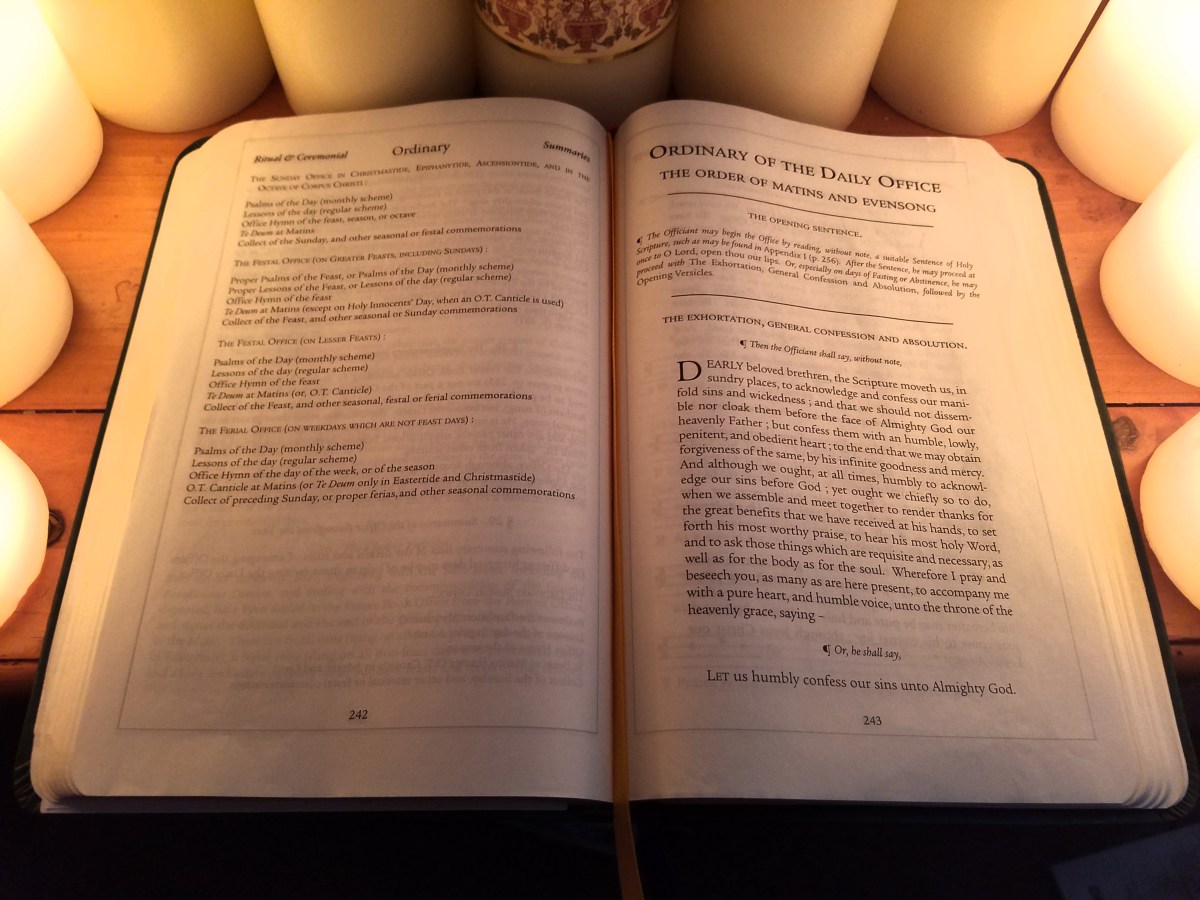
The church throughout her history has kept regular, set times of prayer each day. Should modern Christians reacquire this ancient practice?

Note: this begins a series on my blog called Reflections on Reformation which will be running this year in commemoration of the 500th anniversary of the onset of the Protestant Reformation.

Early on in the history of the church, Christians understood that the 1st century Jewish practice of meeting for prayer at set times of the day was a good and biblical practice to continue. We find references to this in several places in Scripture. In Acts 3 we find Peter and John attending a set prayer at the temple at 3PM. Acts 10 seems to reference Peter continuing this practice in his devotional life as he was praying at the ninth hour (3pm). Later in the story he prays at the sixth hour (noon).  Pentecost occurred at the third hour of the day (9 am). In Jesus’s parable in Luke 18 we find two men going up to the temple to pray. While he does not tell us the exact hour, it was a corporate prayer service they were attending. Simeon and Anna prayed in the Temple continually, it says in Luke 2. We tend to assume this is individual devotional prayer, but it would make more sense if this referred to them participating in the set prayers of the temple service. In Acts 22 we find Paul praying at the temple. In Luke 1:10 we find a multitude praying in the temple courts at the “hour of incense.” In Daniel 9 we find Daniel praying at the time of the evening sacrifice. He did this even though the temple was destroyed and there was currently no sacrificial ministry occurring.

In the Psalms there are multiple references to prayer and times of day. Psalm 88:13 says, “But I, O LORD, cry to you; in the morning my prayer comes before you.” Psalm 141:2 says, “Let my prayer be counted as incense before you, and the lifting up of my hands as the evening sacrifice!” Psalm 5:3 says, “O LORD, in the morning you hear my voice; in the morning I prepare a sacrifice for you and watch.” Psalm 59:16, “But I will sing of your strength; I will sing aloud of your steadfast love in the morning. For you have been to me a fortress and a refuge in the day of my distress.” Psalm 119:147, “I rise before dawn and cry for help; I hope in your words.” Psalm 55:17, “Evening and morning and at noon I utter my complaint and moan, and he hears my voice.” Psalm 119:148, “My eyes are awake before the watches of the night, that I may meditate on your promise.” Psalm 134:1-2, “Come, bless the LORD, all you servants of the LORD, who stand by night in the house of the LORD! Lift up your hands to the holy place and bless the LORD!” Psalm 119:62, “At midnight I rise to praise you, because of your righteous rules.” This is not to mention numerous places in the Psalms where specific times of day are referred to with relation to receiving mercy, hearing God’s word, groaning, crying out, meditating on his greatness, etc.

Perhaps this is also what is meant by the several references in the scriptures to praying night and day and praying without ceasing. This would make sense in the context of gathered set times of prayer, which we know were happening at least in the temple and also in an extension of those temple services in private prayers (see Peter and Daniel above).

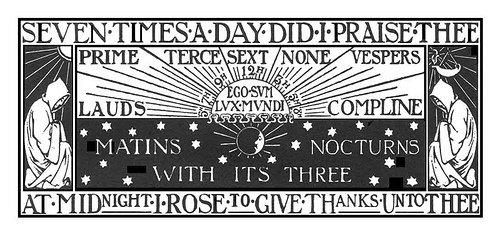
Are we to take these numerous references to prayer at specific times of day as a descriptive coincidence? Or do the Scriptures intend to prescribe a practice for God’s people? Indeed, the early Christians saw these references as scriptural warrant to offer prayers at set times each day. Based on specific times mentioned in scripture (just before dawn, third hour, sixth hour, ninth hour, sunset, evening, midnight) and based on Psalm 119:164 which says, “Seven times a day I praise you for your righteous rules,” the early Christians established set times of prayer at these times.

https://pastortimlecroy.com/wp-content/uploads/2017/09/daf9c-xpray-the-hours-pagespeed-ic-msrl-z6coo.jpg

Not everyone prayed seven times a day in the early church, although for some this was the ideal (see Hippolytus of Rome’s Apostolic Constitutions). Yet the churches called those to prayer who were pastors and workers, those with vocations within the church and those who were able and willing to do so. Eventually communities sprang up who were devoted to prayer, such were the early monasteries. In the Rule of Benedict he lays out the liturgies for the set times of prayer along with the Psalms that were to be sung at them. In the ancient practice of the Benedictine Rule, the monastery was directed to sing through the entire Psalter every week.

This may be what Paul had in mind as well when he describes that the widows who are enrolled in the church when he writes in 1 Timothy 5:5, “She who is truly a widow, left all alone, has set her hope on God and continues in supplications and prayers night and day.” Interestingly, Calvin remarked on this in his Institutes in book 4:8:18-19 where he discusses the enrollment of widows as deaconesses to “discharge the public ministry of the church toward the poor and to strive with all zeal, continancy, and diligence in the task of love.” It is interesting because he does not address the apostolic command that these widows continue in supplications night and day. His reaction against late medieval monasticism was too strong to allow him to consider that possibility. In this he was not unlike many of the Protestant Reformers who saw the services of the hours as attempts to “appease God with songs or unintelligible mumbling.”

Despite Calvin’s protestation, the church has continued these daily prayers, the hours or divine offices throughout her history. At the time of the Protestant Reformation one of the main questions that arose was whether and which practices of the ancient and medieval church should be continued. While some protestant traditions continued the daily office in some form (mainly Anglicans and some Lutherans), most of the Protestants jettisoned the daily office in favor of the teaching ministry of the church. Calvin himself taught the scriptures daily, and for that reason we have an expansive collection of his biblical teaching. We might ask though, while teaching the scriptures is obviously a very good thing, should the corporate prayer ministry of the church have been abandoned? If the answer is no, what are ways that we can reincorporate this ministry into the life our churches today?

Evangelical churches have tended to relegate prayer to the private life of the individual believer. The emphasis on alone time with the Lord is in keeping with Christ’s teaching on prayer, and this was the main influence for Evangelical piety. Yet in the 20th century, Pentecostal and Charismatic movements have reacquired this ancient emphasis on prayer, while not taking up the ancient forms. Many charismatic prayer ministries seek to be faithful to God’s word by opening up prayer rooms where there is a sign-up and a schedule to ensure that prayers are being offered around the clock.

While this re-emphasis on prayer is to be commended, it largely focuses on the efficacy of prayer (a true and good notion), but not necessarily on the formative aspects of prayer for the Christian believer. In the early church it was both the efficacious and the formative aspects of prayer that shaped the church’s practices. Could we glean from this formative aspect of prayer today?

There has been much work recently in this area. James K. A. Smith’s work on Christian formation has drawn deeply from prayer’s formative aspect and the goodness of this for Christian formation. Additionally Greg Thompson in his public teaching ministry has made this a focus. Both Thompson and Smith have drawn from the life of the ancient church in its rich liturgies and from the Rule of Benedict which prescribes prayer as a way of life for disciples of Christ. It should be noted that both Smith and Thompson are active in the Reformed context, Thompson being a pastor in the PCA and having given a series of foundational lectures at Covenant Theological Seminary on this topic.

What then are we to make of this? I’m not suggesting that every Christian should pray the seven offices every day. Yet it would be helpful if Evangelicals leaned into this rich tradition to form our congregations in some way. It is also very helpful, if not necessary, that those who are in vocational ministry participate in the daily office as a way to rest, recharge, and fulfill our callings to intercede as ministers of word and prayer.

I’ll offer several practical suggestions below.

  1. Offer avenues for daily prayer to congregants. This could be in the form of a prayer guide that the church produces, or suggestions of various smartphone apps which fulfill the same purpose. For example, each year for Advent and Lent my church offers a daily prayer guide to all our congregants to enter into daily prayer. Mind you, this is not seven times a day, but a suggestion and resource for engaging in once-daily prayer as individuals and families. Another option is to offer a page in the weekly service bulletin with all the lectionary readings for that week and encourage congregants to use that week’s service as a prayer guide throughout the week.
  2. Offer a mid week prayer service. Churches with access to facilities during the week could offer a mid-week vespers or matins (or both!) so that congregants who wish could attend to pray together and be shaped by these rich patterns of prayer.
  3. Pray daily as a church staff. If you have multiple staff who office at the same location, gather for morning prayer as you start each day. Make it a priority and block the time out on your schedule.
  4. Seminary Communities. Seminaries are uniquely positioned to enter into the richness of communal prayer. If chapels are more lightly attended than years past, perhaps a shift away from the didactic focus of a chapel sermon to the communal and formative act of prayer will reinvigorate seminary communities. Begin by exposing students and faculty to things like chanting psalms and saying the hours. Do the office for one or two of the chapel services a semester. Pick one day per semester to cancel classes and pray the hours (9am, 12, 3, and at sunset), encouraging the students and faculty to work in between the prayer services. Eventually begin offering morning prayer on a daily basis for those that desire it. Then sit back and see what the Lord does with it.
  5. Individual pastors. I encourage all pastors to say the office at least once a day. I say the morning office every morning (even Sunday before church!) except for my day off. This has been very beneficial for me in a number of ways, which I will detail in a future post.

Won’t this require too much work and take up too much time? The great thing about the office is that once you learn how it works, you don’t need to spend time preparing and practicing like we have done for many chapel services and Sunday services these days. Find someone who can lead it well. Find someone who can chant psalms. Then just show up and do it. Take 15-20 minutes out of your day (minimum) to spend time in community before the Lord. I promise that you will begin to see tangible results in the lives of those who participate.

Martin Luther is supposed to have said, “I have so much to do that if I didn’t spend at least three hours a day in prayer I would never get it all done.” There is no written evidence that he ever said that, though perhaps it was a oral tradition that was passed down through the ages due to its poignancy. Whether he said it or not, we must remember that Luther was a medieval monk who prayed the hours. That shaped him and formed him in his knowledge of the scriptures and in his love and knowledge of God. Augustine prayed the hours. Chrysostom prayed the hours. Anselm prayed the hours. In fact, all the theological giants of the ancient and medieval church prayed them in some form. Our fathers and mothers were steeped in scripture because of this. We often think that we know the bible well and understand it even better. But are we steeped in scripture to the level that our fathers and mothers were? Who recited the psalter by heart once a week? Who read through the bible at least every three years? Who daily spent hours in prayer before the face of God?


Want me to help you learn how to chant the psalms? Contact me.

Apps for the daily office
These apps are available in your app store. Note: these apps come from various theological traditions.

  • Mission St. Clare
  • Divine Hours, Vinyard Ann Arbor
  • Universalis
  • Daily Prayer from the COE
  • Do you know of others? Comment below!


Ambrose’s Advice to Augustine When Visiting Other Churches

A beautiful example of Christian discipleship

When I was in graduate school preparing for my doctoral comprehensive examinations on the history of eucharistic theology, I came across an insightful passage in Augustine’s letter to Januarius (Letter 54, found here). In this letter, Augustine relays to Januarius a situation he had with his mother who was scandalized when visiting a church in a distant city that did not worship the way she was accustomed. You see, Augustine was raised by his mother, Monica, according to the Roman rite, and during her sojourn with her son in Milan she was confronted with the different practices of the Milanese rite. All that to say that when traveling, she and Augustine went to church and she was putt off by the way they worshiped (the exact details are contained in the text below).

Now when I came across this passage I was a bit younger and more strident in my opinions about worship. To be sure, I still have a developed liturgical theology, but as I have aged a bit and grown from experience, I have softened a good deal. One of the things that softened me was Ambrose’s advice to Augustine (Was Monica’s scruple really his own?), and Augustine’s advice in turn to Januarius.

Here is another example how the wise Ambrose’s shepherding helped the young Augustine to mature. I think it’s a beautiful picture of Christian discipleship. Like Augustine, my own opinions in my younger days were such that I could not truly participate in worship with any sort of true and humble spirit of unity for all the scruples my sinful heart was throwing before my eyes. I’ve had to repent of that, and this passage from Augustine helped me to do that. Perhaps it will help you as well.

Be mindful that Augustine uses some strong words at the end of the passage, but we can forgive him as he was confronted by violent schism in his native diocese of Hippo and the surrounding areas near Carthage in Northern Africa.

There are other things, however, which are different in different places and countries: e.g., some fast on Saturday, others do not; some partake daily of the body and blood of Christ, others receive it on stated days: in some places no day passes without the sacrifice being offered; in others it is only on Saturday and the Lord’s day, or it may be only on the Lord’s day. In regard to these and all other variable observances which may be met anywhere, one is at liberty to comply with them or not as he chooses; and there is no better rule for the wise and serious Christian in this matter, than to conform to the practice which he finds prevailing in the Church to which it may be his lot to come. For such a custom, if it is clearly not contrary to the faith nor to sound morality, is to be held as a thing indifferent, and ought to be observed for the sake of fellowship with those among whom we live.

I think you may have heard me relate before, what I will nevertheless now mention. When my mother followed me to Milan, she found the Church there not fasting on Saturday. She began to be troubled, and to hesitate as to what she should do; upon which I, though not taking a personal interest then in such things, applied on her behalf to Ambrose, of most blessed memory, for his advice. He answered that he could not teach me anything but what he himself practised, because if he knew any better rule, he would observe it himself. When I supposed that he intended, on the ground of his authority alone, and without supporting it by any argument, to recommend us to give up fasting on Saturday, he followed me, and said: “When I visit Rome, I fast on Saturday; when I am here, I do not fast. On the same principle, do you observe the custom prevailing in whatever Church you come to, if you desire neither to give offence by your conduct, nor to find cause of offence in another’s.” When I reported this to my mother, she accepted it gladly; and for myself, after frequently reconsidering his decision, I have always esteemed it as if I had received it by an oracle from heaven. For often have I perceived, with extreme sorrow, many disquietudes caused to weak brethren by the contentious pertinacity or superstitious vacillation of some who, in matters of this kind, which do not admit of final decision by the authority of Holy Scripture, or by the tradition of the universal Church or by their manifest good influence on manners raise questions, it may be, from some crotchet of their own, or from attachment to the custom followed in one’s own country, or from preference for that which one has seen abroad, supposing that wisdom is increased in proportion to the distance to which men travel from home, and agitate these questions with such keenness, that they think all is wrong except what they do themselves.

SOURCE: Augustine, Letter 54 to Januarius, CCEL (accessed here).

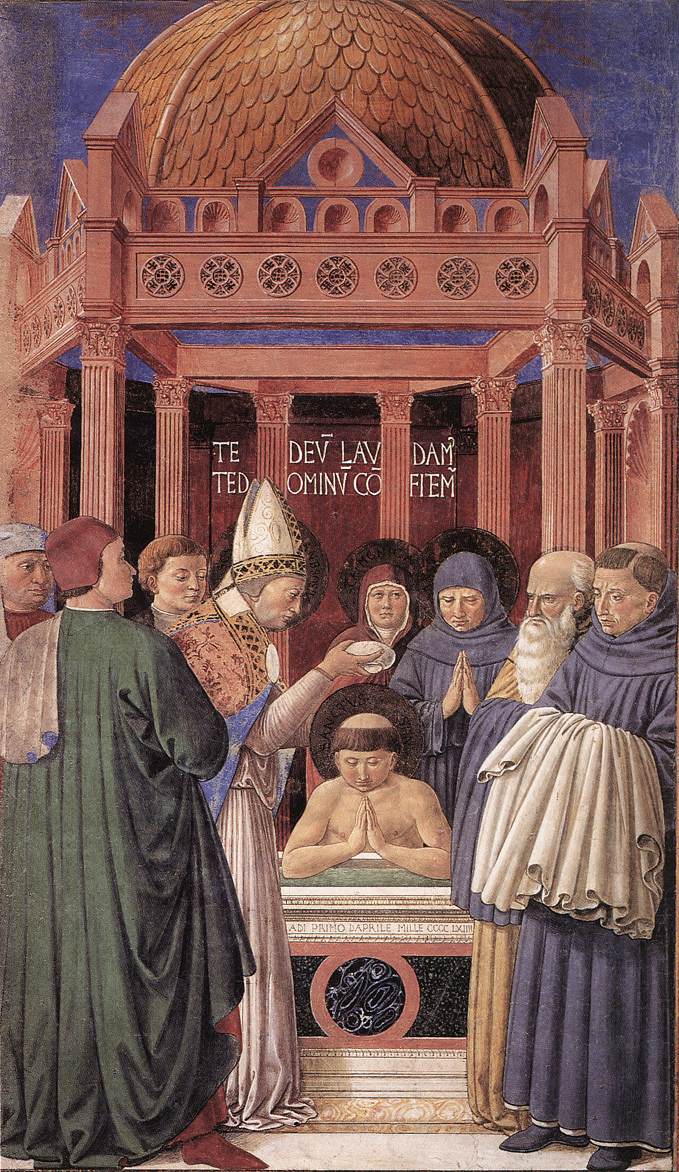
IMAGE: Gozzoli, Ambrose baptizing Augustine with the words of the hymn Te deum (Source: Wikimedia Commons) 15th c.

Hadrian of Carthage: A Medieval African Who Changed Europe

February is Black History Month, a month to pay “tribute to the generations of African Americans who struggled with adversity to achieve full citizenship in American society.” As a church historian I am particularly interested in paying tribute to those African-Americans and others of African origin who played a major role in the story of the Christian Church. There are many who have done excellent work in telling the story of early African-Americans who contributed to American Christianity: leaders like Absalom Jones and Richard Allen, and early African-American Presbyterian leaders like John Gloucester.

My interest in church history though lies further back in the annals of time. I’m a medievalist and I also dabble in the early church period. I have been encouraged at the increased awareness of just how many of the early church Fathers were African: Athanasius, the staunch defender of Nicene Orthodoxy, Augustine, the Schoolmaster of Western Christianity, Cyril of Alexandria, Origin, Cyprian of Carthage, Tertullian… I could go on. I was encouraged to see an article recently that highlighted this wonderful history as a part of a series of posts on Black History Month on the Reformed African-American Network.

The medieval period, however, has often been seen as a time without much contribution from Africans to the life and work of the Church. Part of that is due to the spread of Islam over North Africa. Part of that is due to our ignorance in knowing and telling the stories of African Christians during that time. Yet, as I was reading the article linked above I remembered one particular African who had an enormous impact on medieval Europe: Hadrian of Carthage.

Hadrian, also known as St. Adrian of Canterbury, was like St. Augustine a North African of the Berber people. He was born in Carthage in the early to mid 7th century, and classically educated. He later moved to Italy and became an abbot of a monastery near modern day Naples. Bede describes Hadrian as, “a native of Africa, very learned in the Scriptures, experienced in ecclesiastical and monastic administration, and a great scholar in Greek and Latin,” (HE IV:1). That’s a pretty impressive endorsement by Bede! Because of his experience and erudition, Hadrian was impressed upon two separate times by his friend Vitalian, the Bishop of Rome, to take the vacant see of Canterbury and engage himself in a much needed reformation and revival in the English Church. Twice though Hadrian turned him down, the last time recommending another monastic leader, one Theodore of Tarsus. Theodore accepted the appointment, but the Pope insisted that Hadrian go along, ostensibly, to show Theodore the way through Gaul to England. Yet it was not travel directions that the Bishop of Rome truly desired Hadrian to give, but to be a partner to Theodore in the reformation and revival of the English Church.

Theodore and Hadrian set off for England in 668, after a brief pause for Theodore to grow his hair out so as to be able to accept the Roman form of tonsure. They arrived in England in 669 and began visiting the churches so as to ascertain their state and begin the needed education and reform. They began to attract students whom they instructed in the knowledge of theology, church customs and rites, sacred music, Greek and Latin, and the study of sacred Scripture. Bede describes a renaissance of sorts in England that came as a result of their labors, “The people eagerly sought the new-found joys of the kingdom of heaven, and all who wished for instruction in the reading of the Scriptures found teachers ready at hand,” (HE IV:2).  This explosion of learning was such that Bede remarked a couple of generations later that, “some of their students still alive today are as proficient in Latin and Greek as in their native tongue,” (ibid.).

Thus we can see that Hadrian’s impact on England and the church in England was massive. Yet what remains to be seen is just how much his contribution to the reformation and revival of England led to the foundations of Christianity in Western Europe.

Western Europe in the 7th c. was still a largely unreached place. Catholic Christianity was established in some places, while others of the Germanic tribes had been converted to Arian forms of Christianity. Still others remained pagan. There was a great need in these Germanic areas for both evangelization and Christianization. The problem was that the existing churches of Western Europe (mostly in Gaul, modern France) were not equipped to undertake this mission. This is where the English came in.

Due to the work of Hadrian and Theodore, the English were equipped to engage in this mission to the Germanic peoples. And so they did, with great vigor and success. Boniface led a wave of missionaries from England back to the continent to evangelize and establish churches. He is now known as the Apostle to the Germans. Educational leaders like Alcuin of York were brought from England by the Carolingian rulers to help establish court schools as well as cathedral and monastery schools and to lead in the Christianization and reform of the churches in Western Europe. The legacy of these English missionaries is hard to overstate: these are the fathers of the Europe we know today. They established the institutions and infrastructure upon which Western civilization is established.

And none of this would have been possible without the efforts of St. Hadrian, the African. A medieval giant who had a greater impact than any of us probably realize.

Let us give thanks for St. Hadrian and celebrate his work and ministry and its vast impact on the world we live in.

A Brief History of Sanctification

When reading Berkhof’s Systematic theology one comes away with the notion that justification and sanctification were inseparably conflated and that works based theology reigned until the Reformation, (Berkhof, 529-30). While it is true that the Reformers were the first to articulate the doctrine of justification by faith alone and to draw out the distinction between justification and sanctification, it is not true to say that the church was uninterested in the process of sanctification until the Reformation.

Sanctification is, as the word suggests, the process by which a person is made holy. The distinction has historically been made between definitive sanctification, a setting apart by God at one’s regeneration and baptism, and progressive sanctification, the lifelong process by which a believer, by grace, is enabled to more and more die unto sin and live unto righteousness, to paraphrase Westminster. To say that the church never rested in the “apartness” of baptized believers or that the church never sought to become more conformed to God’s law would be incorrect. Furthermore, after Augustine, everyone in the West taught and believed that everything in a believer’s life was totally and completely of and by grace.

Since though we do not see traditional reformed systematic theological categories in the first fifteen centuries of the church, what do we see? I propose that we see different models of sanctification throughout the life of the church. These models are more or less chronological. They are:

  1. Martyrdom (1st-4th) – the intense early phase of the church. The passion of standing for one’s faith in the face of torture and death and the contagious fervor that this threat posed served to sanctify the early church.
  2. Orthodoxy (4th-6th) – Right belief in the era of the Creeds and Councils. Sanctification through right belief.
  3. Mystical Theosis – Eastern contemplative. Becoming God-like through spiritual disciplines and contemplation. Related to orthodox belief.
  4. Sacramental Divinization (5th-7th) – Augustine’s Western counterpart to Theosis. Being made God-like through grace by hearing the word, participation in the liturgy, sacraments, and prayer.
  5. Communal Regulative formation (5th – 11th) – Benedict of Nursia. Sanctification through faithful (full of faith) and evangelical (belief and adherence to the gospel) submission to a rule of life in the community of believers. Still assumed the Augustinian notion of sanctification by grace.
  6. Corporate Sacramental Participation – Carolingian period (8th-10th c). A form of Augustine’s notion, but more emphasizing the entire body being sanctified corporately instead of individual believers.
  7. Curative Pastoral Application – Innocent III (13th-14th) Emphasis on individual participation and involvement in pastoral care to bring sanctification.
  8. Mystical Contemplation (13th-15th) – Mystics like St. Francis and Bonaventure building on the tradition of Pseudo-Dionysius in the mystical contemplation of the Trinity. There is some of this in Augustine too.
  9. Imitation of Christ (15-17th) – Thomas à Kempis and the other devotio moderna adherents. Contemplation and imitation of Christ. There is some of this in Francis as well.

A Word on Reading the Scholastics

Here are a few points that will help us enter into the wonderful world of scholastic theology.

I’ve had the wonderful opportunity to spend thousands of hours reading and studying the writings and theology of the scholastic period through the course of my PhD, my teaching, and especially through working on this: a translation of one of the more important works of scholastic theology by St. Bonaventure. Since the writings of the scholastics can be a bit difficult to enter into, I thought I would write a primer on scholastic theology as an entry point for interested readers.

Scholasticism broadly defined is the theological and intellectual movement surrounding the schools of Paris in the 13th and 14th centuries. It is marked by an adherence to the theological tradition, grounded in the teachings of the Bible and the theological exposition of St. Augustine. The basic tenant of Scholasticism was Augustine’s mantra Credo ut intelligam (I believe so that I may understand), or to put it more simply, faith seeking understanding. There are two things that made Scholasticism different from previous intellectual movements: the sic et non method, and the use of Aristotle (This one, not this one).  These two (the method and the philosophy) combined to form a theological movement that posited and explored the thesis that everything could be understood and explained through faith and reason. Therefore, if we do not either understand how the sic et non method works or know a bit about the Bible, Augustine, and Aristotle, we cannot read, understand, or explain the scholastics in an intelligent way. Here are a few points that will help us enter into the wonderful world of scholastic theology.

 1. The fallacy of historical anachronism
The first thing we must note when undertaking to read writings from the past is that we should avoid the fallacy of historical anachronism. What’s that? It’s when we impose later developments onto earlier ones and either criticize the earlier for not having exhibited evidence of the latter, or assume that something in a latter development is also an integral aspect of the earlier ones. An example of this would be in criticizing medieval authors because they do not articulate their soteriology in the exact language of the canons of the Council of Dort. We could however hold medieval writers to the canons of the Council of Orange since it preceded the Middle Ages. The basic idea here is that if something didn’t exist yet, we can’t expect someone to know about it. It would be like expecting Abraham Lincoln to know the intricacies of the whip and nae nae, for example.

 2. The sic et non method
The sic et non method was the way scholastic theology was done, thus it is often called eponymously the scholastic method. The sic et non method was introduced by Peter Abelard in the 12th century. Abelard was a rock star in the classroom, mesmerizing his audiences with his lectures. In them he would posit a question, for example, “Must human faith be completed by reason, or not?” Then he would present the arguments for answering “yes” (Latin, sic) followed by the arguments for answering “no” (Latin, non). Abelard would argue passionately and vigorously for each side of the position, but would never give his answer. He would just leave the audience hanging! While this method lead to his fame, it would not develop into anything more than a show prop for about 100 years.

Meanwhile, around the same time, the theological standard for orthodoxy was being developed by another Peter, this one named Lombard. His Four Books of the Sentences was the standard exposition and articulation of Western (Augustinian) theology for 500 years. This book, not Thomas Aquinas, was the theological textbook of the Middle Ages, and has left such an imprint on the Western theological landscape that we can even see it in the arrangement of books and subjects in Calvin’s Institutes.

In the 13th century, the teachers of Paris, lead by Alexander of Hales, synthesized Abelard’s lecture method and Lombard’s theological textbook to form the scholastic method. It began as an academic exercise. Alexander had his students (one of which was the famous scholastic theologian and contemporary of Thomas Aquinas, St. Bonaventure) write a commentary on the sentences of Peter Lombard, using a modified form of the sic et non method. Alexander and his students added to Abelard’s method of presenting the yes and no a statement of the correct answer (in the opinion of the student) and then answers to the objections.

Thus when reading any of these scholastic texts, one must understand that the first statements one finds at the beginning of each section are not the opinions of the author! They are simply popular arguments for and against that the author is presenting for the sake of the method. If the reader wishes to understand what the author is actually teaching on the subject, he must skip down to the respondeo, which begins with the words “I respond.” There you will find the opinion and rationale of the author on the question. Following the response then are the responses to the objections that did not agree with the opinion that the author took.

This academic exercise was undertaken by students of theology studying for a doctorate in the late Middle Ages. Jan Hus, the famous Czech reformer, wrote one of these commentaries as a part of his magisterial studies in Prague, and in it he exhibits the same method developed by Alexander and his students.

The Summa theologica by Thomas Aquinas, though not a commentary on the sentences (he did produce one) employs the sic et non method. Thus readers of the Summa need to understand how the method works.

 3. Augustine and Philosophy – He loved Philosophy!
St. Augustine laid the theological and intellectual framework for Western civilization. His mature synthesis of Christian society can be found in his capstone work The City of God, which was written in 426, four years before his death. In the City of God Augustine argues that the philosophical basis for Christian thought should be what we now call Neo-Platonism, and he even states that Plotinus, the chief expositor of Neo-Platonism in his nine-volume work The Enneads, was the closest of the pagan philosophers to come to a true understanding of God (See Book X in The City of God). In The City of God and other writings Augustine synthesized the Christian faith and Neo-Platonic philosophy to lay the intellectual foundations for the Christian west.

 4. The Scholastics and Augustine
As was already stated above, the theology of the Western church in the Middle Ages was thoroughly Augustinian. This is so in almost every aspect of every subject of theology. For example, medieval theologians were Augustinian in their thoughts on sacraments, sin, grace, anthropology, theology proper, ecclesiology, eschatology, and every other “ology” you can think of. Augustine was the teacher par excellence of the medieval church.

Specifically, on the topic of salvation and grace, medieval theologians consistently maintained their adherence to the Augustinian doctrines of grace. These doctrines are articulated in his treatises against the Pelagians, and also made canonical by the declarations of the Council of Orange. This theology posited the existence of Original Sin, handed down from parent to child all the way back to our first parents, and that original sin destroys the ability in any human being to love God or achieve salvation or do any good work outside the divine aid of God. Augustine also taught that believers must have an act of God performed on them to even make them dispositive for grace. He taught that believers were chosen by God (predestined) to receive this grace a part from any merit in themselves. He also taught that this grace was conferred to believers by a free gift of God through sacraments. No orthodox western theologian (medieval, Reformational, or otherwise) ever strayed from this opinion until the modern period.

A poignant example of this can be found in the writings of Thomas Aquinas, a medieval theologian often pilloried by some Protestant polemicists. In Question 109 of his Summa theologica, Thomas posits ten questions on the necessity of grace in human salvation. You are welcome to read this section, minding the use of the sic et non method I outlined above:

It is notable that Thomas’s answer to all ten of these questions is unequivocal: divine help is absolutely necessary for any good thing to come out of a fallen person. Here are the ten questions:

  1. Without grace, can man know anything? Answer: No
  2. Without God’s grace, can man do or wish any good? Answer: No
  3. Without grace, can man love God above all things? Answer: No
  4. Without grace, can man keep the commandments of the Law? Answer: No
  5. Without grace, can he merit eternal life? Answer: No
  6. Without grace, can man prepare himself for grace? Answer: No
  7. Without grace, can he rise from sin? Answer: No
  8. Without grace, can man avoid sin? Answer: No
  9. Having received grace, can man do good and avoid sin without any further Divine help? Answer: No
  10. Can he of himself persevere in good? Answer: No

Now, admittedly I have done a bit of contextualization to bring his terminology into our modern theological idiom. Thomas is a very precise thinker. So if you take my challenge and read the section, you will find that at times he will say that an extra work of grace is not needed. Nevertheless, none of these things can be done without divine aid. That is what we would call grace. Here are some examples:

Response to question 1: Hence we must say that for the knowledge of any truth whatsoever man needs Divine help, that the intellect may be moved by God to its act. But he does not need a new light added to his natural light, in order to know the truth in all things, but only in some that surpass his natural knowledge. And yet at times God miraculously instructs some by His grace in things that can be known by natural reason, even as He sometimes brings about miraculously what nature can do.

Response to question 2: And thus in the state of perfect nature man needs a gratuitous strength superadded to natural strength for one reason, viz. in order to do and wish supernatural good; but for two reasons, in the state of corrupt nature, viz. in order to be healed, and furthermore in order to carry out works of supernatural virtue, which are meritorious. Beyond this, in both states man needs the Divine help, that he may be moved to act well.

Response to question 3: But in the state of corrupt nature man falls short of this in the appetite of his rational will, which, unless it is cured by God’s grace, follows its private good, on account of the corruption of nature. And hence we must say that in the state of perfect nature man did not need the gift of grace added to his natural endowments, in order to love God above all things naturally, although he needed God’s help to move him to it; but in the state of corrupt nature man needs, even for this, the help of grace to heal his nature.

In these we can see that Thomas is making the distinction between what we would call saving grace and what we would call either common grace or simply, grace, i. e. the grace we need to continue to live the Christian life.

 5. The Scholastic theology of the will
One last thing should be said when thinking about how some scholastics, specifically theologians like Thomas and John Duns Scotus, discuss things like the will, the intellect, the mind, reason, and so on. When they do this they are operating on a whole host of assumptions, set by St. Augustine, on the philosophical foundation for nature and being. Augustine, for example, taught that there is in every human a higher soul and a lower soul (see De Trinitate, Book XII). Augustine also taught, as we have already established, that the human person was fallen and unable to do good or choose God outside of divine help. Scholastic theologians like Thomas and Scotus took this teaching to a particular place when they posited that it was fundamentally the human will that was fallen and thus made the human person unable to do any good thing or to love God or choose to serve him or have faith in him. This theology of the will served as the basis for much of Luther’s thought on the human person, salvation, and the will and is the underlying basis for his doctrine of Justification by Faith Alone.

The reason why Thomas and Scotus taught that there was a part of the human intellect that was untouched by sin has to do with where they placed the image of God in the human person, again following, you guessed it, Augustine. Since they all placed the image of God in the upper or rational soul, that part of the human person could not be touched by the fall, otherwise a person would cease to be rational, cease to be an image bearer, cease to be a person. Yet, these teachers protected the Augustinian teachings on grace in unequivocally stating that despite this, the human person could know nothing or do nothing outside of God’s divine help (as is shown above). Thus I think that anyone labeling these thinkers as semi-Pellagian is straying out of their lane.

Conclusion: Why this matters
Why does this matter? Simply, because there is a resurgent interest in the scholastic period and in thinkers like Thomas, Scotus, Ockham, and Bonaventure. I would add that theologians like Hugh of St. Victor (and the other Victorines), Lombard, Hales, and Anselm are also worthy of study. Thus if we are going to study and read these medieval thinkers, it is always good to read them correctly, contextually, and on their own terms. To put it even more simply, it matters because we want to tell the truth about what these folks actually said.

Why else does it matter? I think another good reason why reading these writers accurately matters is that when we do not tell a true or accurate story about medieval theologians (or patristic writers like Augustine), and then someone is presented with a more nuanced and accurate take on them which better accounts for their writings and their context, it discredits those who propounded the unfortunately false view and those who surround him or her. How many young Protestants have converted to Roman Catholicism (or seriously considered it) because they have heard truncated or even false takes on ancient and medieval writers only to hear a truer take from Roman Catholic authors and apologists? We as Reformed and otherwise Protestant are better served by engaging these ancient and medieval authors correctly, articulating where we differ, celebrating where we find commonality, and enriching on our own traditions where we find anew sources for growing and building upon our own little piece of the great Catholic Church.

To Ash or not to Ash

To Ash or Not to Ash - Theopolis

Today is Ash Wednesday, and as many Christians of the Protestant formerly “low church” persuasion are reacquiring some of the good and ancient practices of the church, one question in particular comes to the front: to ash or not to ash? That is, while many of us are finding great spiritual value in keeping Lent, we are also wondering, what about the whole ashes on the forehead thing?

So, why even make ashes an option? Here, briefly, are the reasons. Let me first say that I resonate with the idea of not offering ashes on Wednesday. The practice is not commanded in scripture, and it is not something that I consider to be essential to the life of the church. Therefore, I do not judge those who abstain from the practice any more than I do those who practice it.

That said, I do believe the imposition of ashes to be a good and right thing to do. My reasons are that the symbolism is taught in the scriptures, the practice has a very ancient heritage in the church, and that rituals are important to us as human beings and especially as Christian believers.

>>To read the rest, click over to the Theopolis Institute Blog.

What You Learned About the Middle Ages Was Wrong

What You Learned about the middle ages was wrongOver at the Theopolis Institute blog they are hosting an essay that I wrote about our misconceptions of medieval Christian civilization. The jumping off point was President Obama’s recent comments at the National Prayer Breakfast, but this is not a political post bashing the President. I actually agree with much of what he said, including how he highlighted persecuted Iranian Pastor Saeed. My essay was an opportunity to dig in on some widely held medieval myths.

https://theopolisinstitute.com/what-you-learned-about-the-middle-ages-was-wrong/


Visit our website: www.christourkingcolumbia.org
Like us on Facebook: www.facebook.com/christourkingcolumbia/
Follow us on Twitter: www.twitter.com/christourkingco/
Peep us on Instagram: www.instagram.com/christ_our_king_como/