Semper Reformanda: The Origins of the Slogan and Its Meaning

Today is Reformation Day. Today we mark the occasion of Luther attaching his ninety-five theses in a letter he sent to Albert Archbishop of Mainz protesting the sale of indulgences that he had authorized throughout Germany. Earlier that year Luther had been disturbed by reports of local townspeople who had visited a nearby area to hear the indulgence preacher Tetzel and purchase indulgences from him. They reported to Luther that they were able to obtain forgiveness of sins without true contrition or amendment of life. This resulted in Luther poring over the issue for several months, composing his list of theses for academic disputation and conversing with various parties via letter. In the early fall of 1517, Luther composed his treatise on indulgences and then on October 31 attached the theses to the letter he sent to Albert. A printer in Basel got a hold of the theses, started printing them, and they went viral. Truly without Luther’s direct involvement, the theses spread all over Europe and became the spark for a much needed and long awaited reformation of the church.

One of the slogans closely associated with the 16th century Reformation is Semper reformanda. It also happens to be the title of this website. It is commonly accepted that this is a reformational slogan that distills and embodies the ideals of the Reformation. Some may even be under the impression that the Reformers themselves employed the term. However both Luther and Calvin opposed the notion of continual reformation, albeit for slightly different reasons. Luther firmly believed that the medieval world and life view was necessary for the proper ordering of government, church, and society and for the godly lives of individuals. Thus for him a total reformation was not in order, only on certain specific terms that he laid out in his writings and pursued in his ministry. Similarly, Calvin did not believe that continual reformation was a good thing. He believed that the church needed reform, but once the reform was completed, no further tweaking would be necessary.

Yet, we can’t say whether or not Calvin or Luther would have approved of the slogan because it did not exist in their day. There simply is no documentary evidence of the slogan existing until the nineteenth century. 

This brings up several questions that bear answering: What are the origins of the slogan?  Which version of the slogan (there are several)? What does the slogan mean? Lastly, given these things, is it a useful slogan for us to employ?

The Historical Origins of Semper Reformanda

The historical origins of the slogan are a bit murky. The earliest recorded use of the phrase with both the adverb “semper” and the future passive participle “reformanda” was by The Dutch theologian and statesman Abraham Kuyper, who in 1892 used the phrase “ecclesia semper reformanda.” [1] Ten years earlier Herman Bavinck used the phrase, “Ecclesia Reformata et Reformanda,” which is close, but lacks the adverb “semper.” If we combine these two phrases, we can see how the fuller phrase “Ecclesia reformata et semper reformanda” came to be.

To be sure, there are older usages of the words “reformata” and “reformanda” to refer to the church, but none that put the adverb and the future past participle together into one aphorism as Kuyper did. Some have placed the origins of the phrase with one Jocodus van Lodensteyn in 1678. However, while van Lodensteyn did use both verbs “reformata” and “reformanda” to refer to the church, it was not done so in a single aphorism and the adverb “semper” is absent. [2]

From Bavinck and Kuyper the phrase took on several different forms until it was popularized by Karl Barth in 1947 as “Ecclesia semper reformanda.” [3]

How then did we come to think of it as an ancient Reformed slogan? Well, certainly the notion of the church being reformed and reforming has been expressed since the 17th c., with Johannes Hoornbeecks in 1660 and Jocodus van Lodensteyn in 1678 being the prime examples. Indeed as far back as 1610, Friedrich Balduin of Wittenburg wrote “semper in Ecclesia opus esse Reformatione, quia semper occurrunt corruptelae morum et doctrinae.” [4] Indeed when Kuyper used the phrase in 1892 he seemed to think of it as an already established expression, perhaps due to the similar usages I’ve pointed out above. Yet the biggest reason why it is considered ancient seems to be the declaration by Peter Vogelsanger, editor of the journal Reformatia, that it was an “ancient formula.” [5] That mistake was repeated by no less of a scholar than Olaf Pedersen in 2007. So we see that the notion of an ancient origin for the slogan is rather persistent and difficult to weed out. 

Which Version of the Slogan?

The ideas contained in this punchy Latin aphorism are so relevant and powerful that folks have continued to add to it and tweak it over the years. Anecdotally, I’ve seen the phrases, semper reformanda, ecclesia semper reformanda, ecclesia semper reformanda est, ecclesia reformata et semper reformanda, and ecclesia reformata semper reformanda, in addition to other variations on these four words that I’m sure have been tried. Further, I’ve seen the phrase secundum verbum Dei tacked on, no doubt in order to place limits on the extent and basis of the said reforming. I’m sure there are other variations. However, it is clear that the phrase we are working with (the canonical one, if you will) is ecclesia semper reformanda.

The Meaning of Ecclesia Semper Reformanda

Now that we have settled on a version of the slogan, what does it mean? The typical translation we hear is “always reforming,” but this is simplistic. “Reformanda” is a gerundive participle in the future tense and with passive voice. The participial aspect implies a continuous or progressive nature to the reform: the Church is reforming. The passive aspect adds a sense that someone or something is doing the reforming of the Church: the Church is being reformed. The future tense combined with the participle communicates the essential nature of the continuing reform: the Church must be being reformed. Lastly, the adverb “semper” adds a temporal modification to the reforming action: the Church always must be being reformed. That’s a bit clunky, but that’s how the phrase breaks down. 

What of the other additions? “Reformata” seems to be an acknowledgment that we inhabit the Reformed church and that even though that word is in our name, the church still needs to be reformed. The sometimes addition of “secundum verbum Dei,” simply clarifies that any reforming must be according to God’s word and not according to some other standard. This is likely employed because some have used the slogan as impetus for moving past the teachings of the Scriptures. Neither of these additions is essential for the aphorism.

One last matter bears attention: who is doing the reforming? I’m sure many think of human agents doing the reform, but this seems not to fit with what Jesus himself has said about the Church in the Scriptures. In Matthew 16:8 he declares, “And I tell you, you are Peter, and on this rock I will build my church, and the gates of hell shall not prevail against it,” teaching us that King Jesus is building the church. And in John he speaks of the help of the Holy Spirit, first in 14:26, “But the Helper, the Holy Spirit, whom the Father will send in my name, he will teach you all things and bring to your remembrance all that I have said to you,” and likewise in 15:26, “But when the Helper comes, whom I will send to you from the Father, the Spirit of truth, who proceeds from the Father, he will bear witness about me.” Lastly, according to Revelation 2:1, King Jesus walks among the golden lampstands, actively governing the Church. Indeed, the head of the Church is Christ (1 Cor. 11:3, Eph. 4:15, 5:23). So it seems best to think of Jesus Christ himself, with the aid of the Holy Spirit, as the one who is reforming the Church.

The Usefulness of Semper Reformanda as a Slogan

Given all of this, is a neo-Latin aphorism something we should employ in reference to the Church? Interestingly, as Perisho points out, many of the first and second generation reformers rejected the idea of the need for continual reform. For them the church was Reformata: no future reforms necessary.

Yet the idea of Semper reformanda still has great appeal to many. What rationale can be given for the need for continual reformation in the church when our forefathers taught there was no need? In the process of researching this topic I found the writings of one of the earliest  theologians to speak of the idea of Semper reformanda: an early 17th century German Lutheran named Friedrich Balduin of Wittenburg. [6] He was a doctor and professor of theology at Wittenberg (Luther’s university), and a church overseer. In 1610 he wrote a commentary on the prophets Haggai, Zechariah, and Malachi, and in his comments on  Malichi chapter one, he wrote this, “Admonemur nos hac inscriptione, semper in Ecclesia opus esse Reformatione, quia semper occurrunt corruptelae morum et doctrinae,” which I’ve translated: “We are admonished by this inscription, the work of Reformation in the Church is always needed, because the corruption of morals and doctrine there always occurs.” [7] Notice the reason for reform is not out of a need for continual tweaking of the faith, but because of the continual digression of morals and doctrine. He goes on to point out the various reformations in the scriptures as proof that the church will always be in need of reform– before the Babylonian captivity: Joash, Asa, Hosea, Hezekiah, Josiah; post captivity: Joshua and Zerubabel; the reformation Malachi was instituting in his prophecy; and the Great Reformer Jesus Christ who sought to reform the church in Jerusalem. 

Balduin offers a fascinating observation that shows us that the church will always be in need of reform due to continued corruption of morals and doctrine. And if the Church in the time of the Bible always needed reformation, shouldn’t we expect that the Church in our time will need it as well? Reformed Christians believe that sin and corruption will remain in us until the return of Christ. Indeed, Luther’s first of the ninety-five theses was, “When our Lord and Master Jesus Christ said, “Repent,” he willed the entire life of believers to be one of repentance.” Applying this doctrine more broadly, I think Balduin gives us the answer: the Church always needs reforming because the Church is always deforming. In other words, due to the sin and corruption of its members, the entire life of the Church is to be one of repentance.

Semper Reformanda!

[1] This is pointed out in a library guide by Steve Perisho of Seattle Pacific University, who cited a book review in an obscure Dutch journal named Documentatieblad nadere reformatie. The review was by J. N. Mouthaan, and the book reviewed was Hermeneutica sacra: Studien zur Auslegung der Heiligen Schrift im 16. und 17. Jahrhundert, a book of essays. The specific essay reviewed was “Ecclesia semper reformanda,” Eine historische Aufklärung. Neue Bearbeitung,” by Theodor Mahlmann. Mahlman’s main thesis was that Karl Barth coined the term in 1947, but Mouthaan disproved that. See https://spu.libguides.com/DCL2017/Reformation#s-lg-box-wrapper-18675181.

[2] See Kevin De Young, “Semper Reformanda,” https://www.thegospelcoalition.org/blogs/kevin-deyoung/semper-reformanda/, and W. Robert Godfrey, “Semper Reformanda in its Historical Context,” https://www.ligonier.org/learn/articles/semper-reformanda-its-historical-context.

[3] Karl Barth, “Die Botschaft von der freien Gnade Gottes,” Theologische Studien 23 (1947).

[4] “The work of Reformation in the Church is always needed, because the corruption of morals and doctrine there always occurs,” https://digitale.bibliothek.uni-halle.de/vd17/content/pageview/7332325

[5]  For the above examples and more, please see the excellent library guide compiled by Steve Perisho, Theology and Philosophy Librarian at Seattle Pacific University. He has done us all a great service with his compilation: https://spu.libguides.com/DCL2017/Reformation#s-lg-box-wrapper-18675181

[6] See: Theodor Mahlmann, “Balduin, Friedrich”, in: Religion Past and Present. Consulted online on 31 October 2022 <http://dx.doi.org/10.1163/1877-5888_rpp_SIM_01435> First published online: 2011. See also: https://www.biblicalcyclopedia.com/B/balduin-friedrich.html; and https://de.wikipedia.org/wiki/Friedrich_Balduin.  

[7] See: https://digitale.bibliothek.uni-halle.de/vd17/content/pageview/7332324.
Visit New Life Presbyterian Church for more articles and teaching from Tim LeCroy. New Life is a church worshiping in the beautiful Finger Lakes region of New York serving both the Cornell University and Ithaca College communities.

Advent Is Not Christmas, Part 2: The Historical Development of Christmas and Advent

“I Hate Christmas.”

I once read an article in the Washington Post whose title was, “I hate Christmas.” It wasn’t entirely what I expected: an atheist curmudgeon annoyed by the ubiquitous seasonal Christian messaging, wishing that everyone would get off his god-free lawn. While there was a little bit of that in the piece, it was mostly centered around the fact that because the author grew up poor, he could never experience Christmas the way movies, tv shows, pop songs, commercials, catalogs, and even friends and family taught him he was supposed to experience it. His family could never afford the lavish feast, the tree surrounded with all the items on his Christmas wish list, or even a very nice tree. He now shuns Christmas along with its gatherings, festivities, gifts, and cheer, instead spending all the money he can afford buying toys for poor children so they can have the Christmas he never had.

I finished the article thinking that the author hadn’t rejected Christmas, he had rejected what Christmas has become: a commercialized cornucopia of instant gratification. What he had actually offered was a valid critique of Christmas and a call to recenter on its true meaning. After all, what more pure symbol of the Christmas spirit is there than sacrificing financially to provide gifts to poor children? St. Nicholas, anyone?

Afterward, I perused a bit of the comment section (yes, I know you are not supposed to read the comments). Many commenters agreed with the author. Some agreed because they were of other religions or were atheists (what I thought the article was going to be about). Others, though, didn’t reject Christmas but rather the spectacle that it has become. One commenter replied, “Only 2-ish weeks before the schizophrenia is behind us. My favorite day of the year is January 1, when it’s all over.”

Christmas Isn’t the Problem

Now don’t get me wrong, I love Christmas. If there was a hidden camera in my house it would catch me randomly singing, “It’s the most wonderful time of the year!” My wife and I have curated the biggest (and best) Christmas display in a three or four block radius (in our estimation… opinions may vary). I love the feasting. I love the gift-giving. I love the Christmas liturgies, hymns, and candlelight services. I love all that because I love the message of Christ born to set his people free. I love the message of Immanuel, God-with-us, that the God of the Universe took on every bit of our broken humanity so that he could redeem it all. I love it because the incarnation is the only sufficient answer to the problem of evil in this world, as the best philosophers have realized, St. Augustine at the head. I love it because he became sin, who knew no sin, that we might become the righteousness of God. That’s the reason I’m singing, “It’s the most wonderful time of the year!” That’s the reason why I’ve lit my yard up in multicolored c-9 ceramic bulb nostalgic glory. That’s also the reason why I’m ecstatic that the whole world pauses once a year to celebrate the fact that God was born into the world.

And yet, I resonate with what that Washington Post author wrote. Because he’s right. The Christmas message is not what Hallmark, Home Depot, Honda, Hanes, Harley-Davidson, Hurley, and Hasbro are selling us. We have gotten off the rails, or jumped the shark, or whatever metaphor you want to use, in our overindulgence of the Coca-Cola commercialized version of Christmas. The songs, ads, and store displays start before Halloween now. That’s three full months on a peppermint Red Bull IV drip of wall-to-wall Christmas experience. There’s no expectation. There’s no preparation. There’s no self-denial. It’s just CHRISTMAS!!!!!, full-bore, full-tilt for three full months until December 26 when they turn off the spigot and we collapse into full-on exhaustion. No wonder some people hate it.

But that’s not the way Christmas was designed by those that developed the church year centuries ago. Yes, there was feasting. Yes, there was decorating and singing and gift-giving. But preceding it was a period of longing, expectation, and self-denial focused on something entirely un-Christmassy: the second coming of Christ. In other words, there was the season of Advent. And Advent was not Christmas.

Perhaps refocusing on the wisdom of those that created the autumnal portion of the Church calendar could help us in our current predicament. What can we learn by sitting at their feet?

The Creation of the Christmas Season

The Advent/Christmas cycle of the church year is a creation of the church itself. This is an important point to note, especially for Protestants. In part one I argued that the springtime cycle of the church year has biblical and patristic roots. Because of those clear biblical roots and direct one-to-one correspondence between Passover/Easter and Pentecost, those two feasts have always been celebrated by the Church from its earliest days. In fact, the only question about early observance of the Spring calendar was when Easter would be each year. To be fair, Lent was a creation of the early church, but its antiquity far outstretches that of Advent and Christmas. Lent, or something like Lent, has been a part of the church from at least the second century A.D.

However, when we come to the fall cycle of the church year, though we do have a clear mandate for a Fall festal calendar, we do not have a clear one-to-one correspondence of OT feasts to NT ones. For that reason, it took a few centuries for unanimity on the fall calendar to develop. I want to briefly trace that development and the reasons for it.

The first part of the season to develop was Christmas Day. The origins of Christmas are a bit murky when compared to Easter, but there are some clear historical markers. The first thing to note is that Christmas was not an appropriation of the Roman feast of Sol Invictus (the Unconquered Sun). First of all, that was not an ancient Roman feast, having been created in 274 by the Emperor Aurelian in a political effort to spark belief in the re-birth of the Western Roman Empire that was crumbling under his feet. It makes no sense for Christians to have appropriated a recently created Roman feast that had no popular following. Sol Invictus is a historical artifact, nothing more. However, Christmas is of Roman/North African origin, and there is some evidence, from no less than St. Augustine, that the celebration of Christmas in North Africa predates the Donatist schism. That would place observance of December 25 as the Feast of the Nativity well before Emperor Aurelian’s creation of Sol Invictus and suggest that the emperor was instead responding to the threat of Christianity by choosing that date.

Why then December 25th? What we need to understand is that the selection of exact days of the year when things occurred was not an essential quality of the church calendar. As I covered in part one, the essential quality of the church calendar was to create a yearly festal calendar for the New Covenant church based around the events of the life of Christ. We do not know when Christ was born, though some have made the case that it was exactly on December 25, and it may have been. However, dates were selected based on their significance in relation to the created year (see part one on day four of creation). We need to think of the church year not as historical reenactment, but as a yearly sermon series. Its purposes are for discipleship, not for reliving the historical record.

So why December 25th? The reason, it seems, is based on two notions. First is the ancient Jewish idea that the prophets and patriarchs were born or conceived on the same day that they died. Second, was the apparent Patristic conviction that major events in salvation history should align with the Solar calendar, and thus fall on a solstice or equinox. Both of these notions led to the idea that the best placement for Christ’s conception was on March 25th, which happens to be when the church commemorates the Annunciation (Luke 1:26-38), and thus his nativity was placed nine months later on December 25th. Whether or not these are the exact days on which these events occurred is largely irrelevant for the purposes of the church year. The point is that these texts are read and taught on those days and their significance in salvation history is celebrated. A church could choose to read the texts surrounding Christ’s birth in July and celebrate it then. As I said in part one, the calendar is a matter of adiaphora. However, if a church did that, that church would not be in step with the rest of the church throughout the world. If catholicity has any value, then keeping the calendar of the universal church should have some weight. As St. Athanasius once wrote concerning the observance of Lent, “while all the world is fasting, we who are in Egypt should not become a laughing-stock, as the only people who do not fast, but take our pleasure in those days… exhort and teach them to fast forty days. For it is even a disgrace that when all the world does this, those alone who are in Egypt, instead of fasting, should find their pleasure.” The early church certainly took their liturgical unity very seriously. Indeed, it was one of the main reasons the Council of Nicaea was convened.

Christmas to Advent

By the late fourth century the celebration of the Nativity was universally accepted, in East and West, on December 25th. In a compromise to earlier Eastern traditions of celebrating the day on January 6th, the Feast of Epiphany was accepted in the West around the same time. In this conception the liturgical year then began on December 25th and there was no preceding season.

Over time a preparatory season developed in the Western Church. It seems to result from areas, like Spain and Gaul, who were more influenced by the East. In the East, Epiphany is a major occasion for baptism, second only to Easter. In fact, to this day, some Eastern traditions will do a kind of “polar bear plunge” on Epiphany as they mark the baptism of our Lord. In Spain and Gaul it was understood that if baptisms were going to occur on Epiphany, there ought to be a corresponding preparatory fast akin to the one that preceded Easter. In fact, Lent as a fast has its origins as a preparatory fast for those who would be baptized on Easter Sunday, and gradually that practice filtered to the church-at-large, especially as infant baptism became the universal practice after the 4th century. Thus, in Spain and Gaul in the 5th and 6th centuries we find the prescription of a preparatory fast for monks in the season leading up to Christmas. However, that fast was not for the general public. The earliest tradition held that the fast would begin after the Feast of St. Martin on November 11, thus it was colloquially called St. Martin’s Lent. For this reason, the earliest forms of Advent consisted of six weeks, not four as it is today.

As they often do, monastic practices filter out to the rest of the church, albeit in a less strenuous form. In that way, the six week Advent began to be practiced in the liturgy of the churches of Spain and Gaul from the 6th and 7th centuries. As we can for many things, we can thank Gregory the Great for shortening Advent from six weeks to four. He was a notorious simplifier of which even Marie Kondo would be proud.

As to the content of Advent (and the eventual naming of the season) there were two separate strains. In Rome, where Christmas was the greater emphasis, the season leading up to that day was more focused on the first advent of Christ. However, in Gaul the focus was entirely on his second advent. In the Bobbio Missal, composed in the early 7th century, the gospel Lessons for Advent are Luke 21, Matthew 11, Matthew 3, and Matthew 24. These are all focused on the second coming and the need to repent ahead of the final judgment. Can you imagine showing up to church the Sunday before Christmas and getting a sermon from Matthew 24 about the tribulation and the second coming of the Lord as lighting split the sky? Such was the tradition in ancient Gaul. These brothers and sisters did not sentimentalize Christ’s birth!

The two strains of focus on either of the advents of Christ demonstrate the shift from the early church’s emphasis of the Parousia being focused around Easter to the early medieval church moving it to the close of the year. The early church had an imminent expectation of the return of Christ, and thus the Parousia was located liturgically in the Spring of the year, with Christ’s resurrection. However, as the centuries rolled by, the church shifted its expectation and began to focus more on a far fulfillment of Christ’s return. For this reason, church leaders began to move the season focusing on the Parousia to the close of the solar year as a reflection of Christ’s return at the end of history, thus putting a tidy bookend on the liturgical calendar. In this conception, as the solar year begins at the winter solstice with the renewal of the Sun, so the liturgical year begins at the solstice with the celebration of Christ’s birth. Then at the close of the year, as the Sun’s light is fading, the church shifts focus to the second coming as the close of history. Then at Christmas the cycle begins again. Thus was the early Gallic conception of the church year.

(As a side note, in this conception Easter is located at the Spring equinox, the exact point in the year when light overcomes darkness. The early church saw this placement of Easter as a non-negotiable due to the declaration of Yahweh in Exodus 12 that the Passover was to mark the beginning of months in perpetuity. Easter must then be after the equinox, because Christ overcame darkness for good on that day. Thus, we see how in its final form the church year closely fits the creational intent reflected on Day Four of creation, that the Sun, Moon, and Stars were to mark the festal seasons. For more on that see part one.)

In the 8th and 9th centuries, the Carolingians of the Frankish empire melded both Gallican and Roman traditions into the one Pan-European tradition that we have inherited. This applied to nearly all aspects of the liturgy, but for our purposes also included prescriptions for Advent. Pepin the Short, Charlemagne, and their advisors thus combined the Roman conception of Advent with the Gallican one, beginning the season with an overt focus on the second coming and then ending Advent with the text of Gabriel’s visit to Mary. In this new form, Advent still has a strong emphasis on the second coming of Christ, but it moves toward the incarnation in its final week. This compromise was not simply for pragmatic reasons. The Carolingians were acutely focused on discipleship, and thus expert liturgists, like Alcuin of York, brilliantly shaped the season that we inherited to include important concepts of the expectant hope of Christ’s return, the eschatological duty to watch, pray, and prepare, and the final judgment. Without Advent’s focus on these themes, the broader plan of the church year has a large catechetical lacuna. The Carolingians remedied that, and for this reason their calendar stuck in the west, and eventually in the east as well.

 Longing for His Appearing

Thus we see that Advent is not Christmas. Advent is a separate liturgical season that focuses on important themes that every Christian disciple should be shaped by. Focusing on these themes, especially the longing for the return of Christ, properly situates our joy and cheer when he is born on Christmas Day. Instead of an empty season of buying, buying, buying, and more buying, Christmas then becomes a day for truly celebrating, because Jesus is the answer to all our prayers of longing for the world to be different than it is. Forgoing full-on Christmas celebration until after the Feast of the Nativity on the 25th is then a practice in festal patience. Feasting is a positive value because we have a reason to feast! Continuous feasting without real reason to do so or any pause to watch, reflect, and prepare leads to debauchery. The Bible is not against feasting, it is decidedly pro-feasting! However, the scriptures also place the festal observance on concrete points in salvation history along with other times to reflect, to fast, and to pray.

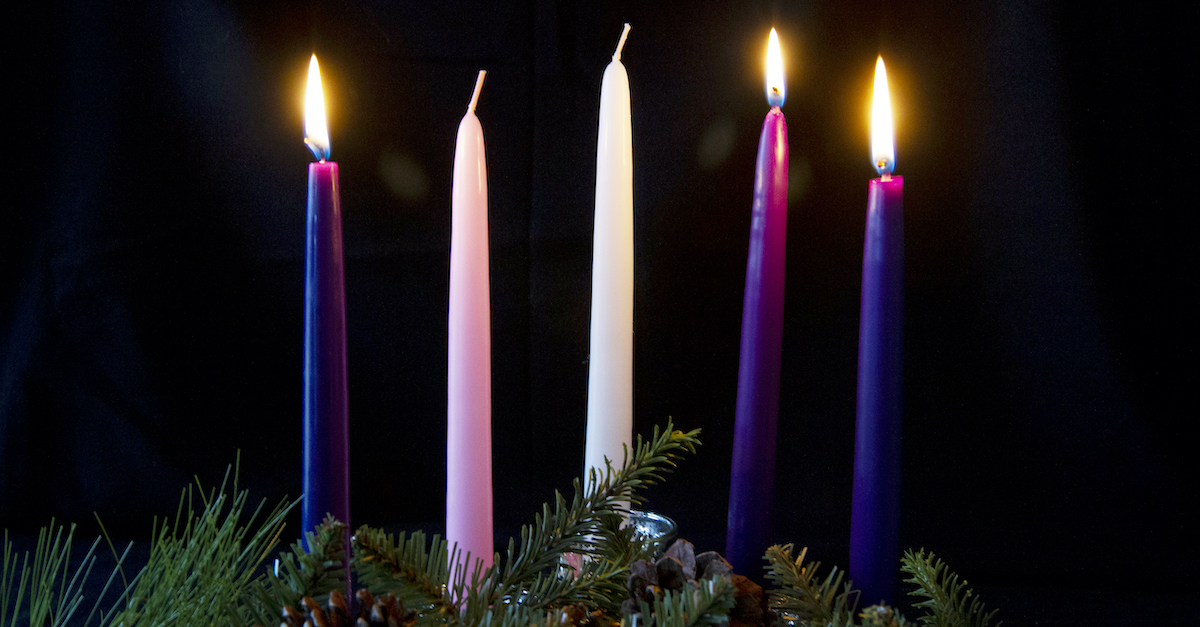
The waning of the year is a natural point to pause and recenter our lives on the longing for his appearing. As the light fades (some of us feel this physically in our bodies) we are naturally reminded that history has an end point. We also become acutely aware of the eschatological principle of the already/not yet. Increased darkness leads to watchfulness; this was especially so in humanity’s pre-industrial eras. The lighting of candles and the longing for dawn is a natural response this time of year. This is reflected in Advent’s focus on our longing for his appearing, especially the placement of Matthew 11 in the second Sunday of Advent. In this text, John the Baptist is rotting in prison and in his misery he sends messages to Jesus asking, “Are you the one who is to come, or shall we seek another?” What a profoundly honest question to ask in a time of darkness! That has to be the theme of our Advent expectancy!

Christ’s response to John does not berate him or cast him away. Instead, he castigates those who think that a man of faith like John should never doubt. His answer to John focuses on the concrete events of Christ’s life that show he is the fulfillment of prophecy, that he, in fact, is the One.

This is the movement of Advent. It begins with the promise of his return to set all things to right. Then it moves to the response of faithful believers in the midst of a very broken world, “Are you really the one?” or, “Are you ever going to deliver us?” Then we move in week three to the triumphant John, preaching repentance ahead of the judgment of the Lord. Finally, we have the announcement by the Angel of the one to be born who will set his people free.

That’s Advent! It’s not what our culture has made it to be, and frankly many people have grown to hate. Advent, in its design, is a season to reset ourselves and to renew our joy in the midst of a dark season. This is why the liturgy for the third Sunday in Advent begins with these words, “Rejoice in the Lord always. I will say it again, Rejoice!” This is the hinge on which the Advent season turns.

Gaudete! Y’all rejoice! Not out of a naïve sentimentality or due to a blind consumeristic obsession, but because though we’ve been honest and realistic about the brokenness of our world, we’ve found again a reason to hope!

I wonder if that Washington Post author would still hate Christmas if the church still led in observing Advent in this way? I wonder if folks would still long for January 1 when it will all be over, if we still kept the distinction between Advent and Christmas? We in the USA talk about there being a war on Christmas in our culture. But what if I told you that many European believers think that it is America that is truly waging the war on Christmas? As the observance of Santa Claus circles the globe haven’t even we in the church lost sight of what Advent and Christmas were originally designed to be?

One more time, Advent is not Christmas. 

Visit New Life Presbyterian Church for more articles and teaching from Tim LeCroy. New Life is a church worshiping in the beautiful Finger Lakes region of New York serving both the Cornell University and Ithaca College communities.

Advent Is Not Christmas: Part 1

I have a pet peeve. Actually, I have several. This one has to do with the way that many churches do Advent, that is, as an extended time of Christmas. Their focus is on the first Advent of Christ, and the time is spent covering the biblical material leading up to his birth. Christmas carols and hymns are sung from the first Sunday of Advent onward and there is no distinctive Christmas season. In other words, Advent is Christmas.

There is just one problem. Advent is not Christmas.

Before I get any further I need to make several disclaimers. First, the purpose of this essay is not to shame anyone or call anyone out. I’ve observed this practice enough to not have any one particular church in mind. In fact, the church I attended this week on the First Sunday of Advent did it correctly. So, I’m not calling anyone out in particular and neither do I have any recent experience in mind. Second, my goal is not to cause anyone to feel ashamed or to cause any immediate, drastic changes in your church. My purpose is to educate and train. The church year is a secondary (or even tertiary) matter, and there’s no reason to go to war over how anyone does the church year (or doesn’t).

That said, if we are going to do the church year, I think that it ought to be grounded in what the Scripture teaches and what the church has observed over the centuries, and that as Reformed Christians we ought to have a good rationale and purpose for doing it.

In this essay, part one of two, I will cover the broader biblical and historical aspects, that is – the Biblical and Patristic Roots of the Church Year. Then in part two I will get into the nitty gritty of why Advent is not Christmas (and why that matters).

The Church Year is Grounded in God’s Word

The church year is not just a cool thing that trendy churches are now doing. While I think it’s good that all kinds of churches are getting in touch with the roots of historic Christianity, as we do that we need to understand what we are doing and why. Ancient does not necessarily equate to good and helpful, and we need to understand what unhelpful aspects may have developed in ancient practices so we can avoid them. When it comes to the church year, we are not just appropriating church tradition. It turns out that, as in many other things, the church’s tradition is grounded in God’s Word.

There are some folks (I happen to be one of them) that believe that whatever we do in the worship of God should be grounded in God’s word. In other words, we can’t do whatever we like in our worship of God. The Bible teaches us how we are to worship, and our worship should be regulated by God’s Word. This idea is referred to by Reformed theologians as The Regulative Principle of Worship.

There are three places we can find the church year grounded in God’s word: the creation narrative, the Mosaic law, and in New Testament observance. The first is in creation itself. In Genesis chapter one we find that light is created on the first day, but the Sun, Moon, and stars aren’t created until the fourth. Light existed before day four— it evidently was a manifestation of God’s glory. Much like the waters were gathered on day three to produce the dry land, the light is gathered on day four to produce the Sun, Moon, and stars. The Sun is said to rule over the day, and the Moon to rule over the night. The Sun, Moon, and stars are given to “to separate the day from the night,” and to serve as indicators of “signs and for seasons, and for days and years,” (Gen. 1:14). The Sun marks the day, the Moon marks the month. The stars mark seasons. Together, all three help us mark years. But did God create all this just for telling time?

The text says they are for “signs and seasons, and for days and years.” Why is the word “signs” in with “seasons, days, and years”? It seems to show that the heavenly bodies will not just mark the passage of time, but that they serve as important markers throughout the year. The word sign used there appears several times in the Old Testament, but two of its usages are as a pledge of the covenant (circumcision, rainbow, and Passover are all signs) or as a marker of divine action. One way to think of these celestial signs are as creational ebenezers, heavenly stones of remembrance, that move us to mark the mighty deeds of the Lord in worship as we move through each year of our lives. Further, the word used for “seasons” here is almost always used in the Old Testament with a connection to worship. It can mean an “appointed place,” in which case it almost always refers to a particular spot in the Temple/Tabernacle, or to the Tent of Meeting itself. As an appointed time, it most regularly refers to the time for appointed feasts. This is how the BDB Hebrew Lexicon defines this usage in Genesis 1, preferring the translation, “for signs and sacred seasons.” This is also the case in Psalm 104: 19, which should be translated, “He made the Moon to mark the sacred seasons.”

This creational feature is encoded in the worship of the Old Testament Church. We find a series of yearly feasts prescribed in the Mosaic law. These feasts are largely agricultural, but they follow the cycle of the year. The movement of the Sun, Moon, and stars in their yearly cycle set the dates for the great festivals, especially those of the springtime.

Exodus 12 describes both the ritual of the Passover meal and the day that it is to be observed. The LORD tells Moses that this month, the month they were delivered from Egypt, is to be counted as the first month in their ecclesiastical calendar. We find that several other important events happen on the first day of the first month, including the day when the waters were dried after the Flood (Gen. 8:13) and the day when the desert Tabernacle was erected (Ex. 40:2, 17). The first day of the first month has also been traditionally thought to be the first day of creation. The first month of the year was calculated based on the first ripening of the barley harvest, a marker of springtime (see Leviticus 23). The first new moon after this marked the beginning of the first month. Then the next full moon marked the Passover. This is why to this day we calculate Easter based on the first full moon after the spring equinox. But more on this later.

After the Passover, the people of God were to celebrate Pentecost, which was dated 50 days after the Passover (Lev. 23:15-16). Thus, Passover and Pentecost were the two great feasts of the springtime. There were also two fall feasts, which are described in Leviticus 23: Trumpets and Booths (also called Ingathering in Ex. 34:22). All four of these festivals marked significant events in the Exodus story. Two other feasts were added to the calendar at later points. The feast of Purim celebrates the deliverance of the people of God as told in the book of Esther. It is held yearly in the last month of the ecclesiastical year (Adar, see Est. 9:18ff). Hanukkah, an early winter feast, was added during the intertestamental period in the month Kislev to celebrate the Maccabees’ deliverance of the people from the Seleucids. Every year the people of God were to celebrate these feasts with eating and drinking and worship services. These feasts had three aspects. First, they were thanksgiving feasts, based on the agricultural calendar of ancient Israel. Second, they were memorial feasts marking out significant moments in salvation history. Third, they were formative feasts, teaching the people of God important theological truths. These three aspects, thanksgiving, instruction, and formation, will be criteria that we refer back to when evaluating Advent in part two.

In the New Testament we find that the people of God are still celebrating these feasts and references to them are sprinkled throughout. Passover is connected with Jesus’ death and resurrection. Pentecost, the day when the Law was given at Sinai, is connected with the coming of the Holy Spirit in the upper room. We also find Jesus attending Jerusalem for the Feast of Booths (John 7:2, 10), Dedication (Hanukkah) (John 10:22), and apparently also Purim (John 5:1-2). The only feast that is not mentioned explicitly in the New Testament is Trumpets along with its Day of Atonement. Perhaps this is because Passover and Eastertide are going to subsume them in the New Covenant. 

Even after Christ’s death and resurrection we have references to the OT feasts in the New Testament. We cannot discount the fact that God chose the Mosaic feast of Pentecost to send the Holy Spirit upon the believers in the Upper Room. This seems to point not only to a New Covenant fulfillment of that feast, but to a continued New Covenant observance of it. Further, we read in Acts 20 that Paul desired to reach Jerusalem by Pentecost. He also mentions Pentecost in 1 Corinthians 16. With these positive participations in the ecclesiastical calendar, we find nowhere in the New Testament that the yearly calendar is to be abrogated. We find other aspects of the Mosaic law are abrogated: bloody sacrifices, circumcision, food laws, other holiness separation laws related to purifications and clothing, and others. But we do not find any abrogation of the ecclesiastical year. Instead, we find an encouragement from Paul to keep the feast, not the old feast of unleavened bread, but the new Pascha, that we now call Easter (1 Cor. 5:7-8). There Paul gives us the theological content of the Old Testament feast (cutting off the old leaven of malice and wickedness) and connects the Old Testament feast of Pascha to the sacrificial death of Christ on the Cross.

The Early Church Celebrated the Church Year

It’s hard to overstate just how important the leaders of the post-Apostolic church were in building the faith that we all profess and practice. Paul uses the metaphor of the Temple structure to describe how our faith has been established. In Ephesians 2:20 he states that our faith is, “built on the foundation of the apostles and prophets, Christ Jesus himself being the cornerstone.” In Paul’s conception though, the apostles, prophets, and Christ don’t make up the entire structure. They are the foundation, but the subsequent generations make up the rest of the building. Peter agrees, saying that we are “living stones” making up the structure of our faith, with Christ as the cornerstone, (1 Pet. 2:5). By the time the Apostles left the scene in the late first century, the foundations were laid, but the early church had to continue building.

The first Christian leaders after the Apostles understood this. The earliest extant Christian document outside of the New Testament, the Didache, purports to hand down instructions from the Apostles themselves on how the church should be organized. As it was written in Syria around 80 A.D. this is not a fantastic claim and should be taken seriously. Clement of Rome, writing to the church at Corinth around the same time, described the problem of who would be the successors to the Apostles and carry on their leadership of the church. In chapter 44 of his letter he writes that the Apostles had designated ordained presbyters to be the successors to their ministry. Ignatius of Antioch, writing after the turn of the century, writes that the people should be subject to the bishop led presbytery, that bishops and presbyters are in tune with one another like strings on a guitar, and that the bishops have the mind of Christ (Ig. Eph. 2:2, 3:2, 4:1). Some scholars have posited that Clement and Ignatius present alternative visions for church government in the early church, but I believe they represent an identical polity, one that is a hybrid of episcopal and presbyterian systems. But I digress.

Those early Christian leaders also addressed the problem of the apostolic vacuum by arguing that the writings of the Apostles were inspired and should be the basis for the fledgling faith. Both Ignatius and Clement demonstrate an awareness that what Peter and Paul wrote was inspired by God and thus authoritative, but that what they themselves were writing was neither inspired nor authoritative in the same way (1 Clem. 47:3, Ig. Ep. 12:1-2, Ig. Rom. 4:3). Thus, while the ordained presbyters were the successors to the Apostles in leading the church, they were bound by the writings of the Apostles in scripture as to what doctrines they elucidated and in their leadership of the church.

These two pillars of early Christian theology lead to the calling of the great ecumenical councils to deliberate and articulate the content of the faith in the presence of heresy. Those first four councils were the weight bearing joists and beams, laid on the foundation of the Apostles, that would support the faith for centuries and even millennia. The Niceno-Constatinopolitan Creed and the formulations of Ephesus and Chalcedon serve as our theological floor to this day. As the preamble to the Athanasian Creed would later expound, no one can be considered a Christian who does not profess the faith that those four councils describe.

But what does all this have to do with the church year? Did you know that when the Council of Nicaea was called in 325 A.D. one of the primary issues it met to deliberate on was the yearly day of the celebration of Easter? One of the more significant controversies of the early church was whether Easter should be celebrated on a fixed date (like Christmas is now) or whether it should be movable based on the calculation of Jewish Passover. The first issue discussed in the published canons of the council does address the issue of the Trinity, but the final act published was the solution of the Holy Pasch (see Decrees of the Ecumencial Councils by Norman P. Tanner). The council decided that Easter should be determined each year according to the practice of the Romans, which practice was developed based on the occurrence of the first full moon after the spring equinox. To this day this is how we determine when Easter will be.

The Nicene deliberation demonstrates two things for us. First is that for the earliest Christians celebration of the springtime ecclesiastical feasts was not a question of if, but when and how. Second, this demonstrates how important the concept of unity was for them (see John 17:20-26 and Eph. 4:3-6 for the reason why), and that unity was based on tangible, observable practices like worship and the celebration of ecclesiastical feasts.

In fact, the Church Fathers felt strongly that the church year should be practiced as a practical feature of the unity of the church. Athanasius of Alexandria is known first for his ardent defense of Nicene Orthodoxy and secondly for his being the first full articulation of the New Testament canon in 367 A.D. Yet Athanasius was also an ardent supporter of the church year, arguing that the 40 day fast of Lent should be a feature of the church’s worship throughout the world. The fact that the council of Nicea refers to the observance of Lent as a given further demonstrates this. (Please see my earlier essay on the origins of Lent for more information.)

Therefore, in addition to laying down our ecclesiological and theological framework, the Church Fathers bequeathed to us the Christian calendar. They redemptive historically transmogrified (to borrow a phrase from two of my seminary professors Jack Collins and Michael Williams) the springtime feasts of the Old Testament into a Christian liturgical calendar. The feast of Unleavened Bread became Holy Week and then Lent. The Day of Atonement became Good Friday. Passover and Trumpets became Eastertide (in fact the vast majority of the world still refers to what we call Easter as Pashca). Pentecost became, well, Pentecost, but the shift moved from Sinai to the New Sinai of the Upper Room and the coming of the Holy Spirit. That the New Testament writers place so much emphasis on the fact that these major events in salvation history occurred on these festal days, also arguing that the sacrificial system of worship itself was transmogrified and brought into the New Covenant in Christ, bolsters what the Church Fathers did. As in the case of canon, presbyterate, and creed, the Apostles laid the foundations for the church year, and the Church Fathers built upon it a sturdy floor for us to stand upon. In fact, continuing with our building metaphor, we might see that patristic doctrines of polity and scripture built the basement walls, the creeds of the councils laid the floor joists, and the liturgy of the Fathers created the weight bearing walls. What remained for later generations was to “dry in” the frame and then to provide the interior design of the place, making the house of our faith into a beautiful dwelling place for us with our God.

The Reformers Accepted the Early Church’s Calendar

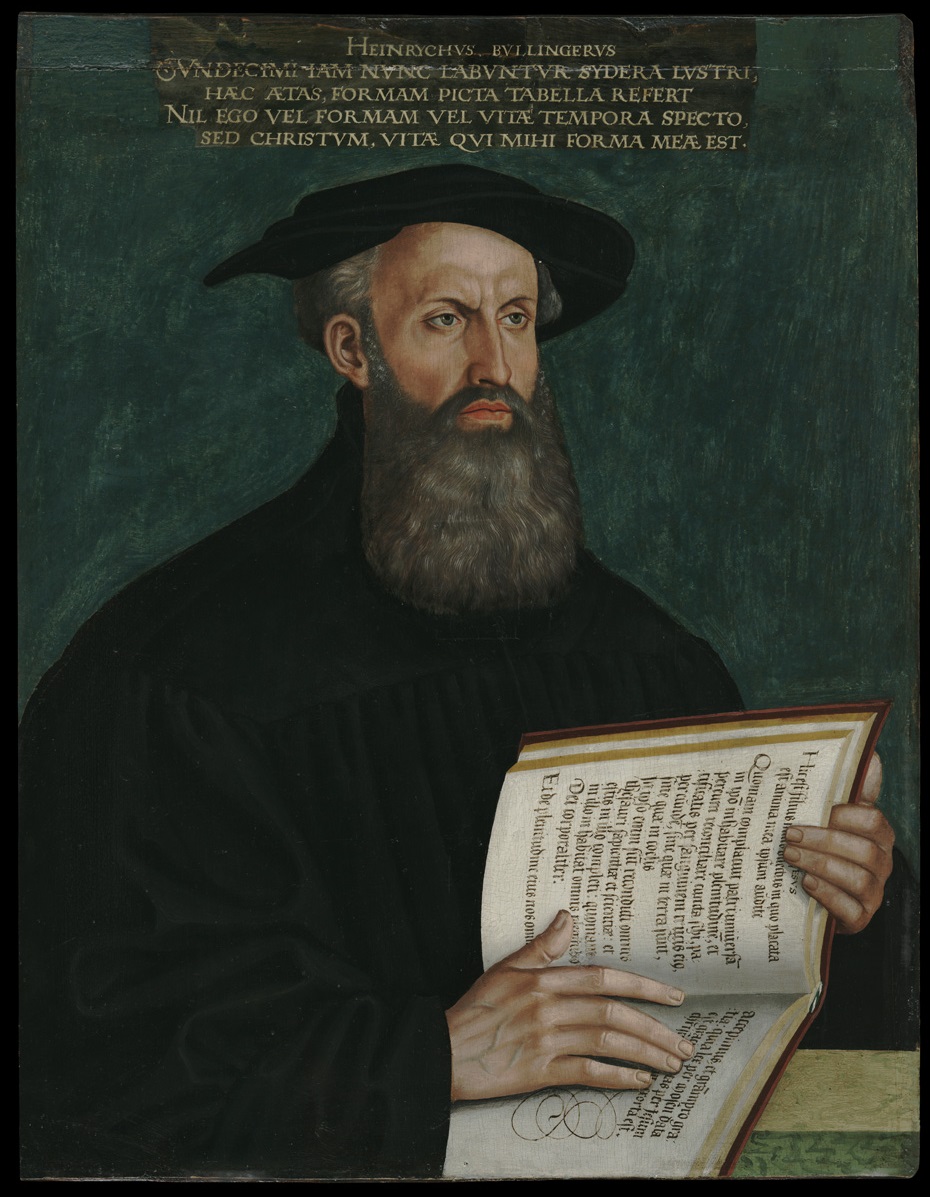
To bring this forward a thousand plus years (I promise I will go back and fill in the medieval gaps in part two) the Reformers accepted the calendar that the Church Fathers developed. Even our Reformed forebears kept the major “evangelical” feasts, emphasizing that communion should be received on those days. For certain, the Reformed rejected the late medieval excesses of Lent, throwing out with that dirty bathwater the baby of patristic Lenten practice, but they did not reject the calendar outright. Martin Luther did not reject it at all, but reformed it, as was his practice in general. But even the Reformed kept the major feasts, while rejecting Lent and being more skeptical of Advent. All the Reformers were keen to reform the calendar of late Medieval excesses with its proliferation of Saints Days, which they felt distracted from the central story of Christ and his life. For this reason they accepted the framework of the church year that emphasized the major events of Christ’s life (birth, death, and resurrection) along with the coming of the Holy Spirit in the Upper Room. We see the pre-Puritan Reformed position clearly in Heinrich Bullinger’s Second Helvetic Confession where he writes: 

If in Christian liberty the churches religiously celebrate the memory of the Lord’s nativity, circumcision, passion, resurrection, and of his ascension into heaven, and the sending of the Holy Spirit upon his disciples, we approve of it highly. but we do not approve of feasts instituted for men and for saints. Holy days have to do with the first Table of the Law and belong to God alone. Finally, holy days which have been instituted for the saints and which we have abolished, have much that is absurd and useless, and are not to be tolerated. In the meantime, we confess that the remembrance of saints, at a suitable time and place, is to be profitably commended to the people in sermons, and the holy examples of the saints set forth to be imitated by all.

For certain, Calvin was more critical of the church year than Bullinger, but he seems to be more concerned with perfunctory performance of them and those who we colloquially call “Chreasters”. Calvin’s Geneavan churches did keep the major holidays, and he preached sermons on their topics (the Nativity of Jesus on Christmas, for example) and served communion. His objections seem to be for pastoral reasons, specifically, that people were only showing up for major holidays and thinking their observance of them was enough for them spiritually. In spite of this, Calvin said that he did not think that observation of the major holidays should be abolished unless the majority of the church agreed.

This Evangelical (story of the gospel) Church Year is a concept I believe that we can all center around. Whether we choose to retain the Puritan rejection of all days save Sunday, go the Lutheran (as in Martin, not the denomination) route of major holidays with their seasons, or walk the Reformed middle way of Bullinger, hopefully we can see the biblical and patristic roots of the church year. In this we can have charity towards our brothers and sisters who observe certain days along with those who do not. Afterall, this is what is laid down by Paul in Colossians 2 and Romans 14, establishing the Apostolic principle that the Church year is a matter of adiaphora not dogma. Paul says we should not despise each other based on our observance of these days and that we should find our central unity not in them but in Christ.

While exercising this charity, the question remains whether the dominical and apostolic exhortations to maintain the unity of the church around the one faith, along with the practical applications of Christian formation that the church year presents, demonstrate the wisdom of the early fathers in building those weight bearing walls. I’m obviously arguing that case, while extending charity to my brothers and sisters who disagree and hoping for theirs in return.

In part two I will discuss that if we accept the wisdom of the Fathers and choose to observe the winter cycle of Advent and Christmas, we should do it in ways that are keeping with the patristic and biblical principles regarding the Church year, and that means, ultimately, that Advent is not Christmas.

Visit New Life Presbyterian Church for more articles and teaching from Tim LeCroy. New Life is a church worshiping in the beautiful Finger Lakes region of New York serving both the Cornell University and Ithaca College communities.

A Reformed Defense of the Church Year

As we draw near to a new church year with the season of Advent approaching we are once again reminded that not all Reformed churches practice the Church Year and some even argue against its usage. The most common reason given against Reformed churches engaging in this practice is based on the Regulative Principle of Worship (RPW), that nowhere in the Bible does it say churches should do such things. Adherents of this strict version of the RPW argue that nothing that is not explicitly commanded in scripture should be done in worship. Thus, since there is no command to do the church year in the Bible, Reformed churches should not do it. However, in this essay I will argue that the Scriptures do present a case for observing a yearly calendar of worship, and that the New Testament writers instead of abolishing it, move it to a secondary matter that churches may or may not participate in. Despite this, we see that the uniform testimony of the Early Church is for the observance of the Church Year, and that the Reformers did not abolish it, but worked to curtail its late medieval abuses.

The Church Year is Grounded in God’s Word

The church year is not just a cool thing that trendy churches are now doing. While I think it’s good that all kinds of churches are getting in touch with the roots of historic Christianity, as we do that we need to understand what we are doing and why. Ancient does not necessarily mean good and helpful, and we need to understand what unhelpful aspects may have developed in ancient practices so we can avoid them. When it comes to the church year, we are not just appropriating church tradition. It turns out that, as in many other things, the church’s tradition is grounded in God’s Word.

There are three places we can find the church year grounded in God’s word: the creation narrative, the Mosaic law, and in New Testament observance. The first is in creation itself. In Genesis chapter one we find that light is created on the first day, but the Sun, Moon, and stars aren’t created until the fourth. Light existed before day four— it evidently was a manifestation of God’s glory. Much like the waters were gathered on day three to produce the dry land, the light is gathered on day four to produce the Sun, Moon, and stars. The Sun is said to rule over the day, and the Moon to rule over the night. The Sun, Moon, and stars are given to “to separate the day from the night,” and to serve as indicators of “signs and for seasons, and for days and years,” (Gen. 1:14). The Sun marks the day, the Moon marks the month. The stars mark seasons. Together, all three help us mark years. But did God create all this just for telling time?

The text says they are for “signs and seasons, and for days and years.” Why is the word “signs” in with “seasons, days, and years”? It seems to show that the heavenly bodies will not just mark the passage of time, but that they serve as important markers throughout the year. The word sign used there appears several times in the Old Testament, but two of its usages are as a pledge of the covenant (circumcision, rainbow, and Passover are all signs) or as a marker of divine action. One way to think of these celestial signs are as creational ebenezers, heavenly stones of remembrance, that move us to mark the mighty deeds of the Lord in worship as we move through each year of our lives. Further, the word used for “seasons” here is almost always used in the Old Testament with a connection to worship. It can mean an “appointed place,” in which case it almost always refers to a particular spot in the Temple/Tabernacle, or to the Tent of Meeting itself. As an appointed time, it most regularly refers to the time for appointed feasts. This is how the BDB Hebrew Lexicon defines this usage in Genesis 1, preferring the translation, “for signs and sacred seasons.” This is also the case in Psalm 104: 19, which should be translated, “He made the Moon to mark the sacred seasons.”

This creational feature is encoded in the worship of the Old Testament Church. We find a series of yearly feasts prescribed in the Mosaic law. These feasts are largely agricultural, but they follow the cycle of the year. The movement of the Sun, Moon, and stars in their yearly cycle set the dates for the great festivals, especially those of the springtime.

Exodus 12 describes both the ritual of the Passover meal and the day that it is to be observed. The LORD tells Moses that this month, the month they were delivered from Egypt, is to be counted as the first month in their ecclesiastical calendar. We find that several other important events happen on the first day of the first month, including the day when the waters were dried after the Flood (Gen. 8:13) and the day when the desert Tabernacle was erected (Ex. 40:2, 17). The first day of the first month has also been traditionally thought to be the first day of creation. The first month of the year was calculated based on the first ripening of the barley harvest, a marker of springtime (see Leviticus 23). The first new moon after this marked the beginning of the first month. Then the next full moon marked the Passover. This is why to this day we calculate Easter based on the first full moon after the spring equinox. But more on this later.

After the Passover, the people of God were to celebrate Pentecost, which was dated 50 days after the Passover (Lev. 23:15-16). Thus, Passover and Pentecost were the two great feasts of the springtime. There were also two fall feasts, which are described in Leviticus 23: Trumpets and Booths (also called Ingathering in Ex. 34:22). All four of these festivals marked significant events in the Exodus story. Two other feasts were added to the calendar at later points. The feast of Purim celebrates the deliverance of the people of God as told in the book of Esther. It is held yearly in the last month of the ecclesiastical year (Adar, see Est. 9:18ff). Hanukkah, an early winter feast, was added during the intertestamental period in the month Kislev to celebrate the Maccabees’ deliverance of the people from the Seleucids. Every year the people of God were to celebrate these feasts with eating and drinking and worship services. These feasts had three aspects. First, they were thanksgiving feasts, based on the agricultural calendar of ancient Israel. Second, they were memorial feasts marking out significant moments in salvation history. Third, they were formative feasts, teaching the people of God important theological truths. These three aspects, thanksgiving, instruction, and formation, will be criteria that we refer back to when evaluating Advent in part two.

In the New Testament we find that the people of God are still celebrating these feasts and references to them are sprinkled throughout. Passover is connected with Jesus’ death and resurrection. Pentecost, the day when the Law was given at Sinai, is connected with the coming of the Holy Spirit in the upper room. We also find Jesus attending Jerusalem for the Feast of Booths (John 7:2, 10), Dedication (Hanukkah) (John 10:22), and apparently also Purim (John 5:1-2). The only feast that is not mentioned explicitly in the New Testament is Trumpets along with its Day of Atonement. Perhaps this is because Passover and Eastertide are going to subsume them in the New Covenant. 

Even after Christ’s death and resurrection we have references to the OT feasts in the New Testament. We cannot discount the fact that God chose the Mosaic feast of Pentecost to send the Holy Spirit upon the believers in the Upper Room. This seems to point not only to a New Covenant fulfillment of that feast, but to a continued New Covenant observance of it. Further, we read in Acts 20 that Paul desired to reach Jerusalem by Pentecost. He also mentions Pentecost in 1 Corinthians 16. With these positive participations in the ecclesiastical calendar, we find nowhere in the New Testament that the yearly calendar is to be abrogated. We find other aspects of the Mosaic law are abrogated: bloody sacrifices, circumcision, food laws, other holiness separation laws related to purifications and clothing, and others. But we do not find any abrogation of the ecclesiastical year. Instead, we find an encouragement from Paul to keep the feast, not the old feast of unleavened bread, but the new Pascha, that we now call Easter (1 Cor. 5:7-8). There Paul gives us the theological content of the Old Testament feast (cutting off the old leaven of malice and wickedness) and connects the Old Testament feast of Pascha to the sacrificial death of Christ on the Cross.

The Early Church Celebrated the Church Year

It’s hard to overstate just how important the leaders of the post-Apostolic church were in building the faith that we all profess and practice. Paul uses the metaphor of the Temple structure to describe how our faith has been established. In Ephesians 2:20 he states that our faith is, “built on the foundation of the apostles and prophets, Christ Jesus himself being the cornerstone.” In Paul’s conception though, the apostles, prophets, and Christ don’t make up the entire structure. They are the foundation, but the subsequent generations make up the rest of the building. Peter agrees, saying that we are “living stones” making up the structure of our faith, with Christ as the cornerstone, (1 Pet. 2:5). By the time the Apostles left the scene in the late first century, the foundations were laid, but the early church had to continue building.

The first Christian leaders after the Apostles understood this. The earliest extant Christian document outside of the New Testament, the Didache, purports to hand down instructions from the Apostles themselves on how the church should be organized. As it was written in Syria around 80 A.D. this is not a fantastic claim and should be taken seriously. Clement of Rome, writing to the church at Corinth around the same time, described the problem of who would be the successors to the Apostles and carry on their leadership of the church. In chapter 44 of his letter he writes that the Apostles had designated ordained presbyters to be the successors to their ministry. Ignatius of Antioch, writing after the turn of the century, writes that the people should be subject to the bishop led presbytery, that bishops and presbyters are in tune with one another like strings on a guitar, and that the bishops have the mind of Christ (Ig. Eph. 2:2, 3:2, 4:1).

Those early Christian leaders also addressed the problem of the apostolic vacuum by arguing that the writings of the Apostles were inspired and should be the basis for the fledgling faith. Both Ignatius and Clement demonstrate an awareness that what Peter and Paul wrote was inspired by God and thus authoritative, but that what they themselves were writing was neither inspired nor authoritative in the same way (1 Clem. 47:3, Ig. Ep. 12:1-2, Ig. Rom. 4:3). Thus, while the ordained presbyters were the successors to the Apostles in leading the church, they were bound by the writings of the Apostles in scripture as to what doctrines they elucidated and in their leadership of the church.

These two pillars of early Christian theology lead to the calling of the great ecumenical councils to deliberate and articulate the content of the faith in the presence of heresy. Those first four councils were the weight bearing joists and beams, laid on the foundation of the Apostles, that would support the faith for centuries and even millennia. The Niceno-Constatinopolitan Creed and the formulations of Ephesus and Chalcedon serve as our theological floor to this day. As the preamble to the Athanasian Creed would later expound, no one can be considered a Christian who does not profess the faith that those four councils describe.

But what does all this have to do with the church year? Did you know that when the Council of Nicaea was called in 325 A.D. one of the primary issues it met to deliberate on was the yearly day of the celebration of Easter? One of the more significant controversies of the early church was whether Easter should be celebrated on a fixed date (like Christmas is now) or whether it should be movable based on the calculation of Jewish Passover. The first issue discussed in the published canons of the council does address the issue of the Trinity, but the final act published was the solution of the Holy Pasch (see Decrees of the Ecumencial Councils by Norman P. Tanner). The council decided that Easter should be determined each year according to the practice of the Romans, which practice was developed based on the occurrence of the first full moon after the spring equinox. To this day this is how we determine when Easter will be.

The Nicene deliberation demonstrates two things for us. First is that for the earliest Christians celebration of the springtime ecclesiastical feasts was not a question of if, but when and how. Second, this demonstrates how important the concept of unity was for them (see John 17:20-26 and Eph. 4:3-6 for the reason why), and that unity was based on tangible, observable practices like worship and the celebration of ecclesiastical feasts.

In fact, the Church Fathers felt strongly that the church year should be practiced as a practical feature of the unity of the church. Athanasius of Alexandria is known first for his ardent defense of Nicene Orthodoxy and secondly for his being the first full articulation of the New Testament canon in 367 A.D. Yet Athanasius was also an ardent supporter of the church year, arguing that the 40 day fast of Lent should be a feature of the church’s worship throughout the world. The fact that the council of Nicaea refers to the observance of Lent as a given further demonstrates this. (Please see my earlier essay on the origins of Lent for more information.)

Therefore, in addition to laying down our ecclesiological and theological framework, the Church Fathers bequeathed to us the Christian calendar. They redemptive historically transmogrified (to borrow a phrase from two of my seminary professors Jack Collins and Michael Williams) the springtime feasts of the Old Testament into a Christian liturgical calendar. The feast of Unleavened Bread became Holy Week and then Lent. The Day of Atonement became Good Friday. Passover and Trumpets became Eastertide (in fact the vast majority of the world uses the name “Pascha” for what we call Easter). Pentecost became, well, Pentecost, but the shift moved from Sinai to the New Sinai of the Upper Room and the coming of the Holy Spirit. That the New Testament writers place so much emphasis on the fact that these major events in salvation history occurred on these festal days, also arguing that the sacrificial system of worship itself was transmogrified and brought into the New Covenant in Christ, bolsters what the Church Fathers did. As in the case of canon, presbyterate, and creed, the Apostles laid the foundations for the church year, and the Church Fathers built upon it a sturdy floor for us to stand upon. In fact, continuing with our building metaphor, we might see that patristic doctrines of polity and scripture built the basement walls, the creeds of the councils laid the floor joists, and the liturgy of the Fathers created the weight bearing walls. What remained for later generations was to “dry in” the frame and then to provide the interior design of the place, making the house of our faith into a beautiful dwelling place for us with our God.

The Reformers Accepted the Early Church’s Calendar

To bring this forward a thousand plus years, the Reformers accepted the calendar that the Church Fathers developed. Even our Reformed forebears kept the major “evangelical” feasts, emphasizing that communion should be received on those days. For certain, the Reformed rejected the late medieval excesses of Lent, throwing out with that dirty bathwater the baby of patristic Lenten practice, but they did not reject the calendar outright. Martin Luther did not reject it at all, but reformed it, as was his practice in general. But even the Reformed kept the major feasts, while rejecting Lent and being more skeptical of Advent. All the Reformers were keen to reform the calendar of late Medieval excesses with its proliferation of Saints Days, which they felt distracted from the central story of Christ and his life. For this reason they accepted the framework of the church year that emphasized the major events of Christ’s life (birth, death, and resurrection) along with the coming of the Holy Spirit in the Upper Room. We see the pre-Puritan Reformed position clearly in Heinrich Bullinger’s Second Helvetic Confession where he writes: 

If in Christian liberty the churches religiously celebrate the memory of the Lord’s nativity, circumcision, passion, resurrection, and of his ascension into heaven, and the sending of the Holy Spirit upon his disciples, we approve of it highly. but we do not approve of feasts instituted for men and for saints. Holy days have to do with the first Table of the Law and belong to God alone. Finally, holy days which have been instituted for the saints and which we have abolished, have much that is absurd and useless, and are not to be tolerated. In the meantime, we confess that the remembrance of saints, at a suitable time and place, is to be profitably commended to the people in sermons, and the holy examples of the saints set forth to be imitated by all.

For certain, Calvin was more critical of the church year than Bullinger, but he seems to be more concerned with perfunctory performance of them and those who we colloquially call “Chreasters”. Calvin’s Geneavan churches did keep the major holidays, and he preached sermons on their topics (the Nativity of Jesus on Christmas, for example) and served communion. His objections seem to be for pastoral reasons, specifically, that people were only showing up for major holidays and thinking their observance of them was enough for them spiritually. In spite of this, Calvin said that he did not think that observation of the major holidays should be abolished unless the majority of the church agreed.

Westminster on the Church Year

As an ordained minister in the Presbyterian Church in America I have taken a vow to “sincerely receive and adopt the Confession of Faith and the Catechisms of this Church, as containing the system of doctrine taught in the Holy Scriptures,” and when I was ordained the Book of Church Order required me to declare any differences I had with the Westminster Standards. I did not declare a difference with the Standards on the issue of the Church Year, nor do I believe I needed to. The Westminster Standards are silent on the issue of the church year: the words “Easter,” “Lent,” and other direct references to the Church Year are not to be found. In fact, I argue that as a consensus document, the Assembly gave latitude on the issue within certain parameters. Those parameters are described in chapter 21: “On Religious Worship and the Sabbath Day.” That chapter lays down the boundary that all religious worship is governed by God’s Word, specifically:

the acceptable way of worshipping the true God is instituted by Himself, and so limited by His own revealed will, that He may not be worshipped according to the imaginations and devices of men, or the suggestions of Satan, under any visible representation, or any other way not prescribed in the Holy Scripture.

Thus, whatever form of the Church Year PCA churches employ, it must not be according to our imaginations, but prescribed in God’s word. I have attempted above to argue that the Church year is prescribed by God’s word and that the New Testament gives freedom to do it or not do it as a secondary matter, in line with Bullinger’s quote above.

But we must ask ourselves, exactly what does the above quoted portion from WCF 21.1 intend to govern? Does it intend to forbid a seasonal set of scripture readings, prayers, and topical sermons? Does it intend to forbid certain church decorations or the lighting of candles? Some would argue that it does, but I don’t think it is explicit in the text. On the contrary, the Confession in chapter one states that, “there are some circumstances concerning the worship of God, and government of the Church, common to human actions and societies, which are to be ordered by the light of nature, and Christian prudence, according to the general rules of the word, which are always to be observed.” This seems to apply to church decor and lighting and doesn’t explicitly forbid symbolic approaches to church decor and lighting as long as they are “according to the general rules of the word.”

WCF 21.5 states that, “The reading of Scriptures with godly fear; the sound preaching, and conscionable hearing of the Word, in obedience unto God, with understanding, faith, and reverence; singing of Psalms with grace in the heart; as also, the due administration and worthy receiving of the sacraments instituted by Christ; are all parts of the ordinary religious worship of God.” What is the church year but a set of scripture readings, prayers, thematic sermons, and church fellowship events? Certainly, worship services reflecting the Church Year can be pared down to such ordinary aspects. Further, the same paragraph gives permission for churches to designate seasons, stating, “solemn fastings, and thanksgivings upon special occasions, which are, in their several times and seasons, to be used in an holy and religious manner,” (emphasis added). Thus the Confession gives permission for churches to observe seasons, as long as they adhere to the guidelines given elsewhere in the Confession. Indeed, chapter 62 of the Book of Church Order, though unconstitutional, provides guidelines for churches to observe days of fasting and thanksgiving. I see no reason why observance of the church year cannot fit under that umbrella.

Conclusion

The Evangelical (story of the gospel) Church Year Bullinger presents is a concept that we can all center around. Whether we choose the Puritan rejection of all days save Sunday, go the Lutheran (as in Martin, not the denomination) route of major holidays with their seasons, or walk the Reformed middle way of Bullinger, hopefully we can see the biblical and patristic roots of the church year. In this we can have charity towards our brothers and sisters who observe certain days along with those who do not. After all, this is what is laid down by Paul in Colossians 2 and Romans 14, establishing the Apostolic principle that the Church year is a matter of adiaphora not dogma. Paul says we should not despise each other based on our observance of these days and that we should find our central unity not in them but in Christ.

While exercising this charity, the question remains whether the dominical and apostolic exhortations to maintain the unity of the church around the one faith, along with the practical applications of Christian formation that the church year presents, demonstrate the wisdom of the early fathers in building those weight bearing walls. I’m obviously arguing that case, while extending charity to my brothers and sisters who disagree and hoping for theirs in return.

Visit New Life Presbyterian Church for more articles and teaching from Tim LeCroy. New Life is a church worshiping in the beautiful Finger Lakes region of New York serving both the Cornell University and Ithaca College communities.