
Work and Pray

Ora et labora: pray and work.

This was the motto of the medieval monk. This simple phrase moved the life of prayer from the realm of the ascetical heroism of the few to a life that was both accessible to normal Christians and helpful for society. Monks were called to a life of prayer, and pray they did.

But they also worked. They built. They planted. They copied texts by hand. They pastored churches. But in all that work their rhythm of life was set to the meter of daily prayer. Seven times a day, the monks would pray. Their life was one of meditation on God’s wondrous works. Their work flowed out from their prayers and enabled their work to be a vocation, a calling, that was defined by God’s goodness and love for the world, not one motivated by greed, success, pride, or jealousy.

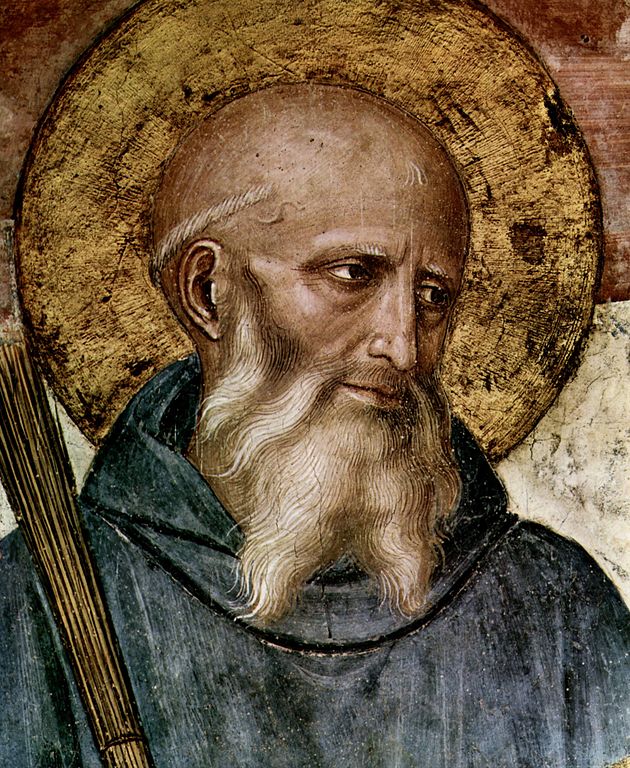
It was not always this way for monks. The ancient monks of the Egyptian desert did not place work as a priority. Their goal was an ascetical ascent to God. Yet the goal of 6th century monastic father Benedict of Nursia was to set prayer and work in harmony. In order to do this he lessened the monastic requirements on prayer to make them more reasonable. He increased the provision for sleep, food, and drink so that the monks could be productive. His goal was not to ascetically bludgeon evil out of the monk, but to set the monk into an ordered life that valued work as an objective good and recognized the necessity of prayer in the life of the worker.

In essence, the daily prayer patterns that Benedict developed for his rule were designed to be a pattern of prayer that the worker could manage. It was intended to be reasonable and doable. It was intended to uplift and encourage, not berate and punish.  

The monk’s life was, as one commentator on The Rule of St. Benedict put it, “an intensely lived Christianity.” Their life was more intense in prayer and in the denial of some worldly goods. Yet the monastic call to prayer was never just for monks, it was for all, even if monks were the only ones ever to fully attain to it. St. Francis, after visiting the Sultan of Egypt remarked at the devotion of Muslim peoples and their commitment to prayer. In a letter to Christian rulers he suggested that cities emulate the Muslim public calls to prayer with a bell or a trumpet or some sort of public audible sign so that Christians everywhere would be called to pray. In the early Church, Hippolytus of Rome encouraged all Christians to pray, at least some kind of prayer, seven times a day according to the Psalmist who wrote, “Seven times a day I praise you for your righteous rules,” (Psalm 119:164).

The Protestant Reformation, one might say, was not an effort to do away with all the emphases of monasticism entirely, but to return the positive aspects of monastic spirituality to all the people. This was in effect to turn the entire Christian church into a monastery, a “School for Christ,” as Benedict of Nursia himself put it, and as Knox notably called Calvin’s Geneva a thousand years later. The Reformation was about returning the spirituality of the Church back to the people. It did not intend to remove anything from the richness of the faith.

The phrase ora et labora, pray and work, shows us the goodness of work. It also communicates the need for prayer. All of us work. We work and work and work. There is no end to our work. But is our work good?  Do we have this notion that work is secular and prayer is sacred? Do we drive a hard division in between our work during the week and our prayers on Sunday? The scriptures tell us that our work is good. The Christian faith has not driven such a hard wedge between the sacred and the secular. While prayer is not needed to sanctify work, (work is a created good), returning prayer to work reinforces work’s goodness and helps to push against the forces of this world which seek to turn our work toward evil and unhelpful and unhealthy paths.

Ora et labora also shows us the need for prayer in our lives. We need to pray. Paul says, “Pray without ceasing.” Yet do any of us really know how to go about doing that? Daily prayer on the pattern of the divine hours gives us a pattern for prayer that we can keep.

Work needs prayer. Prayer needs work. We cannot continue to do our best work unless we stop to fill our tanks with the spiritual fuel of word and prayer. The best work is done from a tank that is filled to the top, a goblet of goodly wine that is full to the brim and overflowing, as David wrote. This is a kind of prayer, you see, not just for the various prayer needs of our lives, but a formative prayer: a prayer that forms, shapes, molds; a prayer that fills us and renews us and restores us. There is room in that prayer for petitioning God according to our needs. But the main force of the daily office is to fill our tanks, to nourish and strengthen us, to make us better Christians out in the working world.

Ora et labora. Pray and work.

This essay originally appeared at Mere Orthodoxy. Please visit their great website.

The Promise of His Appearing: The Historical Development of Christmas and Advent

Advent Is Not Christmas, Part II

This is part two of a two part series. To read part one click here.

“I hate Christmas.”

I recently read an article in the Washington Post whose title was, “I hate Christmas.” It wasn’t entirely what I expected: an atheist curmudgeon annoyed by the ubiquitous seasonal Christian messaging, wishing that everyone would get off his god-free lawn. While there was a little bit of that in the piece, it was mostly centered around the fact that because the author grew up poor, he could never experience Christmas the way movies, tv shows, pop songs, commercials, catalogs, and even friends and family taught him he was supposed to experience it. His family could never afford the lavish feast, the tree surrounded with all the items on his Christmas wish list, or even a very nice tree. He now shuns Christmas along with its gatherings, festivities, gifts, and cheer, instead spending all the money he can afford buying toys for poor children so they can have the Christmas he never had.

I finished the article thinking that the author hadn’t rejected Christmas, he had rejected what Christmas has become: a commercialized cornucopia of instant gratification. What he had actually offered was a valid critique of Christmas and a call to recenter on its true meaning. After all, what more pure symbol of the Christmas spirit is there than sacrificing financially to provide gifts to poor children? St. Nicholas, anyone?

Afterward, I perused a bit of the comment section (yes, I know you are not supposed to read the comments). Many commenters agreed with the author. Some agreed because they were of other religions or were atheists (what I thought the article was going to be about). Others, though, didn’t reject Christmas but rather the spectacle that it has become. One commenter replied, “Only 2-ish weeks before the schizophrenia is behind us. My favorite day of the year is January 1, when it’s all over.”

Christmas isn’t the problem

Now don’t get me wrong, I love Christmas. If there was a hidden camera in my house it would catch me randomly singing, “It’s the most wonderful time of the year!” My wife and I have curated the biggest (and best) Christmas display in a three or four block radius (in our estimation… opinions may vary). I love the feasting. I love the gift-giving. I love the Christmas liturgies, hymns, and candlelight services. I love all that because I love the message of Christ born to set his people free. I love the message of Immanuel, God-with-us, that the God of the Universe took on every bit of our broken humanity so that he could redeem it all. I love it because the incarnation is the only sufficient answer to the problem of evil in this world, as the best philosophers have realized, St. Augustine at the head. I love it because he became sin, who knew no sin, that we might become the righteousness of God. That’s the reason I’m singing, “It’s the most wonderful time of the year!” That’s the reason why I’ve lit my yard up in multicolored c-9 ceramic bulb nostalgic glory. That’s also the reason why I’m ecstatic that the whole world pauses once a year to celebrate the fact that God was born into the world.

And yet, I resonate with what that Washington Post author wrote. Because he’s right. The Christmas message is not what Hallmark, Home Depot, Honda, Hanes, Harley-Davidson, Hurley, and Hasbro are selling us. We have gotten off the rails, or jumped the shark, or whatever metaphor you want to use, in our overindulgence of the Coca-Cola commercialized version of Christmas. The songs, ads, and store displays start before Halloween now. That’s three full months on a peppermint Red Bull IV drip of wall-to-wall Christmas experience. There’s no expectation. There’s no preparation. There’s no self-denial. It’s just CHRISTMAS!!!!!, full-bore, full-tilt for three full months until December 26 when they turn off the spigot and we collapse into full-on exhaustion. No wonder some people hate it.

But that’s not the way Christmas was designed by those that developed the church year centuries ago. Yes, there was feasting. Yes, there was decorating and singing and gift-giving. But preceding it was a period of longing, expectation, and self-denial focused on something entirely un-Christmassy: the second coming of Christ. In other words, there was the season of Advent. And Advent was not Christmas.

Perhaps refocusing on the wisdom of those that created the autumnal portion of the Church calendar could help us in our current predicament. What can we learn by sitting at their feet?

Click here to read the rest of the article over at Semper Ref.

Gregory of Nazianzus on the Incarnation

Gregory of Nazianzus was a 4th century bishop from Cappadocia who eventually became the Archbishop of Constantinople. Together with the brothers Basil the Great and Gregory of Nyssa they were known as the Cappodocian Fathers. Basil, Nazianzus, and John Chrysostom are known collectively as the Three Holy Heirarchs, the Eastern Church’s version of the Four Great Doctors (Augustine, Ambrose, Gregory the Great, and Jerome). Gregory briefly presided over the Council of Constantinople (which gave us the Nicene Creed) and is responsible for the Trinitarian language we use about the Holy Spirit, the language of “three persons” (hypostases) of the Trinity, and in articulating Christology in the face of Apollinarianism. In other words, he was kind of a big deal.

It is to Gregory’s defense of the full humanity of Christ against the heresy of Apollinaris that I now turn. Apollinarianism was a heresy that taught that while Jesus had a human body, he did not possess a human mind. What’s the big deal, you ask? He’s still divine. Well, Gregory of Nazianzus would have none of that. In his Epistle 101 he eloquently articulates why it is important that Jesus Christ possesses a human mind. In this section he bequeaths to the church this important theological maxim that you should commit to memory: what has not been assumed has not been healed. Here’s the conclusion to his letter.

If anyone has put his trust in Him as a Man without a human mind, he is really bereft of mind, and quite unworthy of salvation. For that which He has not assumed He has not healed; but that which is united to His Godhead is also saved. If only half Adam fell, then that which Christ assumes and saves may be half also; but if the whole of his nature fell, it must be united to the whole nature of Him that was begotten, and so be saved as a whole. Let them not, then, begrudge us our complete salvation, or clothe the Saviour only with bones and nerves and the portraiture of humanity.

Gregory of Nazianzus, Epistle 101, 4th c. A.D.

Three things stick out from this quote. First of all is the Eastern notion that the incarnation itself, God uniting with humanity in the person of Jesus Christ, is the source of our salvation. Of course, the atoning work of the cross to gain the forgiveness of our sins was necessary, but this notion of the hypostatic union- that humanity and divinity are inseparably united together in Christ and by the very force of that union we find the source of the righting of our broken humanity- this is key aspect of our salvation as well. Thus, Gregory reasoned, if Christ was not fully human, we are not fully saved. If he did not have a human mind, as Apollinaris taught, then our minds are not healed. But if our minds are fallen, then we need our minds to be redeemed. Who among us who has suffered from depression, anxiety, or other disabilities that with modern science we know are afflictions of the mind would not agree that our minds are fallen and in need of healing? Since our minds are fallen we need a Jesus with a human mind, to heal our minds by the union of broken humanity with the divine.

Further, if our wills are fallen or our emotions, or any other non-tangible aspect of our inner-selves, then Jesus had to have a human one of those too. Otherwise we are not fully redeemed.

Secondly, we have in this quote something that looks an awful lot like the Calvinistic idea of radical depravity. Gregory’s syllogism requires belief in the notion that every aspect of humanity is fallen and in need of redemption. He writes, “If only half Adam fell, then that which Christ assumes and saves may be half also; but if the whole of his nature fell, it must be united to the whole nature of Him that was begotten, and so be saved as a whole.” The whole of his nature fell, including the parts that make decisions, the will, and enable a person to respond to the gospel call by faith. That looks like radical depravity to me.

And that leads to the third notion in the quote that so powerfully resonates: the idea that we are saved to the uttermost. It’s not just that our souls are rescued to escape eternal punishment. No, all of who we are, every aspect of who we are as humans is saved because every aspect of our fallen humanity was united to the Godhead in the person of Jesus Christ. In that humanity he perfectly obeyed and pleased the father, was crucified to pay the debt we could never repay, was raised again as the first-fruits of our resurrection, was glorified into a new incorruptible, impeccable humanity that we will all one day possess, and was raised into the heavens where a fully human person sits at the right hand of the Father ruling over all things and sustaining all things with his powerful word.

That is salvation. Do not begrudge us any little bit of it. For if any part of Jesus’ humanity wasn’t really human, if he wasn’t truly consubstantial with us in his humanity, then we aren’t completely saved. What has not been assumed has not been healed. Let them not, then, begrudge us our complete salvation, or clothe the Savior only with bones and nerves and the portraiture of humanity.

The Biblical and Patristic Roots of the Church Calendar

Advent is Not Christmas, Part I

This is part one of a two part series. To read part two click here.

I have a pet peeve. Actually, I have several. This one has to do with the way that many churches do Advent, that is, as an extended time of Christmas. Their focus is on the first Advent of Christ, and the time is spent covering the biblical material leading up to his birth. Christmas carols and hymns are sung from the first Sunday of Advent onward and there is no distinctive Christmas season. In other words, Advent is Christmas.

There is just one problem. Advent is not Christmas.

Before I get any further I need to make several disclaimers. First, the purpose of this essay is not to shame anyone or call anyone out. I’ve observed this practice enough to not have any one particular church in mind. In fact, the church I attended this week on the First Sunday of Advent did it correctly. So, I’m not calling anyone out in particular and neither do I have any recent experience in mind. Second, my goal is not to cause anyone to feel ashamed or to cause any immediate, drastic changes in your church. My purpose is to educate and train. The church year is a secondary (or even tertiary) matter, and there’s no reason to go to war over how anyone does the church year (or doesn’t).

That said, if we are going to do the church year, I think that it ought to be grounded in what the Scripture teaches and what the church has observed over the centuries, and that as Reformed Christians we ought to have a good rationale and purpose for doing it.

In this essay, part one of two, I will cover the broader biblical and historical aspects and then in part two I will get into the nitty gritty of why Advent is not Christmas (and why that matters).

The Church Year is Grounded in God’s Word

The church year is not just a cool thing that trendy churches are now doing. While I think it’s good that all kinds of churches are getting in touch with the roots of historic Christianity, as we do that we need to understand what we are doing and why. Ancient does not necessarily equate to good and helpful, and we need to understand what unhelpful aspects may have developed in ancient practices so we can avoid them. When it comes to the church year, we are not just appropriating church tradition. It turns out that, as in many other things, the church’s tradition is grounded in God’s Word.

Please continue reading over at SemperRef.